

Govt Reduces Petrol Price by Rs74 Per Litre, Diesel by Rs67 Per Litre
June 19, 2026
S&P 500 Rises as Iran Deal Progress Boosts Markets; Micron Leads Semiconductor Rally
June 22, 2026

Chemical MPPT System Stabilizes Solar Fuel Production Without Batteries
A groundbreaking advancement in renewable energy technology could transform the future of solar fuel production. Researchers have developed a Chemical Maximum Power Point Tracking (MPPT) System that stabilizes solar fuel generation without relying on batteries or traditional electronic controllers. This innovation has the potential to reduce system costs, simplify solar fuel production, and improve the efficiency of converting sunlight into usable energy.
As the world seeks cleaner and more sustainable energy solutions, scientists continue to explore ways to make solar energy more practical and cost-effective. The new chemical MPPT approach represents a major step toward achieving those goals by eliminating some of the most expensive and complex components found in conventional solar energy systems.
What Is an MPPT System?
MPPT stands for Maximum Power Point Tracking, a technology used in solar energy systems to maximize the amount of electricity generated by solar panels.
Solar panels do not produce a constant amount of power throughout the day. Changes in sunlight intensity, temperature, weather conditions, and shading can all affect performance. An MPPT system continuously adjusts electrical parameters to ensure solar panels operate at their highest possible efficiency.
Traditional MPPT energy systems typically include:
- Electronic MPPT controllers
- Batteries
- Power converters
- Monitoring equipment
- Voltage regulation systems
While highly effective, these components increase system cost and complexity.
The Challenge of Solar Fuel Production
Solar fuel production involves converting sunlight into chemical fuels that can be stored and used later.
Unlike conventional electricity generation, solar fuel systems often produce substances such as:
- Hydrogen
- Methanol
- Formic acid
- Synthetic fuels
One major challenge is that solar energy fluctuates throughout the day. Clouds, weather changes, and varying sunlight intensity create unstable operating conditions.
To solve this problem, many systems use batteries and electronic MPPT controllers to regulate power flow and maintain stable fuel production.
However, batteries introduce several disadvantages:
- Higher installation costs
- Additional maintenance
- Energy losses during charging and discharging
- Environmental concerns related to battery production and disposal
Researchers wanted to find a solution that could stabilize fuel production without these drawbacks.
The Innovation Behind Chemical MPPT
The newly developed Chemical MPPT system takes a completely different approach.
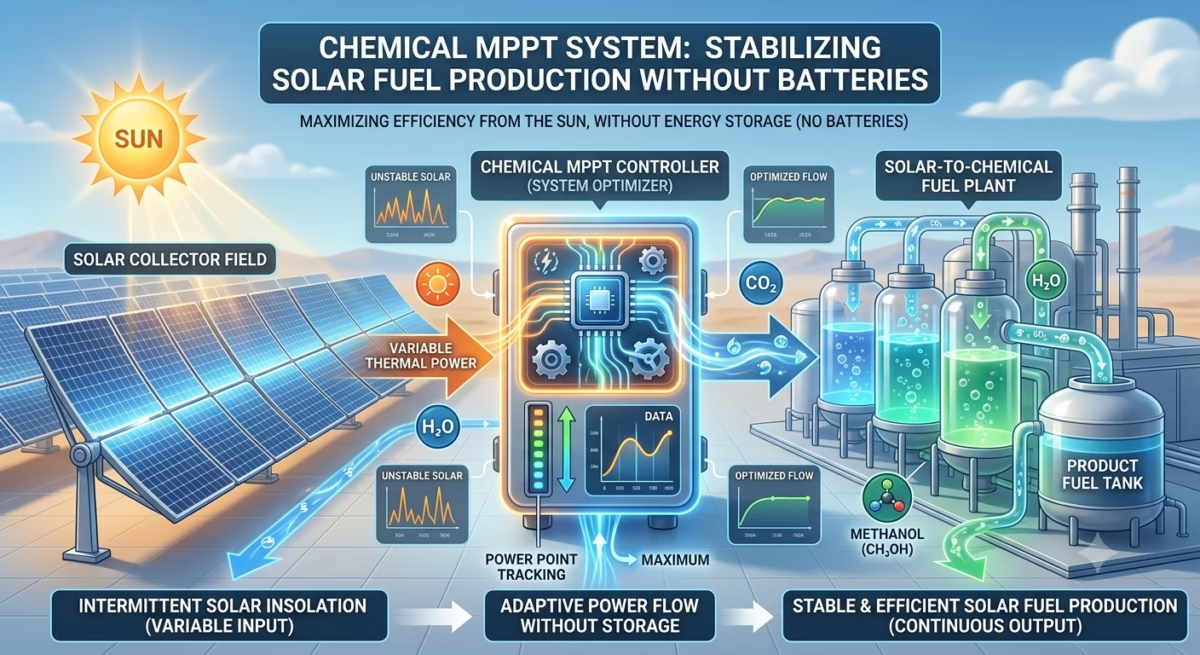
Instead of relying on electronic controls, the system uses specially designed chemical and material properties that automatically adapt to changing sunlight conditions.
As solar intensity changes, the system naturally adjusts its operating behavior to maintain efficient energy conversion.
This allows the electrolyzer itself to perform the role traditionally handled by electronic MPPT hardware.
The result is a self-regulating system that can continuously operate without batteries or complex electronic controls.
How the Chemical MPPT System Works
The system uses a specially engineered electrolyzer that responds to temperature changes caused by sunlight.
When sunlight intensity increases:
- The system heats up naturally.
- Electrical resistance changes.
- Energy flow becomes more efficient.
- Fuel production remains stable.
When sunlight decreases:
- The system automatically adjusts.
- Efficiency remains optimized.
- Production continues without sudden fluctuations.
This self-balancing mechanism effectively tracks the maximum power point of the solar panels without requiring external controllers.
The process happens automatically, reducing both hardware requirements and operational complexity.
Solar Fuel Production Using Sunlight, Water, and Carbon Dioxide
One of the most exciting aspects of the research is its ability to convert renewable resources into valuable fuels.
The system combines:
- Sunlight
- Water
- Carbon dioxide
to produce formic acid, a liquid fuel capable of storing renewable energy.
Formic acid has attracted growing attention because it can be transported, stored, and used more easily than some other renewable fuels.
This makes it a promising candidate for future clean energy applications.
Benefits of Eliminating Batteries
Removing batteries from solar fuel systems offers several significant advantages.
Lower Costs
Batteries are often among the most expensive components in renewable energy systems.
Eliminating them reduces:
- Equipment costs
- Installation expenses
- Maintenance requirements
- Replacement costs
Increased Reliability
Batteries degrade over time and eventually require replacement.
A battery-free system contains fewer components that can fail, increasing overall reliability.
Reduced Energy Losses
Traditional batteries lose some energy during charging and discharging cycles.
The chemical MPPT system avoids these losses, improving overall efficiency.
Environmental Benefits
Battery manufacturing requires raw materials that can have environmental impacts.
Reducing battery usage contributes to a more sustainable renewable energy ecosystem.
Why This Matters for Renewable Energy
Global demand for renewable energy continues to grow rapidly.
Governments and industries are investing heavily in:
- Solar power
- Wind energy
- Green hydrogen
- Carbon-neutral fuels
However, one major challenge remains energy storage.
Solar energy is only available when the sun is shining, creating the need for efficient storage solutions.
Solar fuels provide an attractive answer because they can store renewable energy in chemical form for later use.
The chemical MPPT system helps make this process simpler, cheaper, and more efficient.
Potential Applications
The technology could be applied across numerous industries.
Solar Fuel Facilities
Large-scale solar fuel plants could use chemical MPPT systems to improve efficiency and reduce operating costs.
Carbon Capture Projects
The technology could help convert captured carbon dioxide into useful fuels.
Remote Energy Systems
Off-grid communities could benefit from simpler renewable energy systems that require less maintenance.
Industrial Manufacturing
Factories seeking carbon-neutral energy sources may use solar fuels generated through these systems.
Transportation
Renewable liquid fuels could eventually support cleaner transportation options.
Impact on Future Energy Infrastructure
The development of battery-free solar fuel production could influence future renewable energy infrastructure in several ways.
Energy systems may become:
- Simpler to install
- Less expensive to operate
- Easier to scale
- More environmentally friendly
As renewable technologies continue evolving, reducing complexity often becomes just as important as increasing efficiency.
The chemical MPPT concept addresses both goals simultaneously.
Challenges That Still Need to Be Solved
Although the results are promising, researchers acknowledge that additional work remains.
Key challenges include:
Scaling Production
Laboratory success does not always translate directly to commercial-scale deployment.
Long-Term Durability
The system must demonstrate stable performance over many years of operation.
Manufacturing Costs
Researchers need to ensure the technology can be produced economically at large volumes.
Efficiency Improvements
Further optimization may increase energy conversion rates and fuel output.
Market Adoption
New technologies often require time before industries adopt them widely.
Despite these challenges, the early results are encouraging.
The Future of MPPT Energy Systems
The success of this chemical MPPT system could inspire a new generation of renewable energy technologies.
Future solar MPPT systems may rely less on traditional electronics and more on intelligent material design.
Researchers are increasingly exploring:
- Self-regulating materials
- Adaptive energy systems
- Smart electrolyzers
- Integrated solar fuel technologies
These innovations could significantly reduce the complexity of renewable energy infrastructure while maintaining high performance.
Conclusion
The development of a Chemical MPPT System that stabilizes solar fuel production without batteries represents a major breakthrough in renewable energy technology. By allowing the electrolyzer to automatically adjust to changing sunlight conditions, researchers have demonstrated a simpler and potentially more affordable approach to solar fuel generation.
As the world continues searching for sustainable energy solutions, technologies like chemical MPPT could play an important role in reducing costs, improving efficiency, and expanding access to clean energy. While further development is still needed, the innovation offers a promising glimpse into the future of battery-free renewable energy systems.
FAQs
What does MPPT stand for?
MPPT stands for Maximum Power Point Tracking, a technology used to maximize solar panel efficiency.
What is a Chemical MPPT System?
It is a self-regulating system that performs maximum power point tracking through chemical and material properties rather than electronic controllers.
Does the system require batteries?
No, the new system stabilizes solar fuel production without batteries.
What fuel does the system produce?
The research focuses on producing formic acid from sunlight, water, and carbon dioxide.
Why is battery-free operation important?
It reduces costs, maintenance, energy losses, and environmental impact.
What are the benefits of solar fuels?
Solar fuels store renewable energy in chemical form, allowing energy to be used even when sunlight is unavailable.
Can the technology be used commercially?
Researchers believe it has strong commercial potential, but further development and large-scale testing are still required.
How does the system improve efficiency?
It automatically adjusts to changing sunlight conditions, maintaining optimal energy conversion throughout the day.