

The Shocking New Numbers Behind Apple’s Mammoth iPhone 18 Pro Max Battery Leak
July 3, 2026
Researchers Use AI to Evaluate a Systematic Framework to Describe Molecular Order in Liquid Water
July 6, 2026
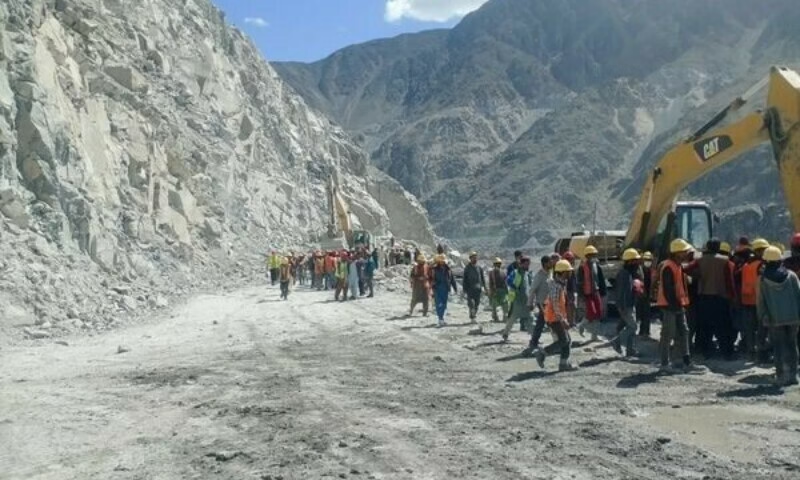
The Diamer-Bhasha Dam Project is one of Pakistan’s largest and most ambitious infrastructure initiatives. Designed to improve water storage capacity, strengthen energy production, and support long-term economic growth, the project represents a significant national investment. Because of its size and strategic importance, the project is also subject to continuous financial oversight and governance mechanisms.
In major public projects, audits are an essential part of ensuring transparency and accountability. Audit observations are intended to identify areas where financial controls, documentation, or management practices can be improved. They help strengthen public institutions by encouraging compliance with financial rules and improving project governance.
Understanding how audits work is important because audit observations do not automatically establish wrongdoing. Instead, they often highlight issues that require clarification, correction, or further review by the relevant authorities. This process supports responsible use of public resources and helps build public confidence in national development projects.
What Is the Diamer-Bhasha Dam Project?
The Diamer-Bhasha Dam Project is a major hydropower and water storage initiative located on the Indus River. It has been planned to address several long-term national priorities, including increasing water reserves, improving irrigation systems, reducing flood risks, and expanding electricity generation through clean hydropower.
As Pakistan’s population and water demand continue to grow, projects like Diamer-Bhasha Dam are expected to play an important role in supporting agriculture, energy security, and sustainable economic development.
The project also creates employment opportunities, strengthens local infrastructure, and contributes to broader regional development through roads, transport facilities, and supporting services.
Why Financial Transparency Matters
Large infrastructure projects involve significant public investment and require careful financial planning. Financial transparency ensures that public funds are managed according to established rules and that project expenditures remain properly documented.
Transparent financial systems provide several important benefits:
- Better public confidence.
- Improved investor trust.
- Stronger project governance.
- Efficient use of government resources.
- Reduced financial risks.
Regular financial reporting also allows government departments, oversight institutions, and the public to understand how project funds are being utilized.
Understanding Audit Findings
Financial audits are a normal part of public sector governance across the world. Their primary objective is to review whether financial procedures comply with applicable laws, regulations, and approved policies.
Audit findings may include observations related to:
- Missing documentation.
- Procurement procedures.
- Payment verification.
- Contract management.
- Internal financial controls.
- Record keeping.
An audit observation should be viewed as an opportunity to improve governance rather than an immediate conclusion about responsibility. In many cases, departments provide explanations, supporting documents, or corrective actions after audit reviews.
Public Accountability in National Development Projects
Public accountability means that government institutions remain answerable for how public resources are managed. Citizens expect development projects to be completed efficiently while maintaining transparency throughout every stage of implementation.
Accountability helps improve decision-making by encouraging institutions to maintain accurate financial records, follow procurement rules, and strengthen internal monitoring systems.
When accountability mechanisms function effectively, they increase confidence among taxpayers, investors, development partners, and the wider public.
The Role of Independent Audits
Independent audits contribute significantly to improving project governance. Their purpose is not only to identify weaknesses but also to recommend improvements that reduce future risks.
Effective audits can help organizations:
- Strengthen financial controls.
- Improve documentation.
- Enhance procurement practices.
- Increase operational efficiency.
- Promote responsible financial management.
These improvements ultimately contribute to better project outcomes and more effective use of public resources.
Economic Importance of the Diamer-Bhasha Dam Project
The Diamer-Bhasha Dam Project is considered one of Pakistan’s most strategically important infrastructure developments. Beyond its engineering scale, the project has the potential to strengthen the country’s long-term economic stability by improving water management, increasing renewable energy production, and supporting agricultural growth.
Pakistan relies heavily on agriculture, making water storage a critical national priority. During periods of heavy rainfall, large volumes of water often flow unused into the sea, while dry seasons create shortages for farmers. A well-managed water reservoir can help regulate this imbalance by storing water for future use.
The hydropower component of the project is equally significant. As electricity demand continues to rise, renewable energy sources such as hydropower can reduce dependence on imported fuels, lower energy costs over time, and support sustainable economic development.
In addition, mega infrastructure projects generate employment opportunities for engineers, technicians, contractors, transport companies, and local businesses. This economic activity contributes to regional development while creating new opportunities for communities surrounding the project.
Challenges Faced by Mega Infrastructure Projects
Large-scale infrastructure projects naturally involve complex financial, technical, environmental, and administrative challenges.
Some common challenges include:
Project Cost Management
Managing billions of rupees across multiple construction phases requires detailed planning, continuous monitoring, and strict financial controls.
Procurement Procedures
Transparent procurement ensures that contracts are awarded fairly and according to government regulations.
Documentation and Compliance
Every financial transaction should be properly documented to satisfy audit requirements and maintain accountability.
Timeline Management
Construction delays can increase project costs, making effective project management essential.
Stakeholder Coordination
Successful execution depends on coordination between government departments, engineers, contractors, consultants, financial institutions, and regulatory authorities.
Addressing these challenges requires strong governance, modern financial systems, and regular performance reviews.
How Financial Transparency Builds Public Trust
Public trust is one of the most valuable assets for any national development project. Citizens want assurance that public funds are being used responsibly and efficiently.
Financial transparency contributes to this trust by:
- Publishing clear financial records.
- Strengthening internal monitoring systems.
- Encouraging compliance with regulations.
- Supporting independent oversight.
- Improving institutional credibility.
When government organizations respond to audit observations through corrective actions and improved financial controls, it demonstrates a commitment to responsible governance.
Best Practices for Financial Governance
To ensure the long-term success of major infrastructure projects, organizations should adopt internationally recognized financial management practices.
1. Strong Internal Controls
Well-designed internal control systems reduce financial risks and improve operational efficiency.
2. Regular Independent Audits
Periodic audits help identify weaknesses before they become major issues.
3. Digital Financial Management
Modern accounting software and digital record management improve accuracy and reduce administrative errors.
4. Transparent Procurement
Competitive bidding and clear procurement procedures help ensure fairness and value for public money.
5. Continuous Staff Training
Financial officers and project managers should receive regular training on compliance requirements, audit standards, and financial reporting.
The Future of Infrastructure Governance in Pakistan
Pakistan continues to invest in large infrastructure initiatives aimed at improving water security, transportation, and energy production. As these projects grow in scale, financial governance will become even more important.
Future improvements may include:
- Greater use of digital auditing systems.
- Real-time financial monitoring.
- Improved public reporting mechanisms.
- Stronger institutional coordination.
- Enhanced risk management practices.
These developments can help improve efficiency while increasing confidence among citizens, investors, and development partners.
Conclusion
The Diamer-Bhasha Dam Project represents far more than a construction initiative—it is a long-term investment in Pakistan’s water security, renewable energy capacity, and economic development. Projects of this scale require not only engineering excellence but also strong financial governance and institutional accountability.
Regular audits, transparent financial management, and effective oversight play an important role in ensuring that public resources are used responsibly. Audit observations should be viewed as opportunities to strengthen systems, improve compliance, and enhance project management rather than as final judgments.
By adopting stronger financial controls, embracing transparency, and continuously improving governance practices, Pakistan can maximize the long-term benefits of its infrastructure investments while reinforcing public confidence in national development.
Frequently Asked Questions
What is the Diamer-Bhasha Dam Project?
It is one of Pakistan’s largest hydropower and water storage projects, designed to improve water security, electricity generation, and economic development.
Why are financial audits important for infrastructure projects?
Audits help ensure that public funds are managed responsibly, financial procedures are followed, and governance systems continue to improve.
Do audit observations always indicate corruption?
No. Audit observations often identify issues that require clarification, better documentation, or corrective action. They are part of the normal oversight process.
How does financial transparency benefit the public?
Transparency builds trust, supports accountability, and ensures that public resources are used efficiently for national development.
Why is the Diamer-Bhasha Dam important for Pakistan?
The project is expected to improve water storage, enhance renewable energy production, strengthen agriculture, and contribute to long-term economic growth.
Call to Action
Want more expert insights on Pakistan’s infrastructure, economy, and public policy? Stay connected with our website for reliable news, in-depth analysis, and easy-to-understand updates on the country’s biggest development projects. Follow us to stay informed and never miss an important story.