
Apple Watch Alarms Upgrade: How to Enable Always Play on iPhone
April 29, 2026
Pakistan Navy Commissions PNS/M Hangor: First of 8 Chinese Subs
April 30, 2026
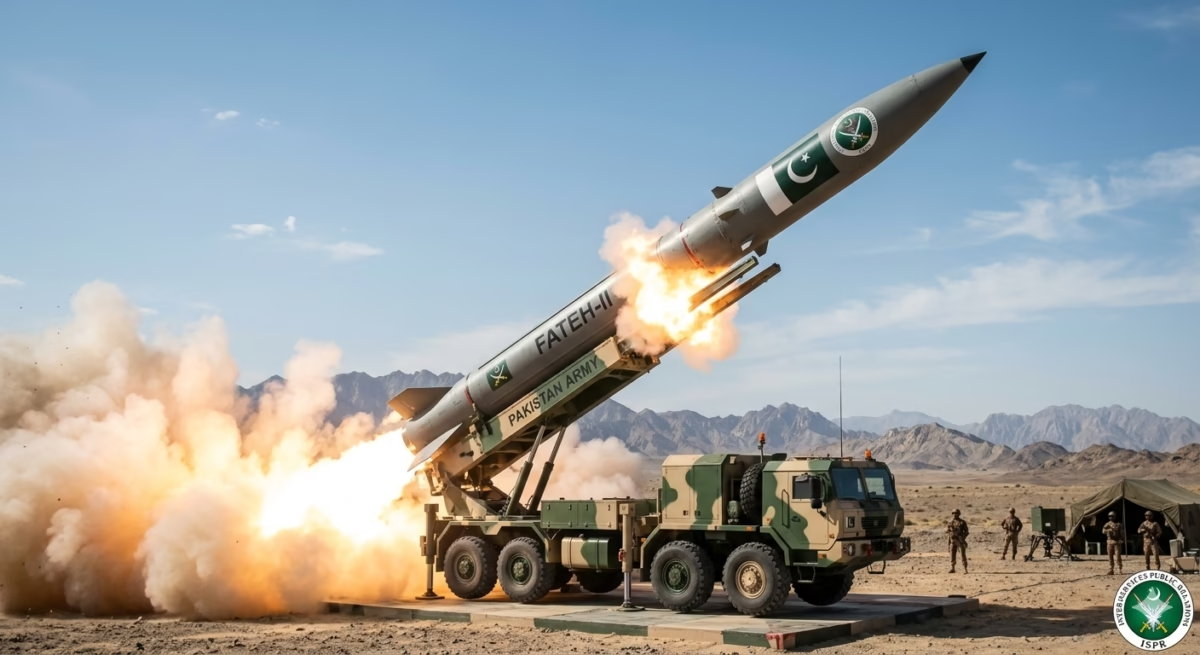
Pakistan Successfully Conducts Training Launch of Fateh-II Missile System: ISPR
In a significant move to bolster its conventional deterrent, Pakistan successfully conducted a training launch of the Fateh-II Guided Rocket System on Wednesday. According to the Inter-Services Public Relations (ISPR), the test was aimed at perfecting the operational procedures and technical parameters of the indigenously developed weapon system.
The flight test, witnessed by senior military officials and scientists, underscores Pakistan’s commitment to self-reliance in advanced military technology.
1. Precision Strikes at Long Range
The Fateh-II missile system is a state-of-the-art guided multi-launch rocket system (MLRS) designed to deliver precise strikes deep into enemy territory. Unlike traditional rockets, the Fateh-II is equipped with an advanced navigation system, allowing it to hit high-value targets with pinpoint accuracy. With a reported range of up to 400 kilometers, it provides the Pakistan Army with a formidable tool for “deep strike” operations.
2. ISPR Confirmation and Strategic Goals
According to a statement released by the ISPR, the training launch was part of the Army’s ongoing efforts to enhance its operational readiness. The ISPR noted that the rocket system is capable of engaging targets with high precision, bypassing modern air defense systems due to its unique flight trajectory and speed.
3. Indigenous Development and Technological Sophistication
One of the most notable aspects of the Fateh-II is that it is an indigenous project. Developed by Pakistani scientists and engineers, the system features a dual-guidance mechanism. This technological independence ensures that the military can maintain and upgrade the system without reliance on foreign suppliers, a key pillar of Pakistan’s defense strategy in 2026.
4. Operational Readiness of Artillery Divisions
The training launch was specifically designed to evaluate the proficiency of the Artillery corps. By conducting these tests under realistic field conditions, the Pakistan Army ensures that its troops are fully capable of deploying and firing the system during active conflict. This “training launch” phase is the final step before the system is fully integrated into the frontline combat units.
5. Deterrence in a Regional Context
Military analysts suggest that the Fateh-II serves as a conventional counter to regional security challenges. By bridge the gap between short-range artillery and long-range ballistic missiles, it allows for a flexible response. Its ability to carry various warheads makes it a versatile asset in maintaining the balance of power in South Asia.
6. Congratulations from National Leadership
Following the successful launch, the President, Prime Minister of Pakistan, and the Chairman Joint Chiefs of Staff Committee (CJCSC) extended their congratulations to the participating troops and scientists. They praised the technical excellence demonstrated during the flight and reaffirmed support for the modernization of the armed forces.
7. Technical Specifications: A Closer Look
While many details remain classified, the Fateh-II is known for its high maneuverability. It utilizes a combination of GPS and inertial navigation systems (INS). Its speed and low radar cross-section make it difficult for current interceptors to track, ensuring that the payload reaches its intended destination even in contested airspace.
8. Future of Pakistan’s Rocket Artillery
The success of the Fateh-II launch paves the way for further iterations in the “Fateh” series. As Pakistan continues to modernize its military hardware, the focus is shifting toward networked warfare, where systems like the Fateh-II can be linked with drones and satellite surveillance for real-time target acquisition.
Frequently Asked Questions (FAQs)
1. What is the range of the Fateh-II missile system?
The Fateh-II Guided Rocket System has a range of approximately 400 kilometers, allowing it to strike targets deep inside enemy territory with high precision.
2. Is Fateh-II a nuclear-capable missile?
No. The Fateh-II is primarily a conventional guided rocket system. It is designed for high-precision strikes on tactical and strategic targets using conventional warheads, rather than as part of the nuclear triad.
3. How does Fateh-II differ from Fateh-I?
While Fateh-I laid the groundwork for Pakistan’s guided artillery, Fateh-II offers a significantly longer range (doubling the previous reach) and features more advanced avionics and navigation systems for better accuracy.
4. Who developed the Fateh-II system?
The Fateh-II system is indigenously developed by Pakistani defense scientists and engineers, showcasing the country’s growing capability in defense manufacturing.
5. Why is this launch called a “training launch”?
A “training launch” is conducted to train the actual troops who will use the weapon in the field. It ensures that the soldiers are proficient in the handling, aiming, and firing procedures of the system.
Elevate Your Brand with MasterInDesign 🚀
Don’t let your business get left behind in today’s fast-paced digital world. At MasterInDesign, we specialize in helping brands stand out, engage audiences, and grow online.
Take the next step toward digital excellence. Contact us today and transform your brand into a powerful online