
Pakistan Conducts Successful Fateh-II Missile Training Launch
April 29, 2026
The U.S. Economy Was Shaky Before the Iran War. Now It’s in Real Trouble.
April 30, 2026
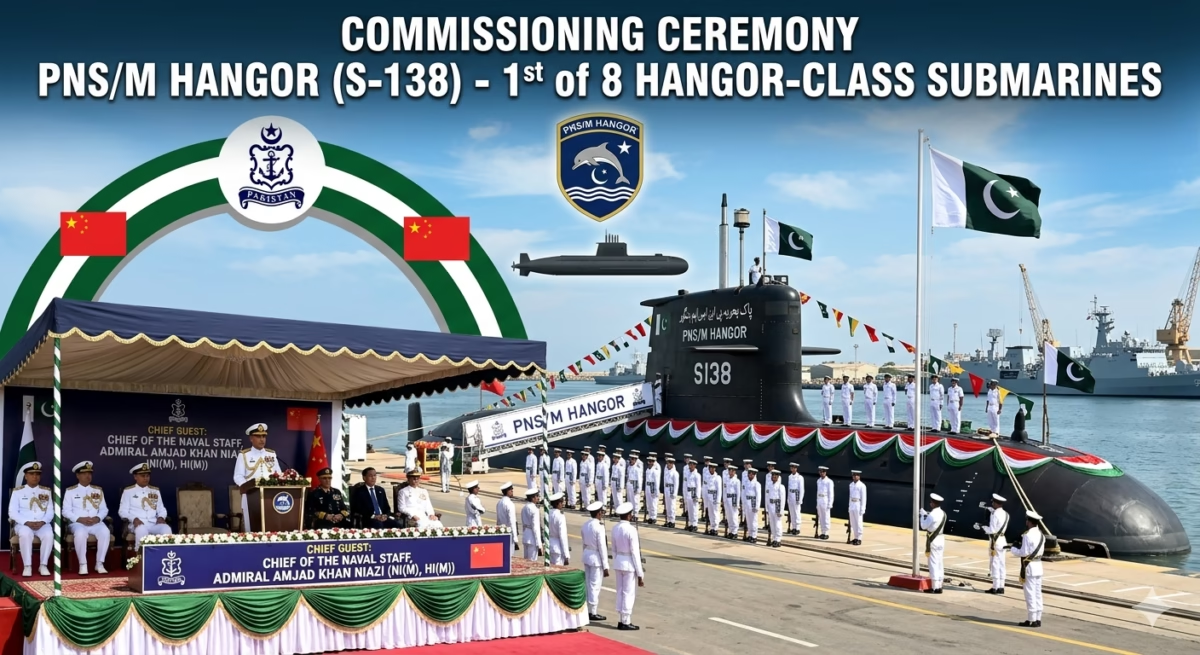
Pakistan Navy to Add Advanced Chinese Submarines: A New Era of Maritime Deterrence
The maritime landscape of the Indian Ocean is undergoing a tectonic shift. As of April 30, 2026, the Pakistan Navy has officially entered a new chapter of strategic depth and technological superiority. With the commissioning of the first Hangor-class vessel, the integration of Chinese submarines for Pakistan is no longer a future prospect—it is a present reality. This massive naval expansion program is designed to modernize the Pakistan Navy submarines fleet, ensuring that Islamabad can protect its interests in the Arabian Sea and beyond.
1. The Strategic Pivot: Why China?
For decades, Pakistan relied heavily on French-designed Agosta-class vessels. However, the shift toward Chinese technology represents a strategic pivot toward “All-Weather” defense cooperation. The Pakistan Navy new submarine program, valued at approximately $5 billion, is the most significant defense contract in the history of the two nations. China’s Type 039B Yuan-class, on which the Hangor-class is based, is renowned for its stealth and endurance, making it the perfect fit for Pakistan’s “Area Denial” strategy.
2. Technical Marvel: Inside the Hangor-Class
The advanced Chinese submarines being added to the fleet are a “goldmine” of modern naval engineering. These are not merely transport vessels; they are sophisticated underwater predators.
- Air-Independent Propulsion (AIP): Unlike standard diesel-electric subs that must surface frequently to recharge, these vessels use Stirling-cycle engines to stay submerged for weeks.
- Stealth Design: The hull is covered in rubber anechoic tiles that absorb sonar waves, making the sub nearly invisible to enemy detection.
- Vertical & Torpedo Launch: They are equipped to fire 533mm heavyweight torpedoes and the Babur-3 cruise missile, providing Pakistan with a “second-strike” nuclear capability from the sea.
3. The “Make in Pakistan” Initiative
A critical component of this deal is the transfer of technology (ToT). Out of the eight planned vessels:
- Four are built at the Wuchang Shipbuilding Group in China.
- Four are being constructed at the Karachi Shipyard & Engineering Works (KS&EW).This local production ensures that the Pakistan Navy can maintain, repair, and eventually evolve these platforms without external assistance, fostering a new generation of Pakistani naval engineers.
4. Operational Range and Endurance
In the vast expanse of the Indian Ocean, endurance is everything. The Hangor-class boasts an operational range that allows it to patrol far from its home ports in Karachi and Ormara. With a submerged endurance of over 20 days (thanks to AIP) and a total mission capacity of 65 days, these submarines can monitor vital Sea Lines of Communication (SLOCs) and protect trade routes associated with the China-Pakistan Economic Corridor (CPEC).
5. Shifting the Regional Balance
The introduction of these Pakistan Navy submarines significantly complicates the underwater battlespace for regional rivals. By doubling its modern submarine force, Pakistan creates a “silent threat” that forces adversaries to invest heavily in expensive Anti-Submarine Warfare (ASW) technology. This “asymmetric” advantage allows a smaller navy to check the ambitions of a much larger surface fleet.
6. Training and Human Capital
Modern submarines require modern sailors. The Pakistan Navy has established advanced training facilities to simulate the complex systems of the Hangor-class. From sonar operators to nuclear-certified technicians, the human element of the Pakistan Navy total submarines expansion is just as important as the steel and sensors.
7. The Role of PNS/M Hangor
The lead ship, PNS/M Hangor, carries a name of immense historical weight. It commemorates the original PNS Hangor which famously sank an enemy frigate in 1971. By reviving this name for the new advanced Chinese submarines, the Navy is signaling a return to a high-readiness, aggressive defense posture.
8. Looking Ahead: The 2030 Vision
By the time the final vessel is commissioned in 2028-2029, the how many submarines in Pakistan navy question will have a formidable answer: 11 to 13 modern, AIP-capable attack submarines. This force will be the backbone of Pakistan’s “Regional Maritime Security Coordinator” role, ensuring that the Arabian Sea remains a zone of stability rather than conflict.
Pakistan Navy Submarine Fleet Statistics (2026)
| Feature | Agosta 90B (Legacy) | Hangor-Class (New) |
| Origin | France | China / Pakistan |
| Length | 67 Meters | 76 Meters |
| Displacement | 2,050 Tons | 2,800 Tons |
| Max Depth | 320 Meters | 400+ Meters |
| Primary Weapon | SM39 Exocet | Babur-3 SLCM |
Frequently Asked Questions (FAQs)
1. How many submarines are in the Pakistan Navy as of 2026?
As of late April 2026, the Pakistan Navy operates an active fleet of 9 submarines, including the newly commissioned PNS/M Hangor and the modernized Agosta-class vessels. By 2028, this number will rise to 13 as more Chinese-designed subs are completed.
2. What makes the Chinese submarines “advanced” compared to older models?
The primary advancement is the Air-Independent Propulsion (AIP) system. Older diesel-electric subs need to snorkel (breathe air) every few days, making them vulnerable to radar. The new Chinese-built subs can stay hidden underwater for nearly three weeks at a time.
3. Can the new Pakistan Navy submarines carry nuclear weapons?
While primarily conventional, the Hangor-class is designed to be compatible with the Babur-3, which is a submarine-launched cruise missile (SLCM) capable of carrying various warheads. This provides Pakistan with a credible sea-based deterrent.
4. Are these submarines built entirely in China?
No. Under the “Transfer of Technology” agreement, four of the eight submarines are being built at the Karachi Shipyard in Pakistan. This helps Pakistan develop its own indigenous submarine construction industry.
5. Why is the Hangor-class important for the Indian Ocean?
The Indian Ocean is a global trade highway. These submarines allow the Pakistan Navy to protect its exclusive economic zone (EEZ) and ensure that trade routes remain open, while also serving as a deterrent against any naval blockades.
Elevate Your Brand with MasterInDesign
Don’t let your business get left behind in today’s fast-paced digital world. At MasterInDesign, we specialize in helping brands stand out, engage audiences, and grow online.
Take the next step toward digital excellence. Contact us today and transform your brand into a powerful online