
Global Stocks Dip as Iran Tensions Rise and Oil Prices Jump
June 3, 2026
Oil Rises, Stocks Slip on Fragile Middle East Peace Hopes | Market Update
June 4, 2026
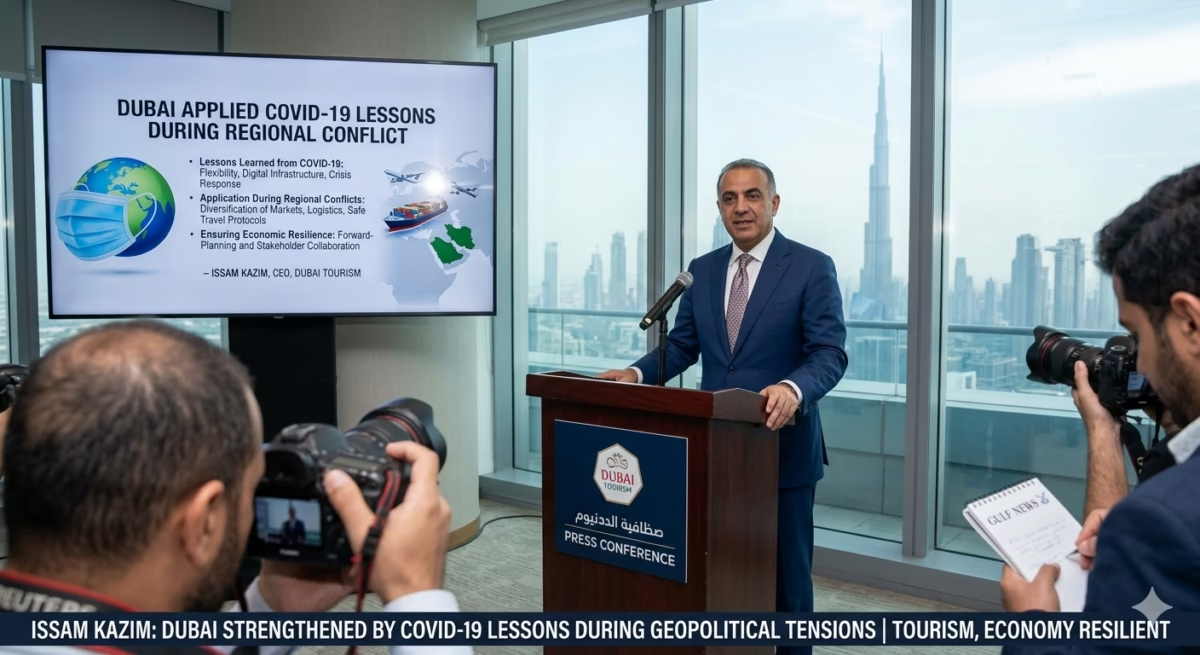
Dubai Applied COVID-19 Lessons During Regional Conflict, Says Issam Kazim
Introduction
Dubai has once again demonstrated its ability to adapt quickly during times of crisis by applying lessons learned from the COVID-19 pandemic to manage recent regional tensions. According to Issam Kazim, CEO of Dubai Corporation for Tourism and Commerce Marketing (DCTCM), the emirate used its pandemic-era experience to maintain stability, ensure continuity, and strengthen confidence across key sectors during the recent geopolitical conflict.
Kazim emphasized that Dubai’s response strategy was not improvised but built on years of structured crisis management, cross-sector coordination, and strong public-private collaboration.
COVID-19 Lessons Shaped Dubai’s Crisis Response
Dubai’s handling of the pandemic between 2020 and 2022 significantly reshaped its governance and emergency response systems. These lessons have now been reused during regional instability.
Key lessons applied include:
- Rapid communication across government and private sectors
- Transparent and real-time information sharing
- Coordinated decision-making between industries
- Strong leadership visibility during uncertainty
- Focus on continuity of essential services
According to Kazim, these principles ensured that Dubai did not experience operational disruption even during heightened regional tensions.
He stated that continuity was a top priority from the beginning of the crisis response.
Ensuring Continuity During Regional Conflict
During the recent US–Iran related regional tensions, Dubai activated its established crisis management framework. The primary objective was to maintain “business as usual” conditions across tourism, aviation, hospitality, and retail sectors.
Kazim explained that the city focused on:
- Maintaining airport and airline operations
- Ensuring hotels and tourism facilities remained functional
- Supporting retail and commercial activity
- Keeping public transport and services running
- Preventing panic through consistent messaging
This approach helped Dubai preserve its image as a stable global destination even during regional uncertainty.
Leadership Visibility and Public Confidence
A major element of Dubai’s strategy was the visible presence of leadership during the crisis period. According to Kazim, leadership visibility played a crucial role in building public confidence.
He highlighted that:
- Leaders were actively engaged across sectors
- Regular stakeholder meetings were conducted
- Concerns from industries were addressed immediately
- Communication loops were kept open at all levels
This direct engagement helped reduce uncertainty among businesses and international investors.
Kazim stressed that confidence is built not only through policy but through visible action and reassurance.
Communication as a Crisis Management Tool
One of the most important lessons from COVID-19 was the value of continuous communication. Dubai applied this principle during the regional conflict by maintaining constant updates across all sectors.
The communication strategy included:
- Real-time updates with industry stakeholders
- Direct engagement with tourism and aviation operators
- Rapid clarification of misinformation
- Coordination between government agencies and private companies
Kazim noted that during crises, misinformation can spread faster than facts, making communication discipline essential.
Dubai’s approach focused on ensuring that accurate information reached stakeholders faster than speculation.
Tourism Sector Stability During Uncertainty
Tourism is one of Dubai’s most important economic sectors, and maintaining its stability was a key priority during the regional tensions.
Despite uncertainty, the sector remained operational due to:
- Continued airline operations by Emirates and flydubai
- Open hotels and attractions
- Ongoing international visitor flow
- Strong coordination between tourism authorities and businesses
Kazim highlighted that tourism did not stop, but rather adapted to conditions in real time.
This resilience reinforced Dubai’s reputation as a global travel hub capable of operating under pressure.
Economic Support Measures and Government Response
To strengthen confidence, the Dubai government also introduced support measures for affected sectors. These included financial relief initiatives aimed at ensuring liquidity and stability in the hospitality and tourism industries.
Such measures helped:
- Support hotel operators during reduced demand periods
- Maintain workforce stability
- Encourage continued investment
- Reduce operational uncertainty
These interventions were designed to ensure that businesses could function smoothly even under external pressure.
Applying COVID-19 Agility to New Challenges
Kazim emphasized that Dubai’s ability to respond quickly did not develop overnight. It is the result of systems built during the COVID-19 pandemic.
During COVID-19, Dubai learned how to:
- Reopen sectors in phases
- Balance safety with economic activity
- Coordinate between health and economic authorities
- Adjust policies based on real-time data
These same principles were applied during the regional conflict, allowing the city to remain flexible and responsive.
Managing Global Perception and Real-Time Narrative
One of the biggest challenges Dubai faced was managing global perception during the crisis. While operations remained stable on the ground, external narratives sometimes lagged behind reality.
Kazim explained that perception management is now a key part of crisis response.
To address this, Dubai focused on:
- Real-time digital communication
- Official travel and aviation updates
- Transparent reporting from authorities
- Strong media engagement
The goal was to ensure that global audiences received accurate and timely information about conditions in the city.
Dubai’s Governance Model and Crisis Readiness
Dubai’s response reflects a broader governance model built around agility, coordination, and long-term planning. This system integrates government entities with private sector stakeholders to ensure rapid decision-making.
Key features include:
- Public-private partnerships
- Centralized coordination mechanisms
- Sector-specific crisis protocols
- Data-driven decision systems
This structure allows Dubai to respond faster than many global cities during emergencies.
Lessons for Future Global Crises
Experts suggest that Dubai’s approach offers a model for other global cities facing similar challenges. The combination of COVID-19 experience and regional conflict response demonstrates the importance of adaptive governance.
Key takeaways include:
- Crisis preparedness must be continuous, not reactive
- Communication is as important as operational response
- Leadership visibility strengthens public trust
- Economic resilience depends on sector coordination
Dubai’s experience shows how past crises can strengthen future readiness.
Conclusion
Dubai’s use of COVID-19 lessons during recent regional conflict highlights the emirate’s evolving crisis management strategy. Under the leadership of officials like Issam Kazim, the city has built a system that prioritizes continuity, communication, and confidence even in uncertain times.
While geopolitical tensions continue to shape the region, Dubai’s ability to maintain stability across tourism, aviation, and business sectors reinforces its position as a resilient global hub.
The key message from Kazim is clear: crisis preparedness is not about reacting—it is about being ready long before the crisis begins.
FAQs
1. What did Issam Kazim say about Dubai’s crisis response?
He said Dubai applied lessons from COVID-19 to manage recent regional conflict and ensure continuity across sectors.
2. Which sectors were prioritized during the conflict?
Tourism, aviation, hospitality, retail, and public services were key focus areas.
3. How did COVID-19 help Dubai prepare for new crises?
It taught Dubai how to coordinate across sectors, communicate effectively, and maintain economic continuity during disruption.
4. Was Dubai’s tourism affected during the conflict?
The sector remained operational with minimal disruption due to strong coordination and communication.
5. What role did leadership play in crisis management?
Leadership visibility helped build confidence among businesses, investors, and the public.