
Apple Launches Official Store on Daraz Pakistan iPhone Deals
June 2, 2026
Dubai Applied COVID-19 Lessons During Regional Conflict, Says Issam Kazim
June 3, 2026
Stocks Dip on New Iran Attacks as Oil Prices Rise Amid Global Market Jitters
Introduction
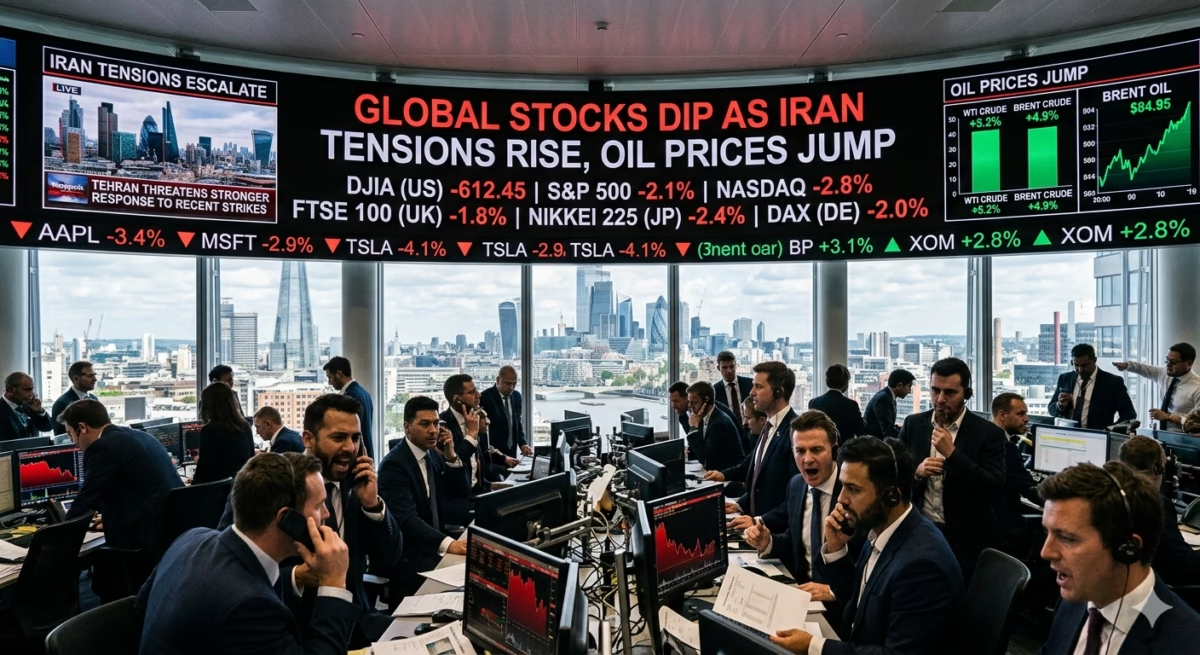
Global financial markets turned volatile as renewed geopolitical tensions in the Middle East triggered a fresh wave of uncertainty across equities, currencies, and commodities. Stocks dipped in major regions while oil prices climbed following reports of new attacks linked to Iran and escalating regional instability.
Investors reacted quickly to the renewed conflict, shifting toward safer assets and energy commodities as fears of supply disruption through key oil routes resurfaced. The situation highlights once again how geopolitical shocks in the Middle East continue to heavily influence global financial stability.
Global Markets React to Rising Middle East Tensions
Stock markets across the world experienced mild but noticeable declines as investors assessed the implications of renewed conflict involving Iran and neighboring regions.
Key movements included:
- European stock indexes slipping in early trade
- U.S. stock futures showing slight declines
- Asian markets showing mixed performance depending on sector exposure
- Increased volatility in energy-sensitive equities
The primary driver behind the shift was renewed military escalation, which raised concerns about oil supply disruptions and broader regional instability.
Investors tend to reduce risk exposure during such events, leading to short-term declines in equity markets.
Oil Prices Rise as Supply Risk Premium Returns
Oil markets reacted sharply to the geopolitical developments, with crude prices rising for a third consecutive session. Traders priced in a higher risk premium due to fears that escalating conflict could disrupt supply routes, particularly through the Strait of Hormuz, one of the world’s most critical oil chokepoints.
Brent crude and WTI futures both moved higher, supported by:
- Supply disruption fears in the Gulf region
- Rising geopolitical risk premium
- Continued drawdown in U.S. crude inventories
- Expectations of strong summer fuel demand
Even small disruptions in this region can significantly impact global oil pricing due to its strategic importance.
Why Iran Tensions Matter for Global Markets
Iran’s geopolitical role in global energy markets makes it a key factor in investor sentiment. Any escalation involving Iran tends to trigger immediate reactions in both oil and equity markets.
Key reasons include:
1. Strait of Hormuz Risk
Nearly a fifth of global oil supply passes through this narrow maritime route. Any threat of closure or disruption immediately pushes oil prices higher.
2. Global Inflation Concerns
Higher oil prices increase transportation and production costs worldwide, raising inflationary pressures.
3. Economic Growth Impact
Rising energy costs reduce consumer spending power and corporate profit margins.
4. Risk-Off Investor Behavior
Investors typically move funds from equities into safer assets such as bonds, gold, or cash during geopolitical shocks.
Stock Markets Show Mixed Performance
While most global indices dipped slightly, the overall reaction was relatively controlled compared to historical crises. This suggests that markets are still balancing geopolitical fears with broader macroeconomic trends.
Some key observations:
- U.S. futures declined modestly
- European markets fell slightly
- Certain Asian tech markets remained resilient
- Energy stocks outperformed broader indexes
Interestingly, artificial intelligence and technology-related sectors continued to attract investor interest, partially offsetting losses caused by geopolitical fears.
This divergence shows that markets are increasingly driven by sector-specific narratives even during global shocks.
Oil and Inflation: A Critical Relationship
Rising oil prices have a direct impact on inflation, which remains a major concern for central banks globally.
When oil prices increase:
- Transport costs rise
- Manufacturing becomes more expensive
- Food prices may increase due to logistics costs
- Consumer inflation accelerates
Central banks often respond by maintaining higher interest rates for longer periods, which can further pressure equity markets.
This creates a feedback loop where geopolitical tensions indirectly influence monetary policy.
Market Analysts Warn of Volatility Ahead
Financial analysts have warned that markets may remain volatile as long as geopolitical tensions persist. Even without major escalation, uncertainty alone is enough to keep risk premiums elevated in energy markets.
Experts suggest:
- Oil markets will remain sensitive to headlines
- Equity markets may experience short-term swings
- Currency markets may see safe-haven flows
- Bond yields could fluctuate depending on inflation expectations
The overall outlook remains highly dependent on developments in the Middle East situation.
The Role of Global Oil Supply Dynamics
Beyond geopolitical tensions, oil prices are also influenced by underlying supply and demand fundamentals.
Recent factors include:
- Declining crude inventories in the United States
- Strong seasonal demand expectations
- OPEC+ production decisions
- Global economic resilience despite higher rates
These fundamentals combined with geopolitical risk create a complex pricing environment.
Even small disruptions can lead to sharp price movements due to tight supply conditions.
Investor Sentiment and Risk Appetite
Investor sentiment has become increasingly sensitive to geopolitical headlines. In today’s fast-moving information environment, markets react almost instantly to breaking news.
Key sentiment trends include:
- Increased short-term trading volatility
- Defensive positioning in portfolios
- Higher demand for safe-haven assets
- Reduced appetite for emerging market risk
Despite this, long-term investors often view such dips as temporary unless conflict significantly escalates.
Energy Sector Gains Amid Market Uncertainty
While broader equities dipped, energy stocks generally benefited from rising oil prices. Companies involved in exploration, production, and oil services often see higher profits when crude prices rise.
This creates a divergence:
- Energy sector: gains due to higher oil prices
- Consumer sectors: pressure from rising costs
- Transportation: negatively impacted
- Technology: relatively stable depending on earnings
This sector rotation is a typical response to oil-driven geopolitical shocks.
Historical Context: Markets and Middle East Conflicts
Historically, Middle East conflicts have repeatedly caused short-term spikes in oil prices and temporary equity market declines.
Common patterns include:
- Initial sharp oil price surge
- Stock market volatility and selloffs
- Gradual stabilization if supply remains uninterrupted
- Long-term normalization of markets
Unless conflicts escalate into prolonged disruptions, markets often recover after initial panic subsides.
Global Economic Risk Scenarios
Economists warn that prolonged conflict could have broader consequences for the global economy, including:
- Slower GDP growth
- Higher inflation across major economies
- Supply chain disruptions
- Increased borrowing costs
However, if tensions de-escalate quickly, the economic impact may remain limited to short-term volatility.
Conclusion
The latest dip in global stock markets combined with rising oil prices highlights the continued sensitivity of financial systems to geopolitical risk, especially in the Middle East.
While the immediate reaction has been moderate, the underlying uncertainty remains significant. Oil markets are particularly vulnerable due to supply route risks, and equity markets are likely to remain volatile in the short term.
For now, investors are closely watching developments in Iran-related tensions, energy supply stability, and central bank responses to potential inflationary pressure.
The situation reinforces a familiar pattern: in global markets, geopolitical shocks in energy-rich regions continue to shape investor behavior across the world.
FAQs
1. Why did stocks fall in global markets?
Stocks dipped due to renewed geopolitical tensions involving Iran, which increased uncertainty and risk aversion among investors.
2. Why are oil prices rising?
Oil prices rose because traders are pricing in potential supply disruptions and geopolitical risk in the Middle East.
3. How does Iran affect global oil markets?
Iran’s strategic location near the Strait of Hormuz makes it a key factor in global oil supply stability.
4. Are higher oil prices bad for the economy?
Yes, higher oil prices can increase inflation and reduce consumer spending power, slowing economic growth.
5. Which sectors are most affected?
Energy prices mainly impact transportation, manufacturing, and consumer goods sectors, while energy companies may benefit.