
Oil Little Changed on Uncertainty Over U.S.-Iran Peace Deal as Markets Watch Supply Risks
June 5, 2026
Alleged iPhone 18 Pro Max’s Aluminium Frames Reveal Three Possible Colour Options
June 8, 2026
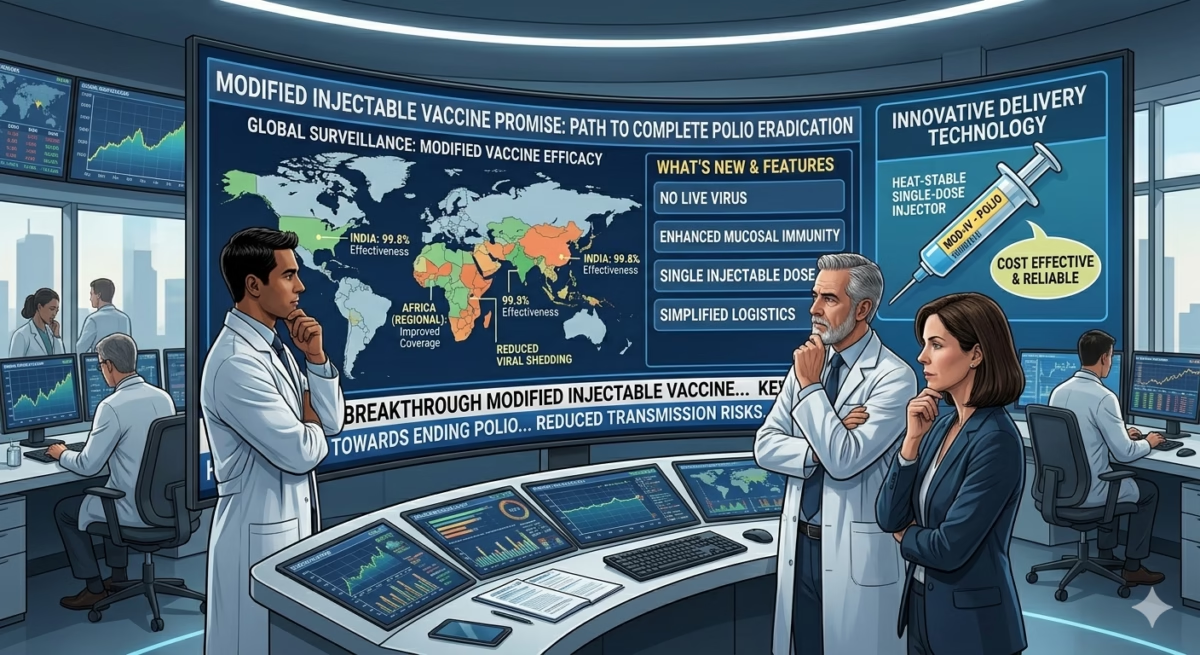
Modified Injectable Vaccine Shows Promise for Complete Polio Eradication
A promising new development in the fight against polio could bring the world one step closer to achieving complete eradication of the disease. Researchers have reported encouraging results from a modified injectable polio vaccine that appears capable of providing stronger immunity while reducing risks associated with traditional vaccination approaches.
The breakthrough comes as global health organizations continue working to eliminate the final remaining cases of polio worldwide. Although tremendous progress has been made over the past several decades, health experts say innovative vaccine strategies are still needed to achieve lasting eradication.
Why Polio Eradication Remains a Global Priority
Polio is a highly infectious viral disease that primarily affects children under the age of five. The virus can attack the nervous system and, in severe cases, lead to permanent paralysis or death.
Thanks to worldwide vaccination campaigns, polio cases have declined by more than 99% since the late 1980s. However, outbreaks still occur in certain regions, making complete eradication one of the most important goals in global public health.
Experts believe that eliminating the disease entirely would prevent future outbreaks and save millions of children from potential disability.
What Is the Modified Injectable Polio Vaccine?
The new vaccine is an improved version of the injectable inactivated polio vaccine (IPV), which uses killed virus particles to stimulate immunity without causing infection.
Researchers modified the vaccine formulation to enhance the body’s immune response, particularly in the intestines where poliovirus typically replicates and spreads.
Traditional injectable vaccines provide strong protection against paralysis but may not always generate sufficient intestinal immunity to completely stop transmission. The modified version aims to address this challenge.
How the New Vaccine Works
Scientists designed the vaccine to stimulate both systemic and mucosal immunity.
Systemic immunity protects individuals from developing severe disease and paralysis. Mucosal immunity helps prevent the virus from multiplying and spreading within communities.
By strengthening both forms of protection, researchers believe the vaccine could significantly reduce the likelihood of poliovirus circulation in populations.
This dual protection is considered critical for achieving complete eradication.
Study Results Show Encouraging Outcomes
Early research findings indicate that the modified injectable vaccine generated stronger immune responses compared with standard formulations.
Participants who received the vaccine demonstrated increased antibody production and enhanced protection against multiple poliovirus strains.
Researchers also observed improved intestinal immunity, which may help interrupt virus transmission more effectively than existing injectable vaccines alone.
These findings suggest the vaccine could become an important tool in the final stages of global eradication efforts.
Why Existing Polio Vaccines Need Improvement
Current polio vaccination programs rely on two main approaches:
Oral Polio Vaccine (OPV)
The oral vaccine is easy to administer and provides strong intestinal immunity. However, in rare situations, weakened vaccine viruses can mutate and contribute to vaccine-derived outbreaks.
Inactivated Polio Vaccine (IPV)
The injectable IPV is extremely safe and cannot cause vaccine-derived polio because it contains inactivated virus. However, it generally produces lower levels of intestinal immunity than oral vaccines.
The modified injectable vaccine seeks to combine the strengths of both approaches while minimizing their limitations.
Potential Impact on Global Vaccination Programs
If larger studies confirm the initial findings, the modified vaccine could influence immunization programs worldwide.
Health authorities may eventually consider integrating improved injectable vaccines into existing childhood immunization schedules.
Such changes could strengthen routine vaccination efforts while reducing dependence on oral vaccines in regions approaching eradication.
The development could also support long-term prevention strategies after wild poliovirus transmission has been eliminated.
Modified EPI Schedule and Future Vaccine Updates
Many countries use the Expanded Programme on Immunization (EPI) to guide childhood vaccination schedules.
As scientific evidence evolves, public health agencies periodically review vaccine recommendations and update immunization schedules when new technologies demonstrate clear benefits.
Although the modified injectable polio vaccine is still under evaluation, experts say successful clinical results could eventually influence future EPI recommendations.
Any decisions regarding modified EPI schedules or newly added vaccines would require extensive regulatory review and approval from national and international health authorities.
New Vaccines Added to EPI: Why It Matters
Public health programs regularly assess emerging vaccines that can improve disease prevention.
When a new vaccine is added to EPI schedules, it typically undergoes years of safety monitoring, effectiveness studies, and policy review.
Adding improved vaccines can:
- Increase protection against infectious diseases
- Reduce disease transmission
- Improve community immunity
- Prevent outbreaks
- Strengthen child health outcomes
The modified polio vaccine may eventually become part of these discussions if future research continues to show positive results.
Challenges Before Widespread Adoption
Despite encouraging findings, several steps remain before the vaccine can be introduced globally.
Researchers must complete larger clinical trials to confirm safety and effectiveness across diverse populations.
Manufacturing capacity, regulatory approvals, cost considerations, and implementation logistics will also play important roles in determining how quickly the vaccine could become available.
Health experts stress that current approved polio vaccines remain highly effective and should continue to be used according to existing immunization guidelines.
The Future of Polio Eradication
Global health organizations have spent decades pursuing the goal of a polio-free world.
The introduction of a more effective injectable vaccine could help overcome some of the remaining challenges that have slowed progress in certain regions.
By providing stronger immunity and reducing virus transmission, the modified vaccine may offer a valuable new tool for public health officials working toward complete eradication.
While additional research is still needed, the latest findings have generated optimism that the world may be closer than ever to ending polio permanently.
Conclusion
The modified injectable polio vaccine represents a potentially significant advancement in global eradication efforts.
Early studies suggest it can provide stronger immune protection while helping reduce virus transmission, addressing key limitations of current vaccination strategies.
Although further testing and regulatory review are required, researchers believe the vaccine could eventually play an important role in eliminating one of humanity’s most persistent infectious diseases.
As scientists continue refining vaccination technologies, the dream of complete polio eradication appears increasingly achievable.
FAQs
What is the modified injectable polio vaccine?
It is an enhanced version of the inactivated polio vaccine designed to provide stronger immunity and better protection against virus transmission.
How is it different from current polio vaccines?
The modified vaccine aims to improve intestinal immunity while maintaining the safety benefits of traditional injectable vaccines.
Can the new vaccine help eradicate polio?
Researchers believe it may significantly improve efforts to stop virus transmission, making complete eradication more achievable.
Is the vaccine currently available?
The vaccine remains under research and evaluation and has not yet been widely introduced into public immunization programs.
What is the EPI schedule?
The Expanded Programme on Immunization (EPI) is a public health framework used by many countries to organize routine childhood vaccinations.
Will this vaccine be added to EPI programs?
It is too early to know. Future inclusion would depend on clinical trial results, regulatory approvals, and policy decisions.
Why is polio eradication important?
Eliminating polio would prevent future infections, paralysis cases, and outbreaks, protecting generations of children worldwide.
Are current polio vaccines still effective?
Yes. Existing polio vaccines remain highly effective and continue to provide strong protection against the disease.