
I Updated to One UI 8.5 and Changed These 5 Settings
June 15, 2026
11.5pc Policy Rate Hard to Justify With Expected 8pc Inflation
June 16, 2026
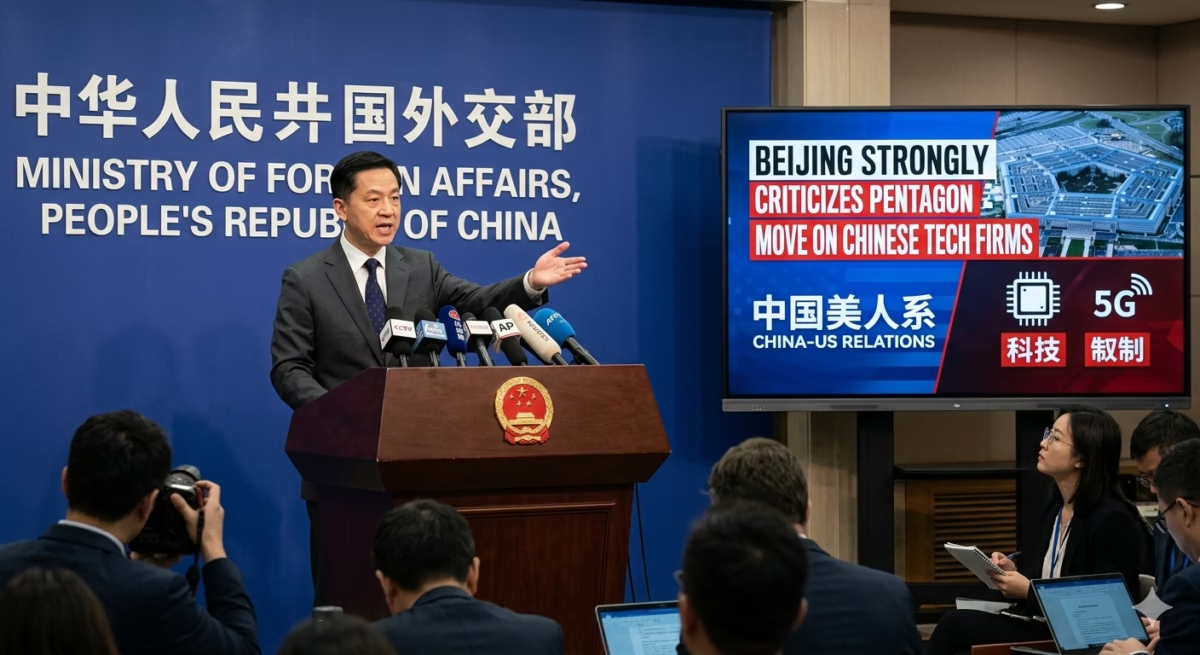
Beijing Says It’s ‘Strongly Dissatisfied’ With Pentagon Move Against Top Chinese Tech Firms
China has expressed strong dissatisfaction after the United States Department of Defense expanded its list of Chinese companies allegedly linked to the country’s military sector. The decision has triggered renewed tensions between the two largest economies, particularly in the technology and defense industries.
According to official statements reported by Chinese ministries, Beijing strongly opposes the move and views it as damaging to recent diplomatic efforts aimed at stabilizing relations between Washington and Beijing. The development comes at a time when both countries have been attempting to manage trade and security disputes through high-level dialogue.
What the Pentagon Decision Involves
The Pentagon recently updated its “Chinese military companies” list, adding several major firms from China’s technology, automotive, semiconductor, and renewable energy sectors. These companies include some of the country’s largest and most globally recognized brands.
The designation does not immediately impose full sanctions, but it does restrict the U.S. Department of Defense from entering contracts with these firms. Over time, it can also limit access to American suppliers, investors, and defense-related partnerships.
China’s Response to the Decision
Beijing responded sharply, calling the move politically motivated and economically damaging. Chinese officials stated that the decision undermines mutual agreements reached during recent diplomatic talks between the two countries.
China also warned that if Chinese companies continue to be targeted, it may respond with countermeasures. The government has urged the United States to withdraw the listing and return to what it describes as “constructive” engagement in bilateral relations.
Rising US–China Tech Tensions
The latest development is part of a broader pattern of escalating competition between the United States and China in technology and industrial sectors. In recent years, Washington has increased scrutiny of Chinese companies involved in artificial intelligence, telecommunications, electric vehicles, and semiconductors.
These actions reflect growing concerns in the United States that some Chinese firms could contribute to military modernization efforts or pose national security risks.
Impact on Global Markets
The inclusion of major Chinese companies on the Pentagon list can have wider implications beyond bilateral relations. Investors often react to such developments by reassessing risk exposure in Chinese equities and technology sectors.
While the listing does not equate to full economic sanctions, it can still affect investor sentiment, supply chain confidence, and long-term business partnerships between U.S. and Chinese firms.
Conclusion
Beijing’s strong criticism of the Pentagon’s latest move highlights ongoing tensions between the two global powers. As both countries continue to compete in strategic sectors like artificial intelligence and advanced manufacturing, similar disputes are expected to remain a key feature of U.S.–China relations.
FAQs
Why is China dissatisfied with the Pentagon decision?
China says the move unfairly targets its companies and undermines recent diplomatic agreements.
Which companies were added to the list?
Major Chinese firms across tech, EV, semiconductor, and energy sectors were included, such as large state-linked and private enterprises.
Does this mean sanctions are in place?
Not immediately. The listing restricts U.S. defense contracts but is not a full sanctions package.
How does this affect US–China relations?
It increases tensions and complicates ongoing efforts to stabilize trade and diplomatic relations.
Why does the US target Chinese tech companies?
The US cites national security concerns and possible links between civilian tech and military development.
What could happen next?
China may respond with diplomatic or economic countermeasures if restrictions continue to expand.