Beijing Strongly Criticizes Pentagon Move on Chinese Tech Firms
June 15, 2026
With New Paris Office, UAE’s EDGE Group Sees Europe as ‘Next Large Market’: CEO
June 16, 2026
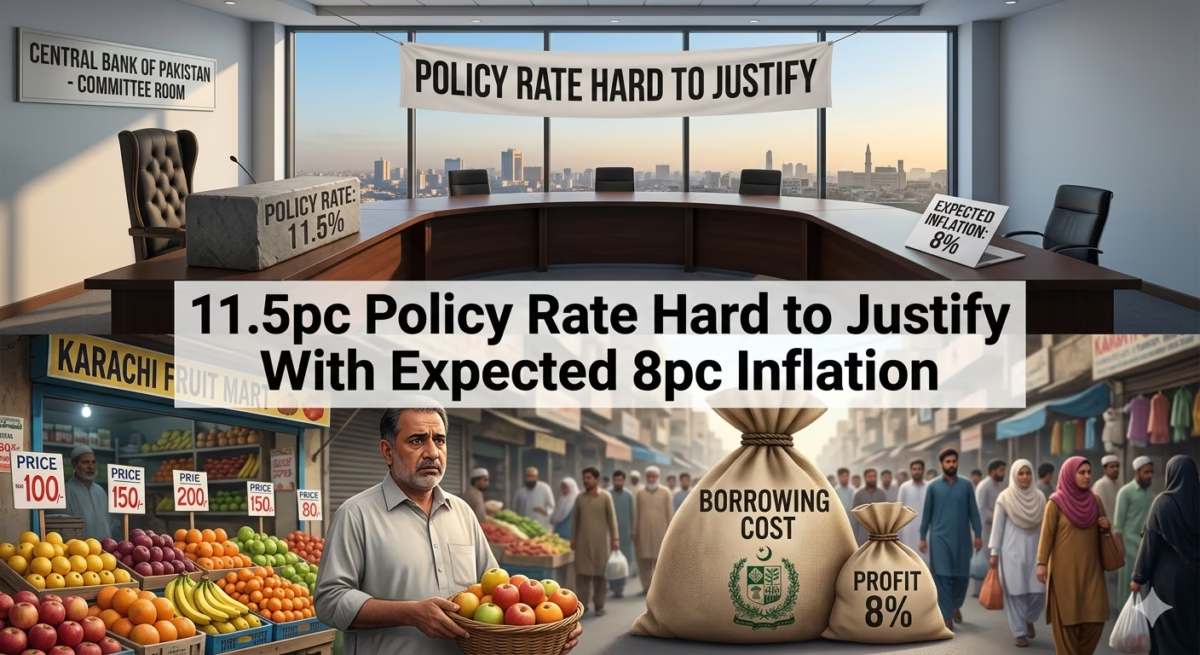
11.5pc Policy Rate Hard to Justify With Expected 8pc Inflation
Pakistan’s monetary policy debate has intensified as economists question whether an 11.5% policy rate remains justified in an environment where inflation is expected to settle near 8%. The discussion reflects growing concerns about the balance between controlling inflation and supporting economic growth.
According to recent economic analysis, maintaining a relatively high policy rate may continue to suppress business activity, increase borrowing costs, and slow down investment. At the same time, policymakers argue that interest rates must remain tight enough to ensure long-term price stability and prevent inflationary pressures from resurfacing. (brecorder.com)
Why the 11.5% Policy Rate Is Being Debated
The main argument against the current policy rate is the gap between interest rates and expected inflation.
When inflation is projected around 8%, a policy rate of 11.5% implies a real interest rate of more than 3%. Critics argue this level may be too restrictive for an economy still recovering from fiscal and external challenges.
Key concerns include:
- High borrowing costs for businesses
- Reduced private sector investment
- Slow credit expansion
- Pressure on small and medium enterprises
- Higher cost of government debt servicing
Supporters of tighter monetary policy, however, believe that premature rate cuts could trigger another inflationary cycle.
Inflation Expectations and Monetary Policy
Inflation expectations play a critical role in central bank decisions. Even if current inflation appears moderate, policymakers focus on future risks such as energy prices, currency stability, and fiscal pressures.
An 8% inflation expectation suggests relative stabilization compared to previous spikes, but it still remains above many long-term target ranges. This makes the policy decision more complex.
The central bank’s objective is not only to control current inflation but also to anchor expectations for the future.
Impact on Pakistan’s Economy
High policy rates directly affect multiple sectors of the economy:
Business and Industry
Higher financing costs make expansion more difficult for companies, especially SMEs that rely on bank loans.
Housing and Construction
Mortgage rates and construction financing remain expensive, slowing real estate activity.
Consumer Spending
Higher interest rates reduce disposable income and discourage consumer borrowing.
Government Debt
The cost of servicing domestic debt increases significantly when policy rates remain elevated.
Salary Increase in Budget 2026-27 Pakistan
One of the most searched concerns is related to salary increase in budget 2026-27 Pakistan. Public sector employees often expect adjustments in salaries to match inflation and rising living costs.
Historically, salary revisions in Pakistan’s federal budget depend on:
- Inflation rate
- Fiscal space
- IMF conditions
- Revenue collection performance
- Government policy priorities
While official announcements are usually made at the time of budget presentation, salary increases are generally linked to inflation trends and economic stability.
Pension Increase in Budget 2026-27 Pakistan
Pension adjustments are another major component of budget discussions. Retired government employees often depend on fixed income, making inflation protection critical.
Possible pension revisions typically consider:
- Cost of living adjustments
- Fiscal constraints
- Long-term pension liabilities
- Government revenue performance
Any increase in pensions usually aligns with broader salary revisions and inflation management strategies.
Budget 2026-27 Pakistan Salary Tax
Tax policy is another major area of interest in budget discussions. Salary tax structures may be adjusted to:
- Broaden the tax base
- Increase revenue collection
- Provide relief to lower-income brackets
- Align with IMF fiscal targets
Changes in income tax slabs and withholding taxes are often key highlights of annual budgets.
Budget 2026 Live Updates
During the budget presentation, “budget 2026 live” updates become a major search trend as citizens follow real-time announcements regarding:
- Salaries and pensions
- Tax reforms
- Development spending
- Subsidies
- Economic growth targets
Media coverage and government portals typically provide live updates during the official budget speech.
Budget 2026-27 Pakistan Timing
The federal budget in Pakistan is usually presented in June each year. The exact timing is announced by the Ministry of Finance and broadcast live across national media channels.
Parliament then debates and approves the budget in the following weeks.
Darson Account Login
Some users also search for financial platform access such as “darson account login.” While unrelated to macroeconomic policy, such searches typically relate to online financial dashboards or account management systems. Users should always ensure they are using official platforms and secure login pages to protect personal financial data.
Economic Outlook and Policy Balance
The central challenge for policymakers is balancing inflation control with economic growth. High interest rates help stabilize prices but can slow down economic activity. Lower rates support growth but may risk inflation resurgence.
Pakistan’s economy remains in a sensitive phase where external debt, currency stability, and IMF conditions all influence monetary decisions.
Conclusion
The debate over whether an 11.5% policy rate is justified in the context of expected 8% inflation highlights the ongoing tension between growth and stability in Pakistan’s economy. While high interest rates help control inflation and maintain macroeconomic discipline, they also place pressure on businesses, consumers, and government finances.
At the same time, expectations around salary increases, pension adjustments, and tax reforms in Budget 2026-27 remain central to public interest. The upcoming budget will play a key role in shaping economic direction, fiscal policy, and public welfare priorities.
Ultimately, policymakers must carefully balance inflation control with sustainable economic growth to ensure long-term stability.
FAQs
What does 11.5% policy rate mean?
It is the interest rate set by the central bank that influences borrowing costs across the economy.
Why is the policy rate being criticized?
Because it is considered high compared to expected inflation of around 8%, making borrowing expensive.
Will salaries increase in Budget 2026-27 Pakistan?
Salary increases depend on inflation, fiscal space, and government policy decisions announced at budget time.
Will pensions increase in Budget 2026-27 Pakistan?
Pension increases are usually announced alongside salary revisions based on inflation adjustments.
What is Budget 2026 live coverage?
It refers to real-time updates during the federal budget announcement.
When is Budget 2026-27 Pakistan announced?
It is typically announced in June each year by the federal government.
What is salary tax in Budget 2026-27 Pakistan?
It refers to income tax slabs and deductions applied to salaried individuals.
What is the impact of high policy rates?
They increase borrowing costs, reduce investment, and slow economic activity.
What is expected inflation in this context?
It refers to the projected inflation rate, estimated around 8% in this discussion.
What is Darson account login?
It refers to accessing an online financial account platform, requiring secure login credentials.