

Oil Prices Rise as US-Iran Strikes Threaten Peace Deal
June 1, 2026
Apple Launches Official Store on Daraz Pakistan iPhone Deals
June 2, 2026
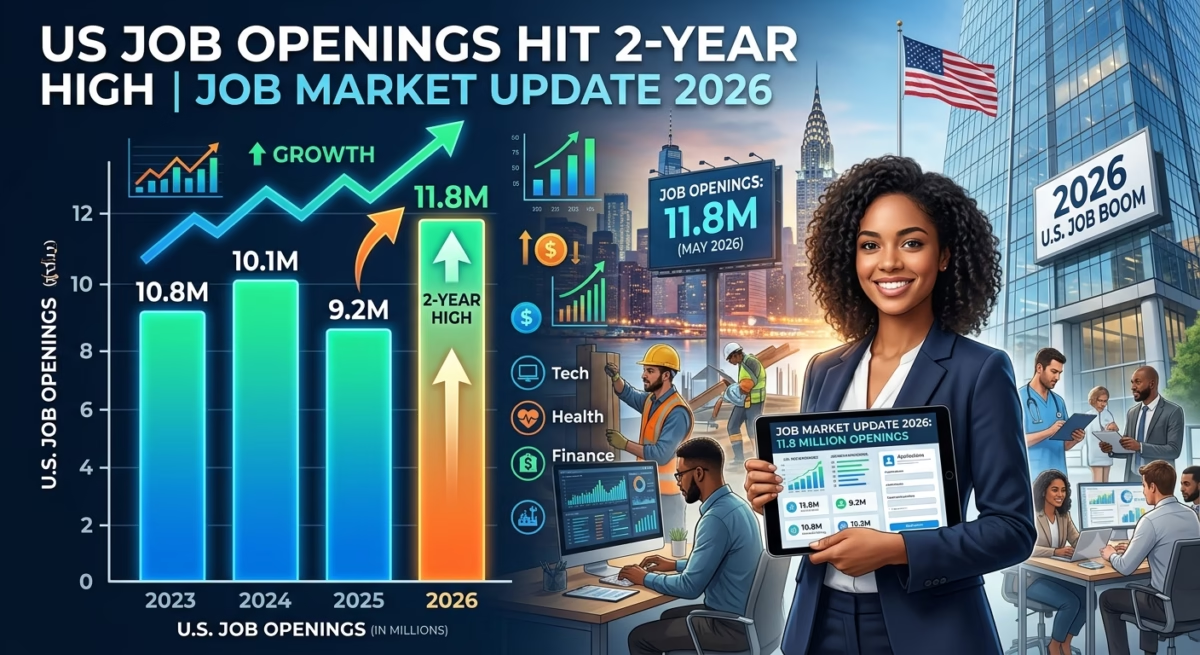
US Job Openings Hit Highest Level in Nearly Two Years Amid Mixed Labor Market Signals
US job openings have surged to their highest level in nearly two years, according to the latest JOLTS (Job Openings and Labor Turnover Survey) data. The increase signals strong employer demand for workers, even as hiring patterns and entry-level opportunities show signs of weakness.
In April 2026, job openings rose sharply to about 7.6 million, the highest level since 2024. At the same time, hiring actually declined, creating a mixed picture of the labor market where demand exists but job movement remains cautious.
Job Openings Surge but Hiring Slows
The latest labor data shows a surprising imbalance:
- Job openings increased significantly
- Hiring fell compared to the previous month
- Layoffs remained relatively low
- Quits rate also declined slightly
This means companies are still posting jobs, but fewer positions are being filled quickly. Economists describe this as a “frozen but stable” labor market where employers hesitate to hire aggressively despite available openings.
Why Are Job Openings High but Hiring Weak?
There are several reasons behind this unusual pattern:
- Companies are being cautious due to economic uncertainty
- Higher interest rates are slowing expansion plans
- Businesses are focusing on efficiency rather than hiring
- Some roles remain open but are not urgently filled
- AI and automation are reshaping workforce needs
This creates a gap between job postings and actual employment growth.
Why Is the Entry-Level Job Market So Bad?
One of the most discussed concerns is the difficulty faced by new graduates entering the workforce.
Entry-level hiring is weaker due to:
- Companies preferring experienced candidates
- Cost-cutting and reduced training budgets
- AI tools replacing basic entry-level tasks
- Fewer junior roles in tech and corporate sectors
- Higher competition among applicants
As a result, many new graduates are struggling to secure their first job despite overall job openings being high.
Impact on New Graduates
Many analysts note that recent graduates are entering one of the toughest entry-level job markets in years.
Key challenges include:
- Increased rejection rates for junior positions
- Preference for “ready-to-work” employees
- Internships replacing full-time entry roles
- Slow hiring in white-collar industries
This trend is especially visible in technology, finance, and professional services sectors.
JOLTS Report and What It Means
The JOLTS report measures:
- Job openings
- Hiring levels
- Layoffs
- Quits rate
It is one of the most closely watched indicators of US labor market health. Despite high job openings, the report shows that labor demand is not translating into strong hiring momentum.
Effect on USD and Financial Markets
Strong job openings data can influence financial markets in several ways:
- Supports the US dollar in the short term
- Signals economic resilience
- May affect Federal Reserve interest rate decisions
- Impacts bond yields and equity markets
However, weak hiring can offset optimism, creating mixed reactions in markets.
Effect on Gold Prices
Gold typically reacts to labor market data through expectations about interest rates:
- Strong job data → stronger USD → pressure on gold
- Weak hiring → uncertainty → support for gold
- Mixed signals → volatility in gold prices
Investors closely monitor JOLTS data to predict Federal Reserve policy direction, which directly affects gold demand.
Is This the Worst Job Market for Entry-Level Workers?
While overall unemployment remains relatively stable, entry-level workers face unique challenges. Many analysts say it is not the worst overall job market, but it is one of the most difficult for newcomers due to structural changes in hiring.
Key Takeaways
- Job openings are at a near two-year high
- Hiring is slowing despite strong demand
- Entry-level job seekers are facing more competition
- AI and cost-cutting are reshaping hiring patterns
- Markets react strongly to labor data signals
Conclusion
The US labor market is sending mixed signals: strong job availability on one hand, but cautious hiring on the other. While overall conditions remain stable, new graduates and entry-level workers are feeling the pressure the most.
This imbalance between job openings and actual hiring may continue as companies adjust to economic uncertainty and technological changes like automation and AI.
FAQs
Why are US job openings so high?
Because companies are still posting roles, but not all positions are being filled due to cautious hiring.
Why is hiring slowing down?
Businesses are uncertain about the economy and focusing more on efficiency and cost control.
Why is the entry-level job market bad?
Fewer junior roles, AI automation, and preference for experienced candidates are reducing opportunities.
What is the JOLTS report?
It is a US labor report that tracks job openings, hiring, layoffs, and quits.
Does this affect the US dollar?
Yes, strong job data can support the USD, while weak hiring can create uncertainty.
How does it affect gold prices?
Gold reacts to expectations of interest rates influenced by labor market strength.