

Could Apple Really Press Pause on New Features in iOS 27? iOS Update Explained
February 9, 2026
Rupee Climbs Against US Dollar for 97th Consecutive Day in Pakistan
February 10, 2026

Solar Users to Pay Full Electricity Unit Price Under Latest Net-Billing Rule in Pakistan
Pakistan’s rooftop solar sector is entering a new era as regulators have introduced a major overhaul to the net-billing framework, resulting in solar users to pay full electricity unit price under the revised policy. The change impacts the way residential, commercial, and industrial solar users are credited for the electricity they generate and export to the grid. Many industry observers believe this could significantly alter the economics of solar power adoption in Pakistan, especially in terms of net metering rates in Pakistan, solar buy back rate, and associated savings that consumers once expected.
Previously, net metering allowed solar users to offset their electricity bills unit-for-unit for excess power they sent back to the grid. This system encouraged investment in rooftop solar and made solar installations financially attractive. However, the new rules have replaced that system with a net-billing framework that fundamentally changes the financial incentives for generating and consuming solar power.
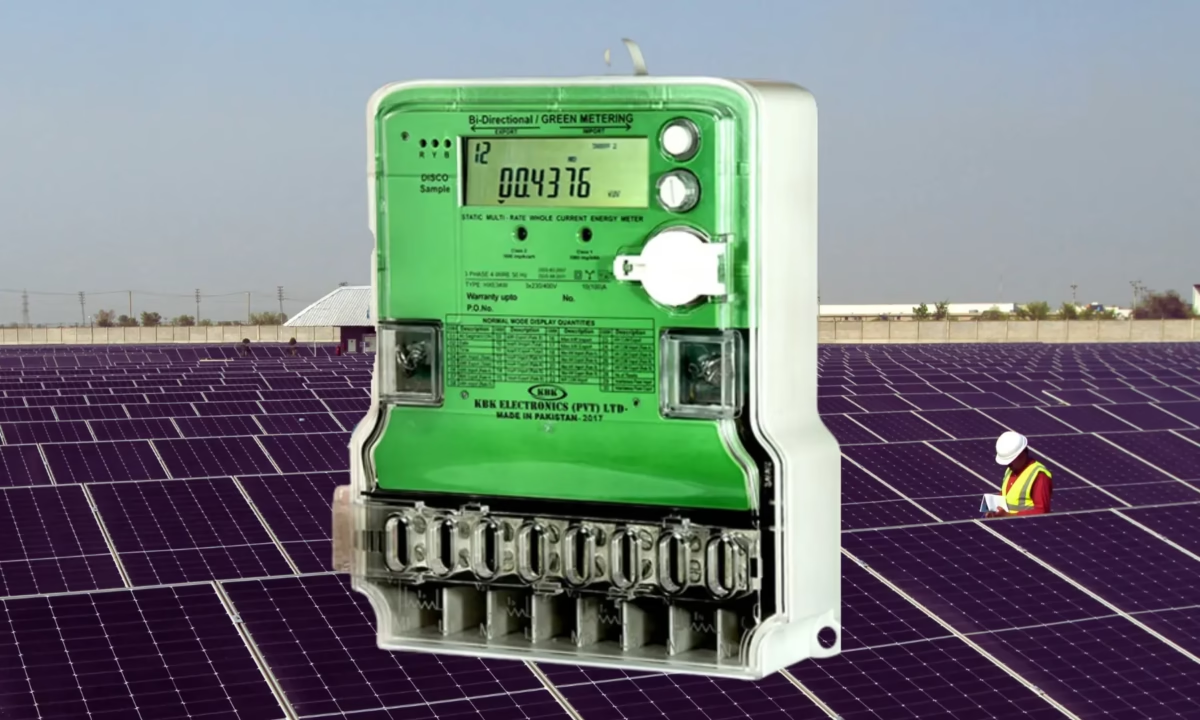
Under the updated regulations, solar producers receive a defined purchase price for the electricity they export to the grid, commonly referred to as the solar buy back rate. Meanwhile, all grid-consumed electricity must be paid at the full retail tariff. This means that even households that generate their own solar electricity must purchase grid power at the full unit price when their solar generation does not meet their demand.
What Are the Key Changes in Policy?
The revised framework eliminates the traditional net metering mechanism that previously allowed solar users to reduce their utility bills by crediting exported power against consumption. Instead, solar producers are compensated at a rate tied to the average tariff at which distribution companies sell electricity. This has the effect of lowering the value of generated solar power while increasing the cost burden when grid power is required.
Under the new rules, key changes include:
- Solar users will now pay full retail rates for electricity consumed from the grid.
- Excess solar power exported to the grid will be purchased by distribution companies at a predetermined buy back rate rather than offsetting one-to-one against consumption.
- Contracts under net metering will be limited in duration, requiring renegotiation or renewal under the net-billing system after expiry.
- Solar consumers may no longer enjoy long-term financial predictability for their rooftop installations.
As a result, solar users face higher costs compared with the previous net metering era, where the economics of generating and using solar electricity were tightly aligned.
Why Are Solar Users Facing Higher Costs?
Critics argue that the switch to net billing fundamentally changes the financial value proposition for solar installations. Under the old net metering system, exporting excess energy could substantially reduce electricity bills. Now, producers receive a fixed purchase rate for exported power, which is generally much lower than the retail tariff paid for consumed electricity.
This results in:
- Higher overall electricity expenditures for consumers who still need power from the grid.
- Longer payback periods for solar investments, as savings are reduced.
- Reduced financial incentive for new solar installations, since the savings that once justified upfront investment are eroded.
For many small solar producers and households, this shift can mean the difference between a financially viable rooftop system and one that struggles to break even.
Policy Goals Behind the Changes
Regulators maintain that the updated regulatory framework is designed to balance the interests of all electricity consumers and distribution companies. They argue that the previous net metering regime created financial strains for distribution companies by shifting costs toward non-solar consumers. The revised net-billing system aims to:
- Ensure a more sustainable financial model for distribution companies.
- Limit tariff distortions introduced by unit-for-unit credit practices.
- Maintain grid stability by more accurately valuing exported solar power.
Supporters of the reform claim that a predictable purchase price for excess generation and full retail billing for grid usage will create a fairer structure for all stakeholders. However, solar advocates counter that the reduced incentives could slow the adoption of renewable energy at a time when it is urgently needed.
Impact on Solar Installations and Adoption
The shift to net billing impacts both existing and prospective solar users:
- Return on investment (ROI) for new solar systems will likely increase, as reduced buy back rates diminish cost savings.
- Investor confidence in rooftop solar may be weakened, with potential slowdown in future installations.
- Residential, commercial, and industrial consumers may reconsider system sizes to align with revised economics.
- Potential long-term planning shifts from net metering optimization to self-consumption strategies, where solar generation is primarily used onsite rather than exported.
Prior to these regulatory changes, many solar adopters viewed rooftop systems as a hedge against rising electricity prices and frequent outages. With savings diminished, that narrative is now less compelling.
What Happens to Existing Solar Users?
Solar users who installed systems under the previous net metering regime are facing uncertainty regarding how long they can benefit from older terms. While some may continue under existing agreements until expiry, renewals could fall under the new net-billing framework, resulting in less favorable financial terms.
The revised policy structure also introduces complexity into future billing cycles, as users will receive payment for exported electricity and pay consumption charges under separate billing line items. This means solar owners now face limited opportunities to fully offset grid purchases with self-generation.
Conclusion
The decision for solar users to pay full electricity unit price under the new billing framework represents a fundamental shift in Pakistan’s approach to rooftop solar incentives. Whereas the net metering regime once offered clear financial benefits and encouraged widespread adoption, the revised policy changes the economics in ways that may slow growth and increase costs for solar users.
While regulators emphasize fairness and financial balance across the grid, solar advocates have raised serious concerns about higher consumer costs and reduced investment appeal. As stakeholders adjust to the new system and its implications, it remains to be seen whether solar growth can remain robust under the updated net-billing and net metering Pakistan framework.
FAQs
1. What does it mean that solar users will pay the full electricity unit price?
It means that solar producers must pay the same retail tariff as other consumers for electricity they consume from the grid, rather than offsetting it with exported solar power.
2. How are net metering rates in Pakistan affected?
Rates that solar producers receive for surplus power exported to the grid have been reduced, making the previous one-to-one credit system largely obsolete.
3. What is the solar buy back rate?
It is the rate at which distribution companies pay solar users for electricity they export to the grid under the revised net-billing system.
Boost Your Brand with MasterInDesign 🚀
In today’s fast-paced digital world, staying visible is key. At MasterInDesign, we help brands shine, captivate their audience, and grow their online presence effectively.
Ready to level up your digital game? Reach out to us today and turn your brand into a standout force online