
Forza Horizon 6 Nears 5 Million Sales with Strong Xbox Performance
May 23, 2026
Gold Prices Surge Sharply in Local and Global Markets
May 25, 2026
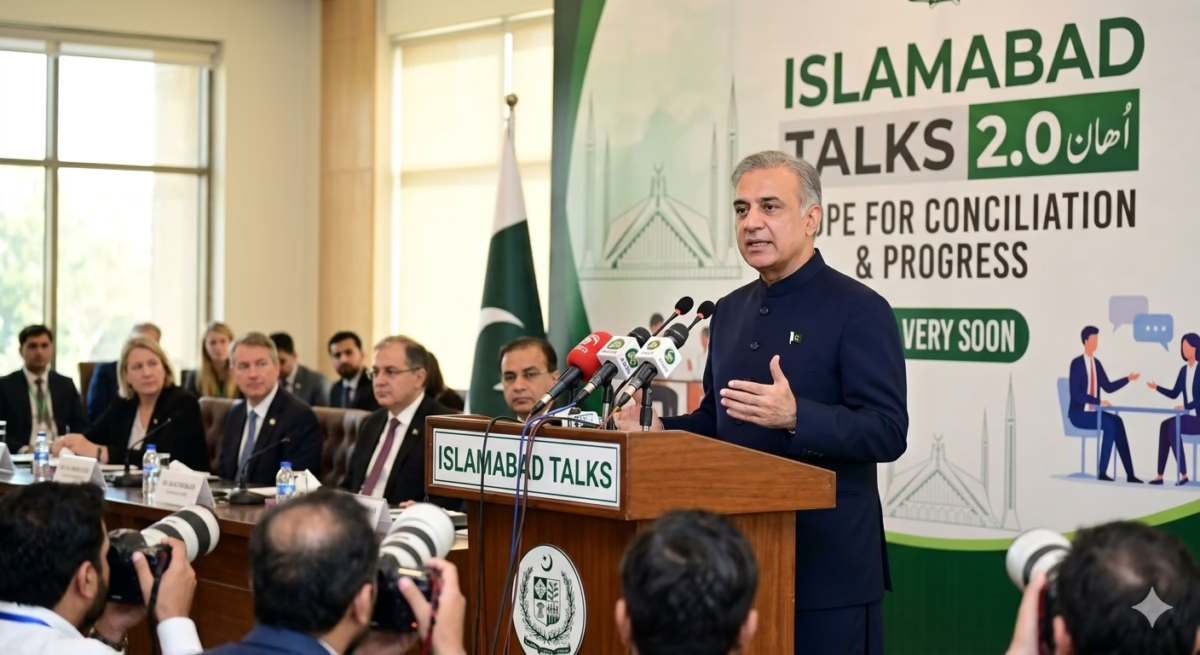
PM Hopes to Host Islamabad Talks 2.0 ‘Very Soon’
Introduction
Prime Minister Shehbaz Sharif has expressed hope that Pakistan may soon host a second round of high-level diplomatic negotiations, informally referred to as “Islamabad Talks 2.0.” The statement comes amid growing international interest in Pakistan’s role as a mediator in global and regional conflicts, particularly involving the United States and Iran.
The remarks signal Islamabad’s continued ambition to position itself as a neutral venue for peace talks and diplomatic engagement in a region marked by ongoing geopolitical tensions.
Pakistan’s Role as a Diplomatic Host
Pakistan has recently emerged as an active facilitator in international diplomacy, especially in efforts related to Middle East stability. Earlier discussions hosted in Islamabad brought together major global stakeholders in attempts to reduce tensions and explore long-term peace frameworks.
Officials believe Pakistan’s geographic and political positioning allows it to serve as a bridge between competing international powers, making it a suitable venue for sensitive negotiations.
The idea of “Islamabad Talks 2.0” reflects continuity in this diplomatic strategy, suggesting that future engagement may build on earlier rounds of discussions.
PM Shehbaz’s Statement on Future Talks
Prime Minister Shehbaz Sharif stated that Pakistan has received encouraging signals regarding renewed diplomatic engagement between involved parties. While no official schedule has been confirmed, he expressed optimism that another round of talks could take place “very soon.”
According to government sources, discussions are still at a preliminary stage, and formal preparations have not yet been finalized. However, diplomatic channels remain active, indicating ongoing behind-the-scenes communication.
Regional Context and Geopolitical Importance
The possibility of renewed talks comes at a time when global tensions, particularly in the Middle East, continue to influence energy markets, trade routes, and international relations.
Pakistan’s involvement in facilitating dialogue is seen as part of a broader effort to support regional stability and reduce the risk of escalation. Observers note that successful mediation efforts could enhance Pakistan’s diplomatic standing on the global stage.
At the same time, geopolitical uncertainties mean that outcomes remain unpredictable, and any planned negotiations could still face delays or changes.
International Reactions and Expectations
International observers are closely monitoring developments around Islamabad Talks 2.0, as previous discussions in the city attracted significant global attention. The potential for renewed engagement between major powers has generated cautious optimism among diplomatic analysts.
While some view Pakistan’s role as constructive, others emphasize the complexity of mediating between deeply divided parties. The success of any future talks will depend on mutual trust, political will, and regional security conditions.
Conclusion
Prime Minister Shehbaz Sharif’s expression of hope for hosting Islamabad Talks 2.0 highlights Pakistan’s continued diplomatic ambitions. Although no formal arrangements have been confirmed, the statement reflects ongoing international interest in using Islamabad as a platform for dialogue.
As global tensions evolve, Pakistan’s role as a mediator may become increasingly significant in shaping regional peace efforts.
FAQs
1. What are Islamabad Talks 2.0?
They refer to a potential second round of diplomatic negotiations involving international stakeholders, possibly building on earlier talks held in Islamabad.
2. Has the date for the talks been confirmed?
No official date has been announced yet; discussions are still in early stages.
3. Why is Pakistan hosting these talks?
Pakistan aims to act as a neutral mediator and support regional and global peace efforts.
4. What was discussed in earlier Islamabad talks?
Previous talks focused on reducing regional tensions and exploring diplomatic solutions to international conflicts.
5. What is the significance of these talks?
They could play an important role in easing geopolitical tensions and improving international relations.