

Netflix Blocks Pakistani Dramas: Shocking Cultural Blackout
December 1, 2025
ChatGPT Turns Three: Transforming Online Search and AI Interaction
December 4, 2025
Pakistan’s AI Potential Unlocked with First Local GPU Data Centre
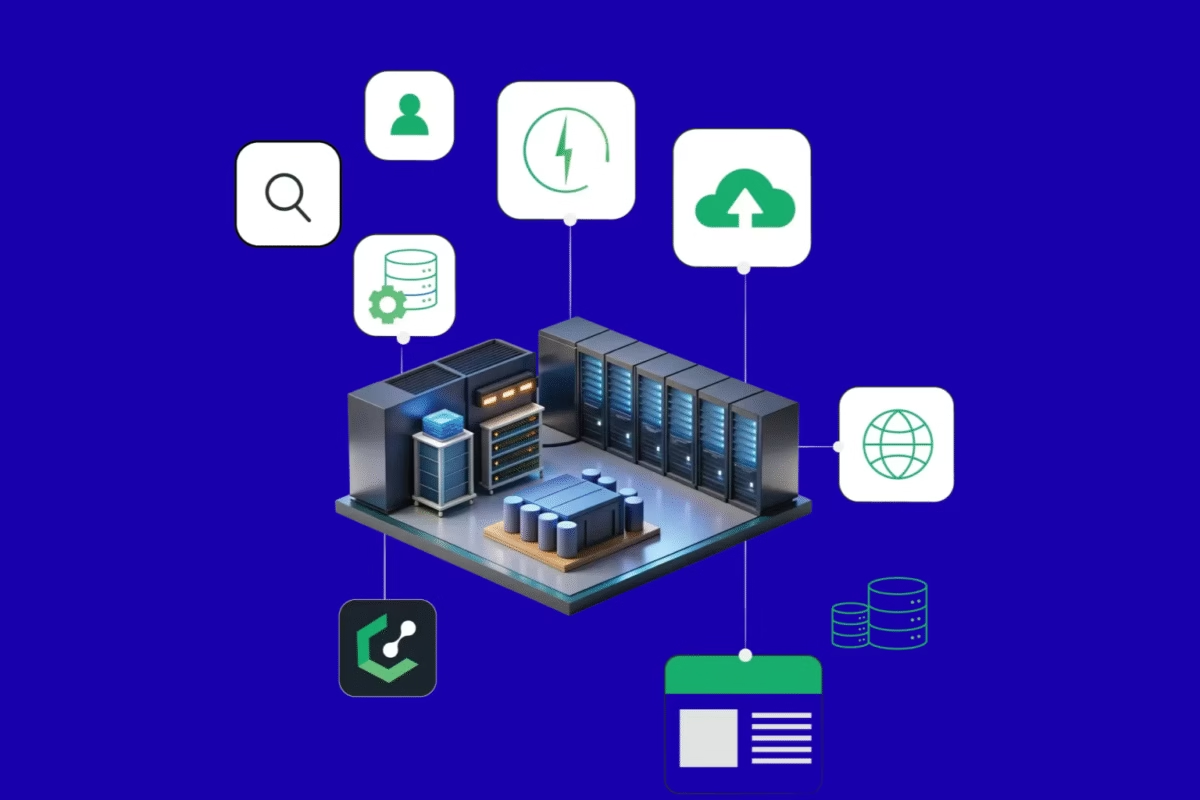
Islamabad — Pakistan takes a major step toward digital self-reliance with the launch of the country’s first locally hosted artificial intelligence data centre and sovereign AI cloud. The initiative results from a collaboration between Telenor and Data Vault Pakistan. The new facility offers enterprise-grade GPU services, opening the door for widespread AI adoption across diverse sectors including healthcare, finance, public safety and government services.
The data centre relies on high-performance computing hardware from Nvidia — a rare feat given global export restrictions and widespread GPU shortages. Data Vault Pakistan says it acquired over 3,000 GPUs through authorised Nvidia partners, under special approval granted amid strict compliance and financing checks.
Data Vault’s CEO, Mehwish Salman Ali, says the facility makes her organisation the only “AI-enabled data centre” operating domestically. The centre will provide GPU-as-a-Service (GPUaaS), giving Pakistani enterprises, startups, universities and public institutions on-demand access to powerful computing resources without needing to import expensive hardware.
A Breakthrough Amid External Constraints
Global supply chain disruptions, export controls and high import costs have long limited Pakistan’s ability to deploy enterprise-grade AI infrastructure. Under normal circumstances, the combination of export-control sanctions and global GPU scarcity would make such a project nearly impossible.
The fact that Data Vault Pakistan secured necessary approvals and hardware sets a significant precedent. It allows local entities to deploy AI solutions that require heavy computational resources — from large language models (LLMs) in Urdu and regional languages, to image-based diagnostics in healthcare, fintech solutions, and smart-logistics platforms.
National Data Protection, Cybersecurity, and Sovereignty
A key advantage of the new data centre lies in its promise of data sovereignty. By keeping all sensitive data — ranging from financial transactions to healthcare imaging, telecom logs and government records — within national borders, the facility addresses critical concerns around privacy, data protection, auditability, and identity management.
This sovereign cloud infrastructure also strengthens national cybersecurity. Local hosting reduces risk of data exposure due to cross-border transfers. It offers enhanced controls over user access, identity management, and ensures compliance with national data governance and privacy standards.
Historically, Pakistani enterprises and public institutions relied on foreign cloud providers for compute-intensive workloads. This launch therefore marks a shift toward domestic infrastructure — reducing dependence on offshore cloud regions, and increasing national capacity to handle digital transformation in critical sectors.
Impact on Key Sectors: Healthcare, Finance, Public Services
Health care providers could deploy AI models for diagnostic imaging, patient data analysis, and predictive health monitoring — all hosted locally under regulatory compliance. Financial institutions may leverage the GPU cloud for algorithmic trading, risk assessment, fraud detection, and fintech innovations.
Government agencies stand to benefit through enhanced public-safety tools, efficient record-keeping, and improved data transparency — under a framework that preserves citizen privacy. Manufacturing, agriculture, logistics, and education sectors may also adopt AI-driven solutions tailored to Pakistan’s local context.
Startups and research institutions will gain access to advanced computing resources previously out of reach due to cost or import restrictions. This could spark a surge in innovation — particularly in local language LLMs, region-specific AI tools, and tech solutions designed to address Pakistani socio-economic challenges.
Challenges Ahead — Sustainability, Scale, and Regulation
While the launch represents a milestone, the success of the initiative depends on long-term sustainability. Operating a GPU-heavy data centre demands consistent power supply, reliable cooling infrastructure, and maintenance. Regulatory frameworks around data privacy, AI ethics, and compliance must evolve in tandem.
Moreover, widespread adoption will require training, capacity building, and a mature ecosystem of users — from government departments to private enterprises. Awareness about best practices, data governance, and responsible AI deployment remains critical.
Significance for Pakistan’s Digital Future
The move signals a turning point in Pakistan’s journey toward digital sovereignty. By deploying a domestic GPU-enabled AI infrastructure, the country positions itself to harness the potential of artificial intelligence without relying on foreign cloud services.
The new capability can accelerate digital transformation in vital sectors, empower local innovators, and enable data-driven governance — provided institutions and stakeholders leverage it responsibly.
This development may also inspire other data-centre operators and telecom companies to invest in similar facilities. Over time, a network of domestic AI infrastructure could emerge, democratizing access and fostering homegrown AI solutions.
Unlock the Future — Explore AI Possibilities in Pakistan
Discover how your organisation can benefit from the new GPU-enabled sovereign cloud. Visit Data Vault Pakistan’s website or contact Telenor’s enterprise desk today. Empower data-driven innovation, boost security, and contribute to Pakistan’s digital transformation.
Further reading on Pakistan’s new AI infrastructure