
Gold Prices Surge Sharply in Local and Global Markets
May 25, 2026
Oil Prices Rise as US-Iran Strikes Threaten Peace Deal
June 1, 2026
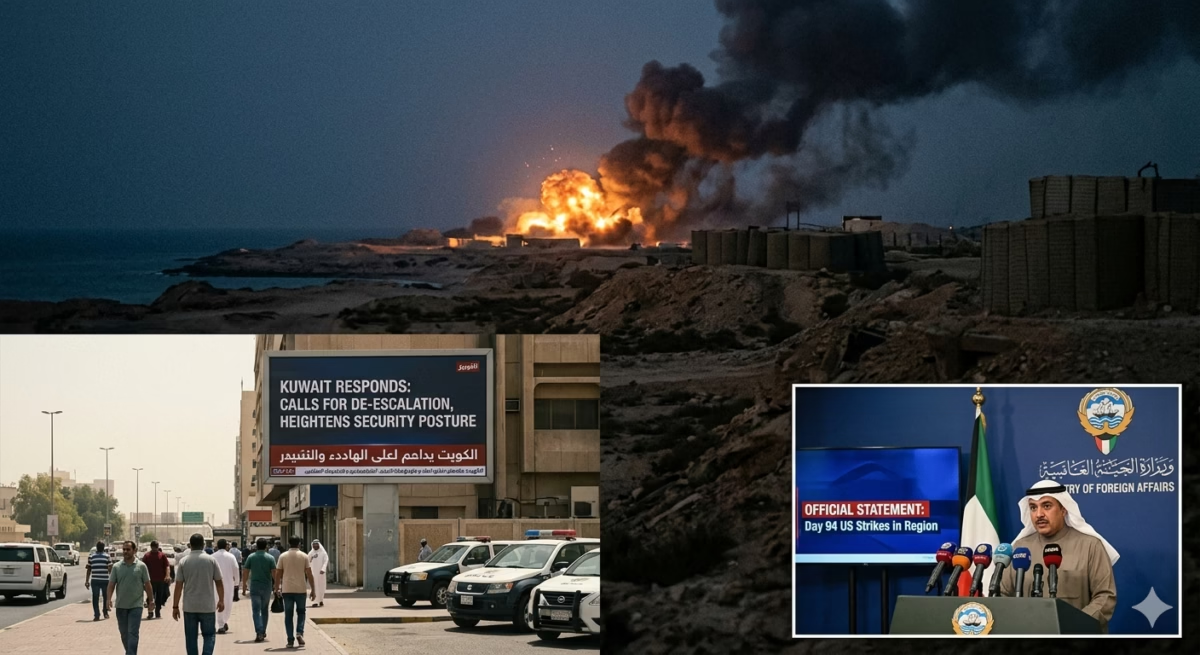
Iran War Day 94: US Strikes Iranian Sites as Kuwait Intercepts Missiles
The conflict between the United States and Iran entered its 94th day with a major escalation after American forces launched strikes on Iranian military sites and Kuwait activated its air defense systems to intercept incoming missiles and drones. The latest developments have increased fears that the already tense regional conflict could expand further, threatening diplomatic efforts and raising concerns about stability across the Middle East.
The renewed exchange of attacks highlights how fragile ceasefire discussions have become. Despite ongoing negotiations aimed at reducing tensions, military confrontations continue between Washington and Tehran. The latest strikes demonstrate that both sides remain willing to respond forcefully to perceived threats, creating uncertainty about whether a long-term agreement can be achieved.
US Launches Strikes on Iranian Military Targets
According to reports, the United States carried out targeted attacks against Iranian military facilities after Iran allegedly shot down an American drone operating over international waters.
US military officials stated that the strikes focused on radar installations, drone command centers, air defense systems, and related military infrastructure.
American officials described the operation as a defensive response designed to protect US forces and maintain security in key maritime areas. The strikes reportedly took place near strategic locations connected to Iran’s military operations in the Persian Gulf region.
The latest military action represents another significant escalation in a conflict that has already involved missile attacks, drone operations, naval tensions, and regional proxy confrontations.
Iran Responds With Retaliatory Action
Iran quickly condemned the American strikes and announced retaliatory measures.
Iranian military officials accused the United States of violating regional stability and targeting critical infrastructure. In response, Iran reportedly launched missile and drone attacks that triggered air defense activity across Kuwait.
The retaliation demonstrates Tehran’s continued willingness to respond militarily rather than limiting its reaction to diplomatic channels.
Iran has repeatedly stated that it will answer attacks against its territory and strategic interests with proportional force, increasing the risk of continued escalation.
Kuwait Intercepts Missiles and Drones
One of the most alarming developments on day 94 was the activation of Kuwait’s air defense systems.
Authorities reported that missiles and drones were detected heading toward areas connected to US military operations. Air defense units successfully intercepted multiple incoming threats, preventing potential damage and casualties.
Sirens reportedly sounded across parts of the country as defensive measures were deployed.
Kuwait hosts important US military facilities and has become increasingly exposed to regional tensions because of its strategic location.
The incident has raised concerns among Gulf nations about the possibility of becoming directly involved in the wider conflict.
Breaking News on Iran War Raises Regional Concerns
The latest attacks have intensified concerns throughout the Middle East.
Several regional governments are monitoring the situation closely as fears grow that additional countries could become involved if hostilities continue expanding.
Security analysts warn that attacks targeting military installations, energy infrastructure, and shipping routes could further destabilize the region.
The Strait of Hormuz remains one of the most sensitive areas in the conflict because it serves as a critical route for global oil exports.
Any prolonged disruption in this area could have significant consequences for international energy markets and global economic stability.
US-Iran War Continues Despite Diplomatic Efforts
One of the most striking aspects of the conflict is that military actions are continuing even while diplomatic discussions remain active.
Reports suggest that both sides have explored proposals aimed at reducing tensions and extending ceasefire arrangements. However, repeated military incidents continue undermining trust between Washington and Tehran.
Negotiations reportedly involve several key issues:
- Iran’s nuclear activities
- Economic sanctions
- Regional security concerns
- Maritime navigation
- Access to frozen assets
- Future military commitments
Despite these discussions, neither side appears willing to compromise on major strategic priorities.
Israel’s Role in the Wider Conflict
The broader regional situation has become increasingly complex because of Israel’s involvement.
Military operations linked to Israel continue in neighboring areas, particularly involving Hezbollah positions in southern Lebanon. Analysts believe these developments contribute to the overall escalation and complicate efforts to reach a comprehensive settlement.
Iran has repeatedly linked regional confrontations to its wider confrontation with both the United States and Israel.
As a result, developments in Lebanon, Syria, Iraq, and the Gulf often influence the direction of the conflict.
US-Iran War: Who Is Winning?
The question of who is winning the US-Iran war remains difficult to answer.
Both sides continue demonstrating military capabilities while avoiding a full-scale direct confrontation that could trigger a wider regional war.
The United States maintains advantages in:
- Air power
- Naval capabilities
- Advanced surveillance systems
- Regional military presence
- Strategic alliances
Iran continues relying on:
- Missile capabilities
- Drone operations
- Regional influence networks
- Asymmetric warfare strategies
- Geographic positioning
Neither side has achieved a decisive breakthrough.
Instead, the conflict has evolved into a prolonged struggle involving military pressure, economic consequences, political negotiations, and regional power competition.
Impact on Global Energy Markets
The conflict continues affecting international markets.
Oil prices have reacted sharply to renewed military activity because investors fear disruptions to shipping routes and energy supplies.
The Strait of Hormuz remains particularly important because a significant percentage of global oil exports pass through the region.
Any escalation involving shipping lanes could create supply concerns and increase fuel prices worldwide.
Energy analysts continue monitoring developments as tensions remain elevated.
Rising Security Risks Across the Gulf
Gulf countries increasingly face difficult security challenges as the conflict continues.
Missile interceptions, drone threats, military deployments, and regional instability have forced governments to strengthen defensive measures.
Countries hosting American military forces face particular concerns because they could become targets during future escalations.
Regional leaders continue calling for diplomatic solutions while preparing for the possibility of additional military incidents.
What Happens Next?
The future direction of the conflict remains uncertain.
Several possibilities exist:
- Renewed diplomatic breakthroughs
- Additional military strikes
- Expanded regional involvement
- Temporary ceasefire extensions
- Increased economic pressure
- Further disruptions to energy markets
The next few weeks may prove critical in determining whether negotiations can reduce tensions or whether military escalation continues.
International observers remain concerned that even a limited incident could trigger a broader confrontation involving multiple countries.
Conclusion
Day 94 of the Iran war marked another dangerous escalation as US forces launched strikes against Iranian military targets and Kuwait intercepted incoming missiles and drones. The latest exchange highlights the fragile nature of ongoing ceasefire discussions and demonstrates how quickly tensions can intensify despite diplomatic efforts.
With military operations continuing, regional security risks growing, and energy markets reacting to uncertainty, the conflict remains one of the most significant geopolitical crises in the world. While negotiations continue behind the scenes, the latest developments show that a lasting resolution remains difficult to achieve.
FAQs
What happened on day 94 of the Iran war?
US forces launched strikes against Iranian military facilities, while Kuwait activated air defense systems to intercept incoming missiles and drones linked to the escalating conflict.
Why did the US attack Iranian sites?
According to US officials, the strikes were carried out in response to Iran allegedly shooting down an American drone operating over international waters.
Did Kuwait intercept missiles successfully?
Yes. Kuwaiti defense systems reportedly intercepted incoming missiles and drones, helping prevent damage and casualties.
Is the US-Iran war still ongoing?
Yes. The conflict remains active despite diplomatic discussions and multiple attempts to establish ceasefire agreements.
What role does Israel play in the conflict?
Israel remains involved in regional military operations, particularly against Hezbollah-linked targets, which contributes to broader tensions connected to the Iran conflict.
Who is winning the US-Iran war?
There is no clear winner. Both sides continue demonstrating military strength while avoiding a decisive direct confrontation.
How is the conflict affecting oil prices?
Military escalation has increased concerns about disruptions in the Strait of Hormuz, contributing to higher oil prices and market volatility.
Are the US and Iran still negotiating?
Yes. Reports indicate that discussions continue regarding sanctions, nuclear issues, regional security, and possible ceasefire arrangements.