
Gold Rates Up Rs1,400: Today’s Gold Price in Pakistan April 2026
April 17, 2026
Is AI Killing the App Store? Why the “App Apocalypse” Never Happened
April 20, 2026
US-Iran Standoff: Tehran Refuses Negotiations in Pakistan Amid Rising Tensions
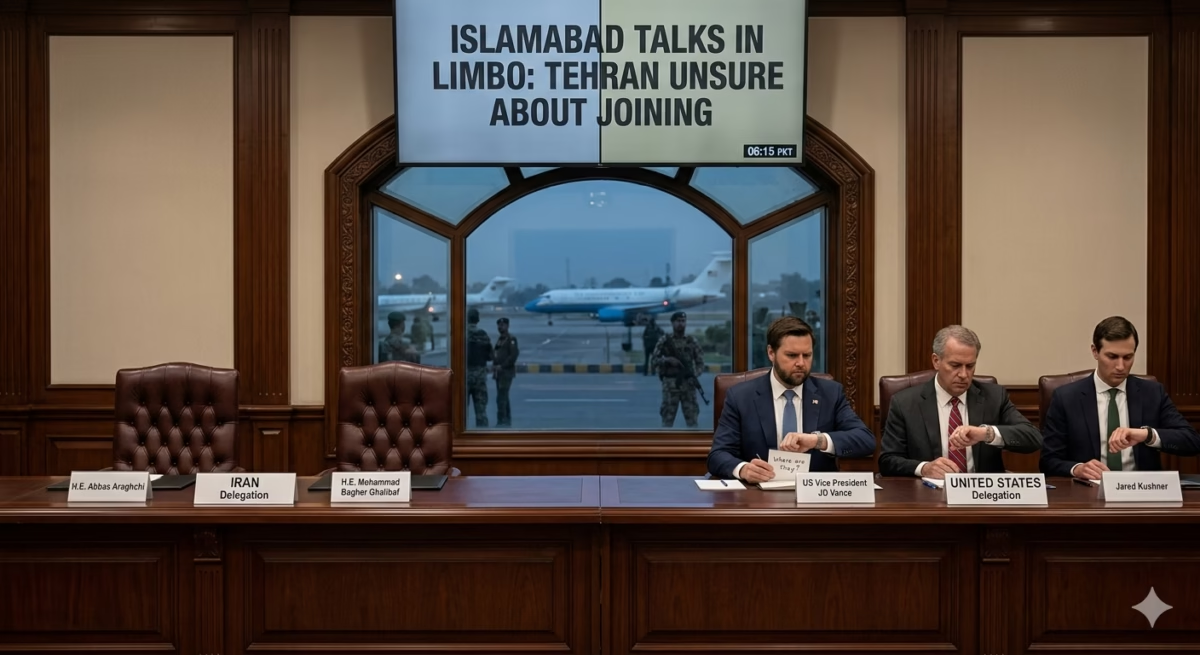
Islamabad’s efforts to mediate a high-stakes diplomatic breakthrough between the United States and Iran have hit a critical roadblock. On April 20, 2026, Iran officially signaled that it will not be sending negotiators to Pakistan for the scheduled multi-day peace talks. This decision comes as a fragile ceasefire deadline approaches on Wednesday, casting a shadow of uncertainty over the region’s stability.
The refusal follows a rapid escalation of military and diplomatic friction, including the U.S. Navy’s seizure of an Iranian-flagged cargo ship and renewed threats from the White House regarding Iran’s energy infrastructure.
The Breaking Point: Naval Blockades and “Piracy”
The Iranian Ministry of Foreign Affairs has been vocal about its reasons for staying away from the negotiating table in Islamabad. Spokesman Esmaeil Baghaei stated that Iran has “no option” but to push back against what it describes as systematic violations of the existing ceasefire.
Key grievances cited by Tehran include:
- The Blockade of the Strait of Hormuz: Iran alleges that the U.S. naval blockade, implemented on April 13, is a direct breach of the truce and international law.
- The Seizure of the M/V Touska: U.S. forces recently intercepted and captured the Iranian container ship Touska in the Gulf of Oman. While President Trump alleged the ship was involved in “illegal activity,” Iran has publicly announced the act as “piracy” and a “war crime.”
Baghaei warned that if the U.S. and Israel continue their “aggression,” Iranian forces will respond accordingly, though he reiterated that Tehran’s 10-point proposal remains the only viable basis for any future discussion.
Trump’s “No More Mr. Nice Guy” Approach
While Pakistan spent the week securing the capital’s “Red Zone” and preparing luxury hotels for the delegations, President Trump’s rhetoric on social media has added fuel to the fire. Trump announced that his representatives—including Special Envoy Steve Witkoff and Jared Kushner—were headed to Islamabad, but he coupled the news with a dire warning.
Trump stated that if Iran does not accept a “fair and reasonable deal,” the U.S. will move to “knock out every single power plant and every single bridge in Iran.” This “hard way” approach has led Iranian state news agencies to dismiss the talks as a “media game” designed to pressure Tehran through a blame-intensive narrative.
Netanyahu’s Warning and Regional Dynamics
Israeli Prime Minister Benjamin Netanyahu has also weighed in, maintaining a consistent focus on the Iranian threat. In recent statements, Netanyahu has repeatedly emphasized that “Iran, Iran, Iran” remains the primary obstacle to peace in the Middle East, urging the U.S. to maintain maximum pressure and not be swayed by “tactical palliatives” like the temporary Israel-Lebanon ceasefire.
Tehran, meanwhile, insists that any lasting peace must be comprehensive and include its regional allies, specifically Hezbollah, who were notably absent from the recent Lebanese truce.
Pakistan’s Role: A Mediator in the Middle
Despite the public denials and the absence of an Iranian team, Pakistani officials remain “cautiously hopeful.” Prime Minister Shehbaz Sharif recently held a 45-minute call with Iranian President Masoud Pezeshkian to build a consensus for dialogue.
Pakistan has a unique position as a mediator trusted by both Washington and Tehran. The immediate goal for Islamabad is to secure a “Memorandum of Understanding” (MoU) that would extend the ceasefire for up to 60 days, providing a wider window for a permanent peace treaty. However, without a delegation from Tehran, these plans remain in limbo.
Frequently Asked Questions (FAQs)
Why did Iran refuse to attend the talks in Pakistan?
Tehran cited the U.S. naval blockade of the Strait of Hormuz and the seizure of the Iranian ship Touska as violations of the current ceasefire, making productive negotiations impossible in their view.
What is the current status of the US-Iran ceasefire?
The fragile ceasefire is set to expire this Wednesday. Without an extension or a new agreement in Islamabad, there are fears that full-scale military hostilities could resume.
Who is representing the U.S. in these potential talks?
The U.S. delegation includes Special Envoy Steve Witkoff and Jared Kushner. There are conflicting reports about whether Vice President JD Vance will join the team due to security concerns.
What happens if the talks fail?
President Trump has threatened to target Iran’s energy and transportation infrastructure (power plants and bridges) if a deal is not reached. Iran has vowed to retaliate against any further “aggression” from the U.S. or Israel.
What is Pakistan’s role in this conflict?
Pakistan is acting as the principal mediator. It hosted the first round of talks on April 11 and has been working to facilitate a longer-term peace framework between the two nations.
Has Iran made a new statement regarding retaliation?
Yes, Iran recently stated that while they have concluir (concluded) certain retaliatory actions, they warned Israel and the U.S. that any new strikes would be met with an even stronger response.
Elevate Your Brand with MasterInDesign
Don’t let your business get left behind in today’s fast-paced digital world. At MasterInDesign, we specialize in helping brands stand out, engage audiences, and grow online.
Take the next step toward digital excellence. Contact us today and transform your brand into a powerful online