
Alleged iPhone 18 Pro Max’s Aluminium Frames Reveal Three Possible Colour Options
June 8, 2026
Pakistan Gold Price Today: Gold Falls According to FXStreet Data in 2026
June 9, 2026
First Global Rulebook for Autonomous Ships to Arrive on July 1
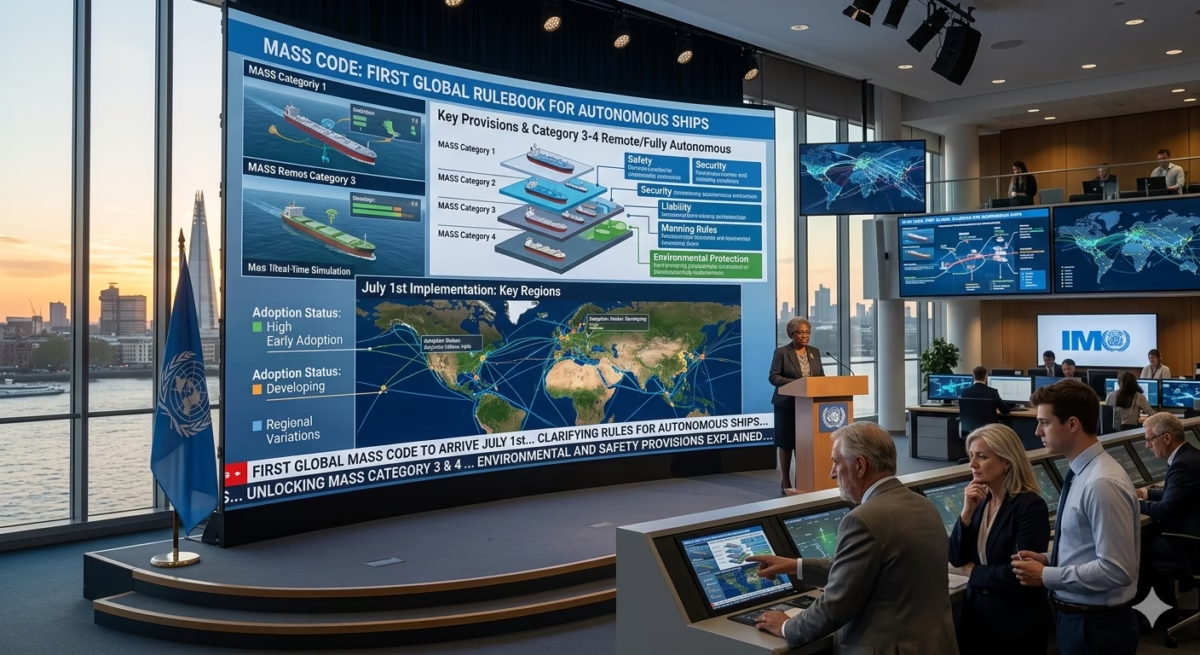
The global shipping industry is entering a new era as the International Maritime Organization (IMO) prepares to implement the world’s first regulatory framework for autonomous and remotely operated ships. The new rulebook, officially known as the International Code of Safety for Maritime Autonomous Surface Ships (MASS Code), will come into effect on July 1, 2026, marking a historic shift in maritime safety and regulation.
This development represents the first time in history that autonomous ships will be governed under a unified global set of rules, aimed at ensuring safety, security, and operational consistency across international waters.
What Is the MASS Code?
The MASS Code is a newly adopted international framework created by the International Maritime Organization (IMO) to regulate Maritime Autonomous Surface Ships.
It defines safety standards for ships that operate with varying levels of autonomy, including:
- Fully autonomous ships with no crew onboard
- Remotely controlled vessels operated from shore stations
- Semi-autonomous ships with automated systems and limited human oversight
The main goal of the code is to ensure that autonomous shipping technologies meet the same safety standards as traditional crewed vessels.
Why the Rulebook Is Being Introduced
Autonomous shipping technology has developed rapidly in recent years. AI systems, remote navigation, and advanced sensors are increasingly being used in commercial vessels.
However, without global regulations, there are risks such as:
- Inconsistent safety standards between countries
- Cybersecurity vulnerabilities
- Unclear responsibility in accidents
- Technical failures in remote operations
- Legal uncertainty in international waters
The MASS Code aims to solve these issues by creating a unified global standard.
Key Objectives of the Autonomous Ships Rulebook
The new IMO framework focuses on several core objectives:
1. Maritime Safety
Ensuring autonomous ships can operate safely in busy international shipping routes.
2. Human Oversight and Control
Defining when and how humans must intervene in ship operations, even for autonomous systems.
3. Cybersecurity Protection
Strengthening protection against hacking, system manipulation, and digital threats.
4. Environmental Protection
Ensuring autonomous systems comply with pollution control and emissions regulations.
5. Legal Clarity
Establishing clear responsibility for ship operators, manufacturers, and remote control centers.
When Will the Rulebook Become Fully Mandatory?
Although the MASS Code becomes active on July 1, 2026, it will initially be non-mandatory.
The rollout plan includes:
- 2026–2028: Voluntary adoption and testing phase
- 2028 onward: Development of mandatory regulations
- 2030 target: Formal adoption of mandatory global standards
- 2032: Expected full enforcement under international maritime law
This gradual approach allows countries and shipping companies to test autonomous systems in real-world conditions before full enforcement.
What Are Maritime Autonomous Surface Ships (MASS)?
MASS refers to ships that can operate with different levels of automation.
There are generally four levels:
Level 1: Automated Assistance
Humans are onboard, but systems assist navigation and operations.
Level 2: Remote-Controlled Ships
Ships are controlled from shore-based control centers.
Level 3: Fully Autonomous Ships
Ships operate independently but may still require remote monitoring.
Level 4: Fully Unmanned Vessels
Ships operate entirely without onboard human presence.
The new rulebook covers all these categories under one unified system.
How Autonomous Ships Will Change Global Shipping
The introduction of regulated autonomous shipping is expected to transform the industry in several ways.
Reduced Human Risk
Fewer crew members onboard reduces risks associated with piracy, accidents, and harsh sea conditions.
Lower Operational Costs
Automation reduces labor costs and increases efficiency in long-distance shipping.
Improved Navigation Accuracy
AI-powered systems can optimize routes and reduce fuel consumption.
Faster Logistics
Autonomous ships may operate continuously without rest cycles, improving delivery speed.
Challenges Facing Autonomous Shipping
Despite its advantages, autonomous shipping still faces major challenges.
Technology Reliability
Systems must function perfectly in extreme weather and ocean conditions.
Cybersecurity Risks
Connected ships could be vulnerable to hacking attempts.
Legal Responsibility
It must be clearly defined who is responsible in case of accidents.
Infrastructure Requirements
Ports and control centers must be upgraded to support autonomous fleets.
Public Trust
Shipping companies and governments must build confidence in AI-driven maritime systems.
Global Impact of the New Rulebook
The MASS Code is expected to have a major global impact on:
- International trade
- Shipping companies
- Maritime insurance industry
- Port operations
- Shipbuilding industry
Countries that adopt autonomous shipping technology early may gain competitive advantages in global trade efficiency.
Role of the IMO in Maritime Innovation
The International Maritime Organization (IMO) plays a key role in regulating global shipping standards. It ensures safety, environmental protection, and legal coordination among member states.
With the introduction of the MASS Code, the IMO is extending its role into the future of digital and AI-driven maritime systems.
Future of Autonomous Ships
Experts believe autonomous shipping is still in its early stages, but the next decade will bring rapid advancements.
Future developments may include:
- Fully autonomous cargo fleets
- AI-powered global shipping networks
- Smart ports with automated docking systems
- Real-time global maritime monitoring systems
The MASS Code is considered the foundation that will make this transformation possible.
Conclusion
The introduction of the first global rulebook for autonomous ships marks a historic milestone in maritime history. By establishing the MASS Code, the IMO is preparing the shipping industry for a future driven by automation, artificial intelligence, and remote operations.
While full adoption will take several years, the July 1, 2026 implementation marks the beginning of a new regulatory era that will reshape global trade and maritime operations.
The coming years will determine how quickly autonomous shipping moves from experimental technology to mainstream global infrastructure.
FAQs
What is the MASS Code?
The MASS Code is the International Maritime Organization’s global rulebook for regulating autonomous and remotely operated ships.
When does the autonomous ship rulebook come into effect?
It comes into effect on July 1, 2026, initially as a non-mandatory framework.
Are autonomous ships already in use?
Some pilot projects exist, but full-scale commercial adoption is still in early stages.
Will autonomous ships replace human crews?
Not immediately. Most systems will still involve human oversight, especially in early phases.
Why is a global rulebook needed?
To ensure consistent safety standards, legal clarity, and cybersecurity across international waters.
When will the rules become mandatory?
Full mandatory adoption is expected around 2030, with enforcement likely by 2032.