
Samsung *#06# Not Working? Galaxy Secret Codes Explained
December 30, 2025
Best Fireworks Spots in Islamabad for New Year 2026 Celebrations
December 31, 2025
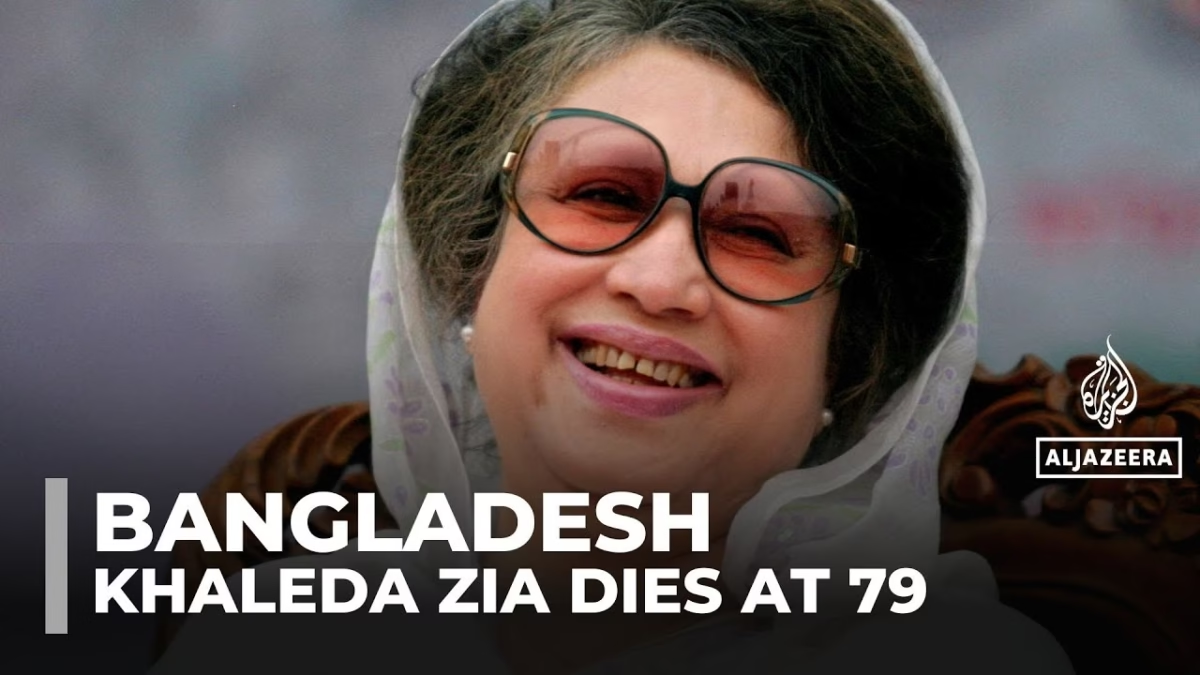
Bangladesh Mourns Former Leader Khaleda Zia, Who Died Aged 79
Bangladesh is in deep mourning following the death of former Prime Minister Khaleda Zia, one of the most influential and controversial political leaders in the country’s history. Khaleda Zia passed away on December 30, 2025, at the age of 79, after a long struggle with serious health problems. Her death marks the end of an era in Bangladeshi politics, where her leadership and rivalry shaped the nation for more than three decades.
The government announced national mourning, lowered flags to half-mast, and tributes poured in from political leaders, supporters, and ordinary citizens across the country. For many, Khaleda Zia symbolized resistance, democracy, and strong opposition politics.
Early Life and Entry into Politics
Khaleda Zia was born in 1945 and entered politics after the assassination of her husband, President Ziaur Rahman, in 1981. Following his death, she took leadership of the Bangladesh Nationalist Party (BNP), a party founded by her late husband. Despite having little political experience at the time, she quickly emerged as a powerful figure.
Her rise reflected both personal resilience and growing public support for civilian rule. Under her leadership, the BNP became one of Bangladesh’s two main political parties.
First Female Prime Minister of Bangladesh
Khaleda Zia made history in 1991 when she became Bangladesh’s first female prime minister after leading the BNP to victory in a national election. Her election restored parliamentary democracy after years of military-backed governance.
She later served as prime minister again from 2001 to 2006, making her one of the longest-serving leaders in the country’s history. Her leadership placed Bangladesh among a small group of Muslim-majority nations led by women at the highest political level.
Political Achievements and Challenges
During her time in office, Khaleda Zia focused on strengthening democratic institutions, improving education, and promoting economic development. Her supporters credit her with encouraging political participation and maintaining a strong opposition culture.
However, her leadership also faced criticism. Her governments were accused of corruption, weak governance, and political intolerance. These allegations later resulted in legal cases against her, which she and her party repeatedly described as politically motivated.
Despite controversies, Khaleda Zia remained a central figure in national politics and retained loyal support among BNP followers.
The “Battle of the Begums”
One of the most defining aspects of Khaleda Zia’s political life was her long-running rivalry with Sheikh Hasina, leader of the Awami League. The two women alternated in power for decades, creating intense political polarization.
This rivalry, often called the “Battle of the Begums,” dominated Bangladesh’s political landscape, leading to frequent protests, election boycotts, and political deadlock. Their competition shaped national debates and deeply influenced the country’s democratic journey.
Health Struggles and Final Years
In her later years, Khaleda Zia’s health deteriorated significantly. She suffered from multiple chronic conditions, including liver disease, heart complications, diabetes, and respiratory issues. Her declining health limited her public appearances and political activity.
Despite being seriously ill, she remained symbolically important to her party and supporters. Even while hospitalized, she continued to inspire political loyalty and emotional support across the country.
Her death came at a sensitive political moment, with Bangladesh preparing for upcoming national elections.
National Mourning and Funeral Arrangements
Following her death, the government declared three days of national mourning. Flags were flown at half-mast, prayer services were held nationwide, and large crowds gathered to pay their respects.
Her funeral prayers were arranged in Dhaka, attended by political leaders, diplomats, and thousands of supporters. Many citizens expressed grief, describing her as a fearless leader who never gave up political struggle despite immense challenges.
Reactions from Political Leaders
Tributes came from across the political spectrum. Leaders acknowledged Khaleda Zia’s role in shaping Bangladesh’s democratic system and recognized her contributions to political life.
Even political rivals expressed condolences, urging the nation to remember her role in history with respect. Her supporters praised her courage, while critics acknowledged her influence on Bangladesh’s political evolution.
Impact on Bangladesh’s Politics
Khaleda Zia’s death leaves a significant leadership gap within the BNP. Her son, Tarique Rahman, is expected to continue leading the party, but analysts believe her absence could reshape opposition politics.
Her passing may influence voter sentiment and political strategies as Bangladesh moves toward future elections. Many believe the country is entering a new political phase without one of its most recognizable leaders.
A Complex and Lasting Legacy
Khaleda Zia’s legacy is both powerful and complex. She broke gender barriers, led the country through critical democratic transitions, and remained politically active despite imprisonment and illness.
At the same time, her career was marked by controversy, political polarization, and unresolved debates about governance and accountability. Her life reflects the challenges of leadership in a deeply divided political environment.
Conclusion
The death of Khaleda Zia closes a major chapter in Bangladesh’s political history. As the country mourns, citizens reflect on her role as a trailblazer, a rival, and a survivor in one of South Asia’s most intense political arenas.
Her influence will continue to be debated, but her impact on Bangladesh’s democracy and political culture is undeniable. Khaleda Zia will be remembered as a leader who shaped the nation through both conflict and change.
FAQs – Khaleda Zia Death & Bangladesh Politics
Q1: Who was Khaleda Zia?
Khaleda Zia was Bangladesh’s first female prime minister and the long-time leader of the Bangladesh Nationalist Party (BNP). She was one of the most influential political figures in the country’s history.
Q2: When did Khaleda Zia die?
Khaleda Zia passed away on December 30, 2025, after a prolonged illness.
Q3: How old was Khaleda Zia at the time of her death?
She was 79 years old when she died.
Elevate Your Brand with MasterInDesign 🚀
Don’t let your business get left behind in today’s fast-paced digital world. At MasterInDesign, we specialize in helping brands stand out, engage audiences, and grow online.
Take the next step toward digital excellence. Contact us today and transform your brand into a powerful online presence!