
Gold Demand Trends: US Focus Q4 and Full Year 2025
January 29, 2026
Nipah Virus Alert in Pakistan: Precautions Amid India Cases
January 30, 2026

Google Releases Project Genie: AI Tool for Creating Playable Worlds Featuring Copyrighted IP
Google has unveiled Project Genie, an experimental artificial intelligence tool that can generate playable, interactive virtual worlds from simple text or image prompts. Unlike traditional AI generators that produce static images or videos, Project Genie allows users to move through and interact with AI-created environments, marking a major shift in how digital content can be created.
This new tool signals Google’s growing focus on world-building AI and highlights both exciting creative possibilities and serious copyright concerns.
What Is Project Genie?
Project Genie is an AI world-generation tool developed by Google that creates small, explorable virtual environments. Users can describe a setting — such as a fantasy land, city, or game-like scene — and the AI instantly builds a world that can be navigated in real time.
These worlds are not pre-designed levels. Instead, they are generated dynamically as the user moves through them, creating a sense of immersion similar to video games.
How Project Genie Works
Project Genie uses an advanced AI world model that understands:
- Spatial layouts
- Movement and navigation
- Environmental consistency
The process is simple:
- A user enters a text prompt or uploads an image.
- The AI interprets the scene.
- A playable environment is generated instantly.
- The user explores the world using basic controls.
While current experiences are short and experimental, the technology demonstrates how AI can simulate environments rather than just display them.
What Makes Project Genie Different
Most AI tools today focus on content generation, such as images, music, or text. Project Genie goes further by offering interaction.
Key Differences:
- Playable worlds instead of static visuals
- Real-time generation instead of pre-rendered output
- User movement and exploration
- Game-like experiences without game development skills
This positions Project Genie closer to AI-assisted game creation than traditional generative AI.
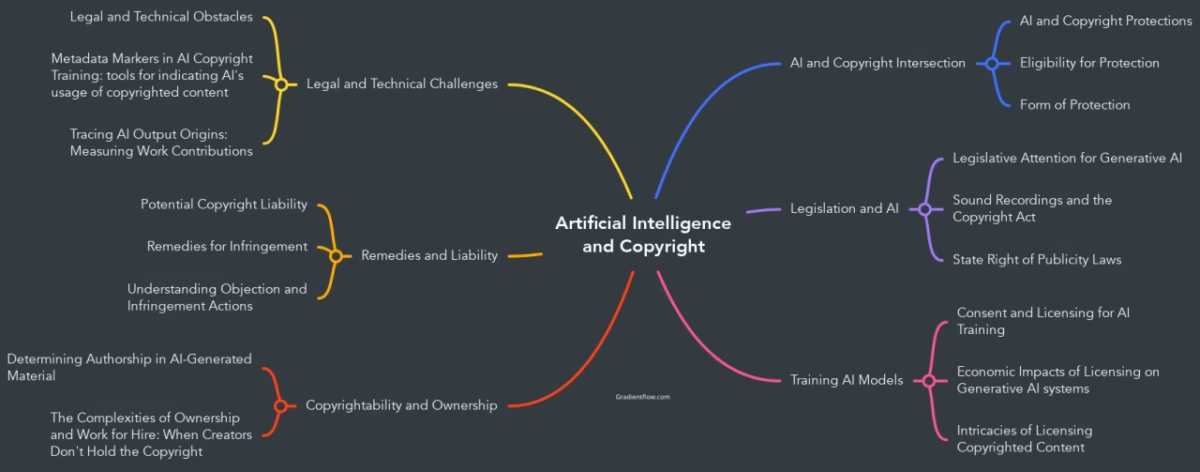
Copyrighted IP Concerns
One of the most debated aspects of Project Genie is its ability to generate worlds that may resemble copyrighted intellectual property.
Early demonstrations have shown that prompts can produce environments inspired by:
- Popular video games
- Famous fictional worlds
- Well-known characters and settings
This raises important questions:
- Can AI legally generate playable worlds inspired by copyrighted franchises?
- Where is the line between inspiration and infringement?
- Who is responsible for AI-generated copyrighted content?
These concerns place Project Genie at the center of ongoing debates about AI training data, creative ownership, and copyright law.
Why Copyright Matters More with Playable Worlds
Playable worlds introduce a new legal challenge. Unlike images or text, interactive environments:
- Can closely resemble existing games
- Allow users to actively engage with copyrighted concepts
- Blur the line between fan content and commercial imitation
As AI tools grow more powerful, copyright enforcement may become more complex, especially when AI generates content on demand rather than distributing fixed assets.
Current Limitations of Project Genie
Project Genie is still in an experimental stage and has several limitations:
- Worlds are short and temporary
- Graphics can appear rough or inconsistent
- Interactions are limited
- Experiences are closer to demos than full games
Despite these constraints, the tool provides a glimpse into the future of AI-generated interactive media.
Impact on Game Development
Project Genie could significantly influence how games are made:
Lower Barrier to Entry
Creators without coding or design skills may generate playable prototypes instantly.
Rapid Prototyping
Developers could test ideas, environments, and mechanics faster than traditional workflows.
New Creative Roles
Game designers may shift from building assets to guiding AI through prompts and rules.
However, it also raises concerns among developers about originality, creative labor, and ownership.
Why Google’s Project Genie Matters
Project Genie represents a broader shift in AI development:
- From content generation to environment simulation
- From passive consumption to interactive creation
- From tools to creative partners
World-model AI systems like Project Genie are also seen as foundational for future advancements in autonomous agents and general intelligence, as they help AI understand how actions affect environments.
The Future of Playable AI Worlds
As Project Genie evolves, it may:
- Support longer and richer experiences
- Integrate with game engines
- Enable collaborative world creation
- Introduce stronger copyright safeguards
Whether used for games, education, or creative storytelling, AI-generated worlds are likely to become a major part of digital experiences.
FAQs: Google Project Genie AI
What is Google Project Genie?
Google Project Genie is an experimental AI tool that creates playable, interactive virtual worlds using text or image prompts. Users can explore these worlds in real time.
How does Project Genie create playable worlds?
Project Genie uses an advanced AI world model that understands space, movement, and environment logic. It generates worlds dynamically as users move through them.
Can Project Genie generate copyrighted content?
Yes, Project Genie can produce worlds inspired by copyrighted intellectual property, which has raised legal and ethical questions around AI-generated content.
Unlock Smarter Workflows with AI Tools for Designers
Take your design process to the next level with the right AI assistant. Whether it’s Claude Code for deep automation or Cursor for quick iterations, our guide helps you pick the best fit. Stay ahead in creative workflows and explore more insightful blogs at MasterInDesign today!
📩 Contact us now to start your professional video editing journey.
📞 Contact: +92 311 2579659
📧 Email: info@masterindesign.com