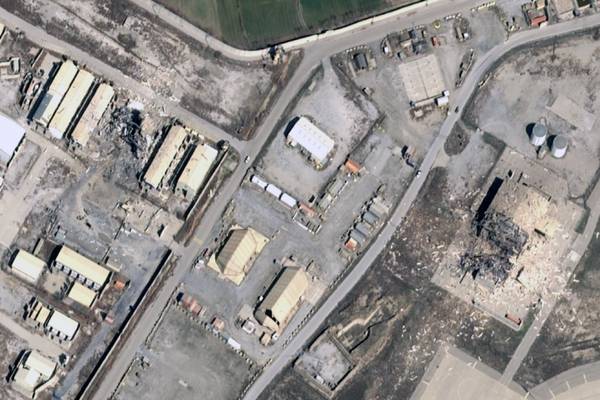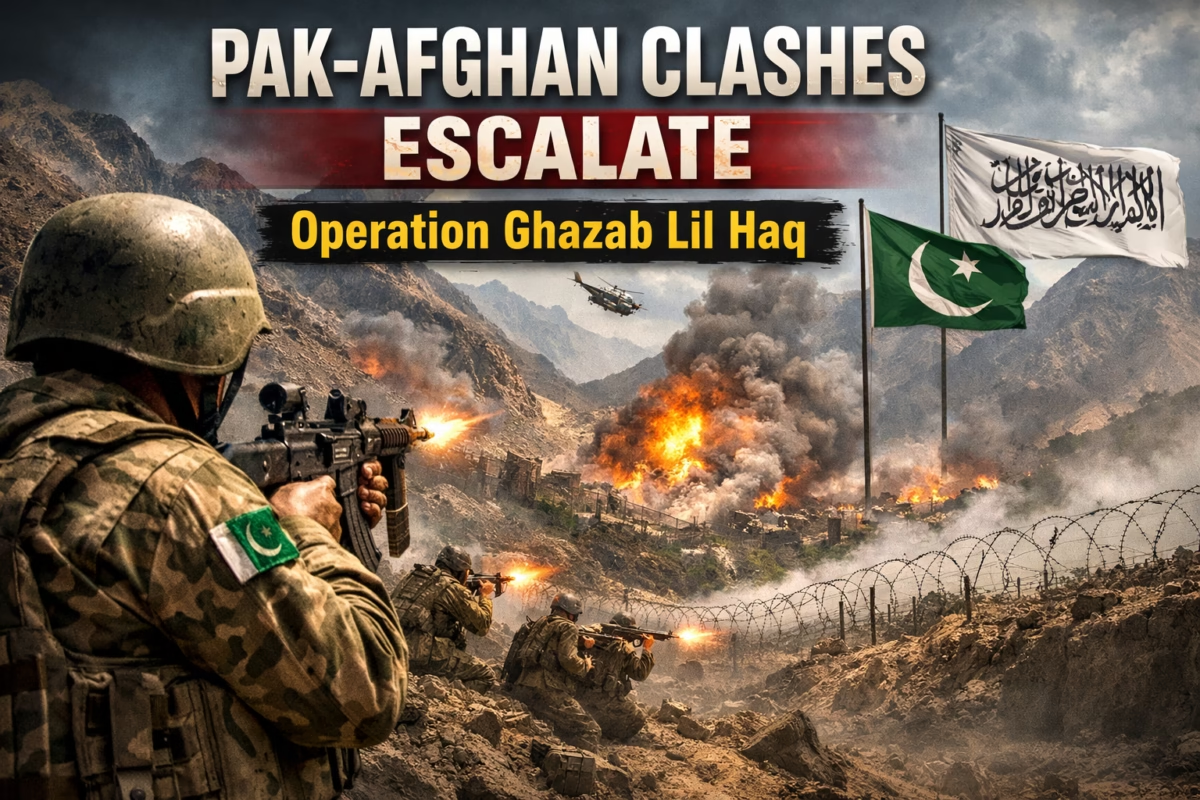

Afghanistan Thwarts Pakistan Airstrikes on Bagram Airbase
March 2, 2026
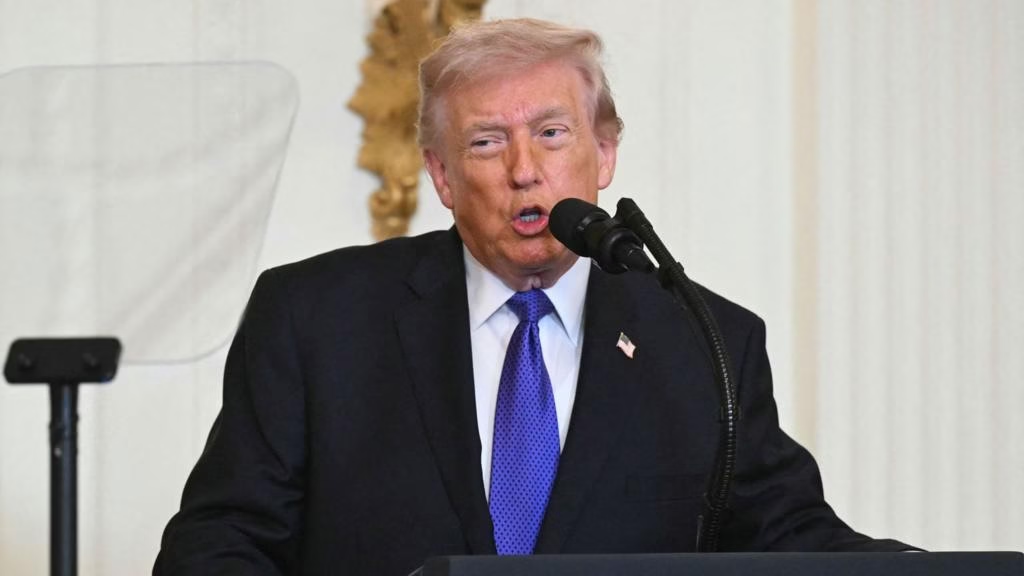
Trump Says US Took ‘Last Best Chance’ to Hit Iran, as Lebanon Reports 52 Killed in Israeli Strikes
Tensions in the Middle East have surged dramatically as the United States and Israel expand military action against Iran and Iran‑aligned forces. U.S. President Donald Trump has described recent American strikes on Iran as the “last best chance” to address what he sees as growing threats from Iran’s missile and nuclear capabilities, signalling a deep commitment to continued operations. Trump also suggested that this campaign could last several weeks, though it might extend longer if necessary.
At the same time, warfare has spread beyond Iran’s borders. In Lebanon, heavy Israeli airstrikes have reportedly killed at least 52 people and injured more than 150, according to local authorities. Thousands of civilians are fleeing conflict zones as communities come under bombardment near Beirut and in southern parts of the country.
US, Israel, and Iran: A Widening Conflict
President Trump’s remarks reflect a major escalation in U.S. strategy in the Middle East. The administration has framed recent strikes on Iran as a critical effort to dismantle Tehran’s missile and nuclear infrastructure, which U.S. officials portray as an increasing threat to American interests and regional allies.
This strategy has drawn intense international scrutiny and debate. Opponents argue that direct U.S. military action risks a broader and more prolonged conflict. Supporters contend that decisive force may be necessary to prevent further destabilisation and deter future aggression.
At the same time, Israel’s military has conducted extensive airstrikes in Lebanon in response to attacks by Iran‑aligned militant groups. Heavy bombardment in residential areas has resulted in significant civilian casualties and widespread destruction, prompting concerns from humanitarian organisations.
Lebanon Bears the Brunt of the Violence
The situation in Lebanon has quickly deteriorated. Lebanese health officials report dozens of deaths and many more wounded as residential neighbourhoods and infrastructure come under repeated air attacks. Large portions of the population have been forced to flee their homes as violence intensifies.
Emergency services are under strain, trying to treat the injured and assist displaced families. In many affected areas, schools and businesses have closed as residents seek shelter and safety. Movement restrictions and damaged roads further complicate daily life for civilians caught in the conflict.
The heavy toll on civilians has prompted international calls for restraint and immediate humanitarian assistance. Observers warn that continued escalation could deepen the humanitarian crisis, particularly in a country already grappling with economic and political challenges.
Broader Regional and Global Effects
The violence in Lebanon is part of a wider conflict involving the United States, Israel, and Iran, which itself escalated after key provocations and retaliatory strikes. Armed groups aligned with Tehran — including Hezbollah — have launched rockets and drones at Israeli territory, which in turn has triggered disproportionate military responses.
This expanding conflict has disrupted travel and heightened security concerns across the region. Shipping channels in strategic waterways have faced threats, affecting global energy markets and trade routes. Nations in the Gulf and beyond are on high alert as tensions mount, fearing a larger regional conflagration.
At home, President Trump’s aggressive posture has divided opinion. While some see the strategy as necessary to counter dangerous actors, others fear it may drag the United States into a deeper and more uncertain war.
Humanitarian Concerns
Civilians are among the worst affected. Many families in Lebanon’s southern regions and the outskirts of Beirut report lost loved ones, damaged homes, and disrupted livelihoods due to the airstrikes. Emergency responders struggle to cope with the scale of the crisis, and displaced people require food, shelter, and medical attention.
International organisations and regional leaders have urged all sides to seek a ceasefire and open humanitarian corridors to provide relief to those in need. However, with hostilities ongoing, achieving a pause in fighting remains elusive.
Conclusion
The Middle East conflict has escalated into a broader regional confrontation, involving direct U.S. military action against Iran’s strategic assets and significant Israeli airstrikes in Lebanon. President Trump’s assertion that the campaign represents the “last best chance” underscores the strategic weight the U.S. leadership attaches to the current operation. Meanwhile, the heavy civilian toll in Lebanon underscores the human cost of the escalating violence.
As the situation continues to unfold, diplomatic efforts, humanitarian intervention, and strategic choices by all involved parties will shape the short‑ and long‑term trajectory of the region.
FAQs
1. What did Trump mean by the “last best chance” to hit Iran?
President Trump used this phrase to describe U.S. strikes aimed at dismantling Iranian missile and nuclear capabilities, framing them as a crucial effort to avert greater future threats.
2. Why has Lebanon been hit by airstrikes?
Lebanon has experienced heavy Israeli airstrikes in response to attacks by Iran‑aligned militant groups, which have targeted northern Israel with rockets and drones.
3. How many people have been killed in Lebanon?
Lebanese authorities reported at least 52 people killed and more than 150 injured due to recent bombardment in and around Beirut and southern regions.
4. Is this conflict limited to Iran and Israel?
No — the conflict involves multiple fronts, including U.S. actions against Iran, militant group attacks, and significant impacts on neighbouring countries like Lebanon.
5. What are the wider effects of this escalation?
The escalation threatens regional stability, disrupts global travel and trade routes, affects energy markets, and raises the risk of wider military involvement, as well as creating humanitarian challenges for civilians caught in the fighting.
Elevate Your Brand with MasterInDesign 🚀
Don’t let your business get left behind in today’s fast-paced digital world. At MasterInDesign, we specialize in helping brands stand out, engage audiences, and grow online.
Take the next step toward digital excellence. Contact us today and transform your brand into a powerful online