
Apple to Launch Affordable iPhone 17e with Upgraded Siri Assistant
February 11, 2026
China’s A-Shares Rise on AI Optimism | Hong Kong Slips Amid Global Scrutiny
February 12, 2026
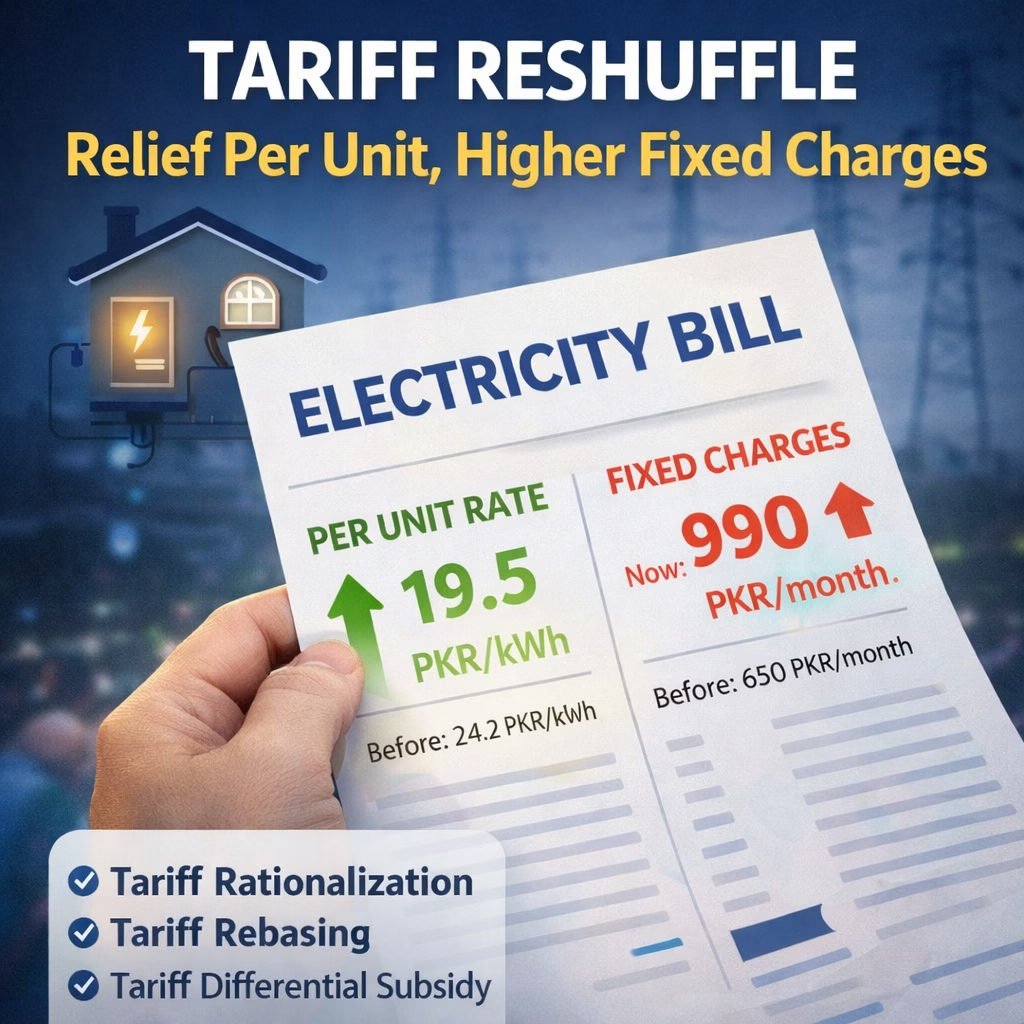
Tariff Reshuffle: Relief Per Unit, Higher Fixed Charges
Electricity consumers in Pakistan are facing a new tariff rationalization initiative that aims to balance relief on per-unit energy charges with an increase in fixed monthly costs. This tariff reshuffle has stirred discussions among economists, consumer advocates, utility providers, and policymakers as it marks a shift in how electricity bills are calculated and structured. The latest changes involve tariff rebasing, shifts in subsidy mechanisms like tariff differential subsidy, and adjustments that affect all categories of electricity users.
While many consumers welcome the idea of paying less per unit of electricity, the introduction of higher fixed charges has raised questions about overall affordability, fairness, and long-term impact on household and industrial electric bills.
What Is Tariff Rationalization?
Tariff rationalization refers to the systematic adjustment of electricity pricing structures to better reflect costs and improve financial sustainability of the power sector. In simple terms, it means revising the way consumers are charged so that the pricing system becomes more efficient, transparent, and equitable. This may involve reducing the variable cost per unit of electricity while increasing the fixed charges that every consumer pays regardless of usage.
This process has important implications for both consumers and utility companies. On one hand, lower per-unit rates can ease the burden on those who consume larger amounts of electricity. On the other hand, higher fixed charges ensure that utilities can cover basic operating costs even when usage drops.
Tariff Rebasing: Why It Matters
Tariff rebasing is the periodic revision of electricity tariff structures based on updated cost assessments, inflation, fuel prices, and operational expenses. It ensures that electricity pricing does not remain outdated or disconnected from real costs. This is a key element of the broader tariff rationalisation process.
Rebasing is intended to:
- Align consumer prices with the actual cost of electricity generation and distribution.
- Reduce cross-subsidies where one group of consumers unintentionally bears the cost of another.
- Ensure utilities remain financially viable.
- Improve investment confidence in the energy sector.
However, rebasing can lead to short-term pain for consumers if not carefully calibrated with relief measures — such as lowering per unit charges or reconfiguring subsidy frameworks.
How the Tariff Reshuffle Affects Your Bill
Under the new structure, the tariff reshuffle rebalances two main components of a typical electricity bill:
1. Relief in Per-Unit Charges
Consumers are being given relief through reduced per-unit electricity tariffs. This means that the amount charged for every unit (kWh) of electricity used is now lower than before, at least on paper. A lower per-unit rate can especially benefit:
- High consumption households
- Industrial and commercial users
- Consumers with heavy electrical loads
The rationale is that reducing the variable cost per unit encourages consumption efficiency and provides predictable savings for end users.
2. Higher Fixed Charges
To offset the reduced per-unit revenue, utility companies have increased fixed charges — a set fee that every consumer pays regardless of how much electricity they use.
Fixed charges are intended to cover essential infrastructure costs, grid maintenance, and operational expenses that do not change with usage. While lower per-unit costs benefit heavy users, higher fixed costs can disproportionately affect:
- Low-usage households
- Economically vulnerable consumers
- Small businesses with limited electrical demand
Understanding Tariff Differential Subsidy
One of the tools used by policymakers is tariff differential subsidy. This refers to the financial assistance provided by the government to bridge the gap between the actual cost of electricity and what consumers are charged. In other words, the government pays part of the cost to avoid sharp increases for end users.
Such subsidies help stabilize tariff structures, particularly during rebalancing efforts, and prevent sudden spikes in electricity bills. However, they also represent a significant budgetary commitment and can strain public finances if not targeted carefully.
Does Tariff Rationalisation Include a Surcharge?
In some cases, a tariff rationalization surcharge may be applied temporarily to adjust for transitional costs. A rationalization surcharge is a mechanism that adds a small extra fee to electricity bills during a restructuring period. It is often justified as a way to:
- Balance sudden cost shifts
- Recover past deficits
- Smooth transition to a new pricing regime
While such surcharges are meant to be short-term, they can be controversial if they linger longer than expected or lack clear sunset dates.
Tariff Headings and Classification
The overall tariff framework typically includes different tariff headings, which represent specific categories or charges in an electricity bill. These could include:
- Fixed charges
- Per-unit charges
- Surcharges
- Subsidy adjustments
- Taxes and levies
Each heading contributes to the total payable amount, and reshuffles often reclassify or re-weight these components.
What Does “Tariff Reduction” Mean?
For many consumers, the idea of tariff reduction conjures the hope of lower monthly bills. In everyday language, a tariff reduction means a decrease in the rate charged per unit of electricity consumption. If someone asks for the “tariff reduction meaning in Urdu,” the idea is often explained as:
بجلی کی فی یونٹ قیمت میں کمی
which means a reduction in the per-unit price of electricity.
However, a tariff reduction does not always lead to lower overall bills, especially when fixed charges or surcharges increase simultaneously.
Who Benefits and Who Pays More?
The outcome of the tariff reshuffle depends on usage patterns:
Beneficiaries:
- High usage consumers may see noticeable relief due to lower per-unit charges.
- Commercial and industrial users with steady power demand.
- Consumers whose fixed cost share is relatively small compared to total consumption charges.
Those Who May Pay More:
- Low consumption households.
- Consumers who use electricity infrequently but now face higher fixed charges.
- Small businesses with limited load profiles.
Why This Tariff Change Is Happening
Several drivers explain why authorities have introduced this kind of tariff reshuffle:
- Budgetary pressures on the power sector.
- Inflation in fuel costs and generation expenses.
- Pressure to reduce circular debt in the electricity supply chain.
- Demand for transparency and cost-reflective pricing.
- Need to attract investment into generation and grid infrastructure.
By rationalising tariffs, policymakers aim to build a more sustainable electricity sector while trying to distribute costs more equitably.
Conclusion
The recent tariff reshuffle represents a significant shift in Pakistan’s approach to electricity pricing. With relief on per-unit charges and higher fixed costs, the new system hopes to strike a balance between consumer affordability and financial sustainability for utilities. However, the impact will vary for different user groups — heavy consumers may benefit, while low modest users may notice higher bills due to increased fixed charges.
Understanding terms like tariff rationalization, tariff rebasing, tariff differential subsidy, and tariff rationalization surcharge helps consumers make sense of their bills as they adjust to this new pricing landscape.
FAQs
Q1: What is tariff rationalization?
Tariff rationalization refers to adjusting electricity pricing to align with true costs and improve financial sustainability while balancing consumer impact.
Q2: Why has per-unit electricity rate been reduced?
The per-unit price is reduced to provide relief to consumers and encourage efficient usage, but other charges may increase to offset revenue loss.
Q3: What are higher fixed charges?
Fixed charges are monthly fees that consumers pay regardless of usage, covering infrastructure and operational costs.
Elevate Your Brand with MasterInDesign 🚀
Don’t let your business get left behind in today’s fast-paced digital world. At MasterInDesign, we specialize in helping brands stand out, engage audiences, and grow online.
Take the next step toward digital excellence. Contact us today and transform your brand into a powerful online