
I Tested the MacBook Neo for 4K Video Editing — Surprising Results
March 27, 2026
WHO Recommends New Diagnostic Tools to Help End Tuberculosis (TB)
Tuberculosis (TB) remains one of the leading infectious diseases in the world, affecting millions of people annually and causing a significant number of deaths, especially in low‑ and middle‑income countries. Early detection and prompt treatment are critical to preventing the spread of TB, reducing illness and death, and moving closer to ending the global TB epidemic.
Recognizing the challenges many countries face in diagnosing TB—such as limited laboratory infrastructure, long turnaround times for test results, and difficulty accessing diagnostic services—the World Health Organization (WHO) has published new recommendations for diagnostic tools that are simpler, faster, and more accessible. These tools are intended to improve case detection, help healthcare workers provide timely care, and reduce the burden of TB worldwide.
🧪 What’s New in WHO’s Diagnostic Recommendations for TB
WHO’s updated recommendations focus on expanding access to modern diagnostic technologies that can be used closer to where people live and seek care. These tools include portable tests, easier ways to collect samples, and efficient testing strategies that reduce cost and time.
1. Near Point‑of‑Care Molecular Tests
One of the key recommendations is the use of near point‑of‑care (near‑POC) molecular diagnostic tests. These are portable devices that can detect TB bacteria quickly and do not require complex lab infrastructure. They are battery‑operated, relatively easy for health workers to use, and can deliver results in under an hour. By bringing testing closer to patients—such as in local clinics, community health posts, and district hospitals—these tools can reduce delays in diagnosis and start treatment sooner.
2. Tongue Swab Sample Collection
WHO now recommends using tongue swabs as an acceptable specimen for TB testing. Traditionally, TB diagnosis relies on sputum (mucus coughed up from the lungs) samples, which can be difficult to collect from certain groups of people, such as young children, people living with HIV, or those who cannot produce sputum. Tongue swab collection is simpler, safer, and more acceptable, which can improve testing coverage, especially in hard‑to‑reach populations.
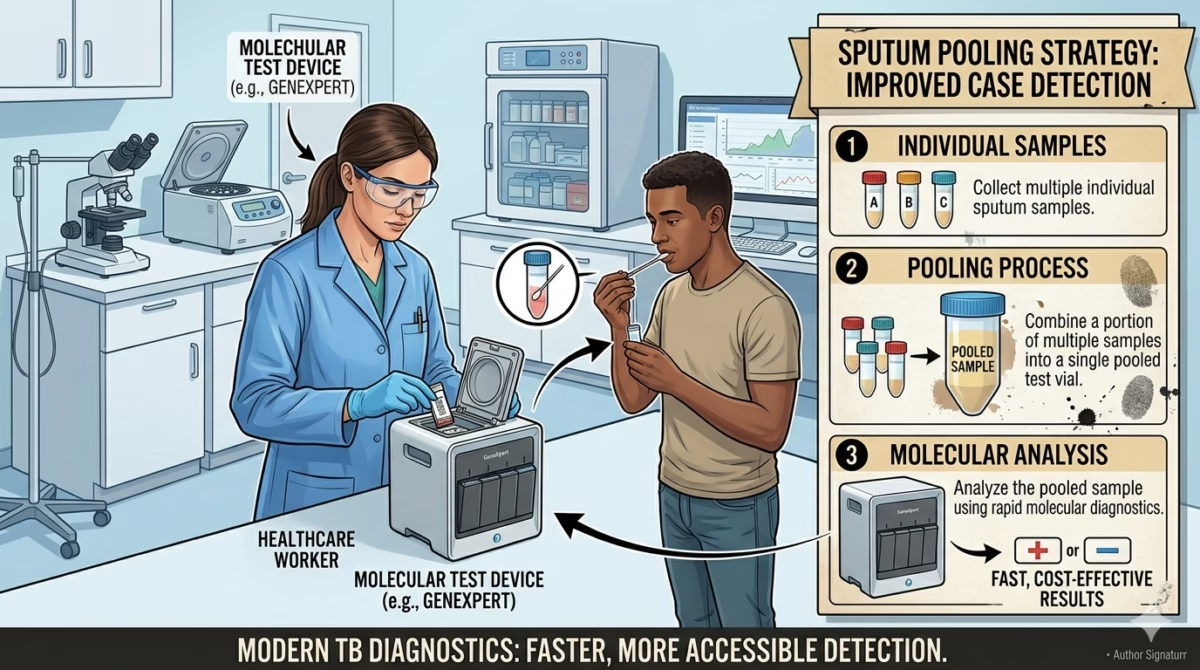
3. Sputum Pooling Strategy
In settings where diagnostic resources are limited, WHO suggests a sputum pooling strategy. This approach combines sputum samples from multiple individuals into a single test. If the pooled test is negative, all individuals are presumed negative, reducing the number of tests needed. If positive, individual testing can be done. This strategy helps stretch limited testing resources and reduces costs.
4. Other Supporting Diagnostic Innovations
WHO also supports the use of other innovative tests, such as:
- Rapid diagnostics designed specifically for people living with HIV
- Low‑ and moderate‑complexity tests suitable for peripheral health facilities
- Tools that can detect not only TB but also drug resistance patterns, helping guide treatment decisions
🧠 Why These Tools Matter
Accurate and timely diagnosis is at the heart of TB control. Millions of people with TB still go undiagnosed or are diagnosed late due to limitations in diagnostic capacity. Traditional methods like culture and microscopy can take days or weeks and often require well‑equipped laboratories and trained personnel.
The new diagnostic tools recommended by WHO aim to overcome these challenges by:
- Reducing the time between testing and results
- Making tests accessible in remote and underserved areas
- Detecting TB in people who might otherwise be missed
- Helping healthcare systems diagnose and manage TB more efficiently
Faster and more accessible diagnosis leads to earlier treatment, better patient outcomes, reduced transmission, and progress toward global TB elimination goals.
📌 Frequently Asked Questions (FAQs)
Q1. Why is WHO updating TB diagnostic recommendations?
A: WHO is updating recommendations because early and accurate diagnosis is essential to control TB. Current diagnostic gaps mean many people go undetected or are diagnosed too late. New tools help bridge these gaps by making testing faster, more accessible, and more reliable.
Q2. What does “near point‑of‑care” testing mean?
A: Near point‑of‑care testing refers to diagnostic tests that can be done close to the patient, such as in local clinics or health posts, without needing a fully equipped laboratory. These tests provide quick results and help healthcare providers make timely treatment decisions.
Q3. How do tongue swabs help in TB diagnosis?
A: Tongue swabs are easier and safer to collect than sputum samples. They are especially helpful for people who cannot produce sputum, including young children and people with certain medical conditions. This increases the chance that more people with TB can be diagnosed.
Q4. What is sputum pooling and why is it useful?
A: Sputum pooling is a strategy that combines samples from several people into one test. It helps reduce the number of tests needed, saving time and resources—especially important in settings with limited testing capacity.
Q5. Can these new diagnostic tools detect drug‑resistant TB?
A: Some of the newer molecular tests can also detect resistance to key TB drugs. This is important for guiding effective treatment plans and combating drug‑resistant forms of TB.
Q6. Will these tools work in remote or low‑resource settings?
A: Yes. The recommended tools have been chosen for their ability to work even in settings with limited laboratory infrastructure. Portable molecular tests and simpler sample collection methods make diagnosis more accessible in remote and underserved communities.
Q7. How will faster diagnosis impact TB control?
A: Faster diagnosis means people with TB can start treatment sooner, reducing the time they are infectious and lowering the chance of transmitting TB to others. This contributes to reducing TB incidence and mortality.
Q8. Are these tools already being used?
A: Some of these tools are already in use in various countries. The new recommendations encourage wider adoption and support for scaling up their use in national TB programs.
Elevate Your Brand with MasterInDesign 🚀
Don’t let your business get left behind in today’s fast-paced digital world. At MasterInDesign, we specialize in helping brands stand out, engage audiences, and grow online.
Our services include:
Take the next step toward digital excellence. Contact us today and transform your brand into a powerful online presence!