
KSE-100 Historic Rally: Index Surges 9% on Ceasefire News
April 9, 2026
The Blue Light Myth: Why Its Impact on Sleep is Smaller Than Previously Believed
For years, the “blue light” emitted from our smartphones, tablets, and laptops has been cast as the ultimate villain of the modern sleep crisis. We’ve been told to wear amber-tinted glasses, install “Night Shift” filters, and put away our devices hours before bed to protect our melatonin levels. However, recent scientific inquiries and a growing body of research—including latest reports from The News—suggest that the impact of blue light on sleep might be significantly smaller than we once believed.
As we dive into the “Blue Light Thesis” of 2026, the conversation is shifting from the color of the light to the intensity and timing of our overall light exposure.
Deconstructing the Blue Light Disadvantage
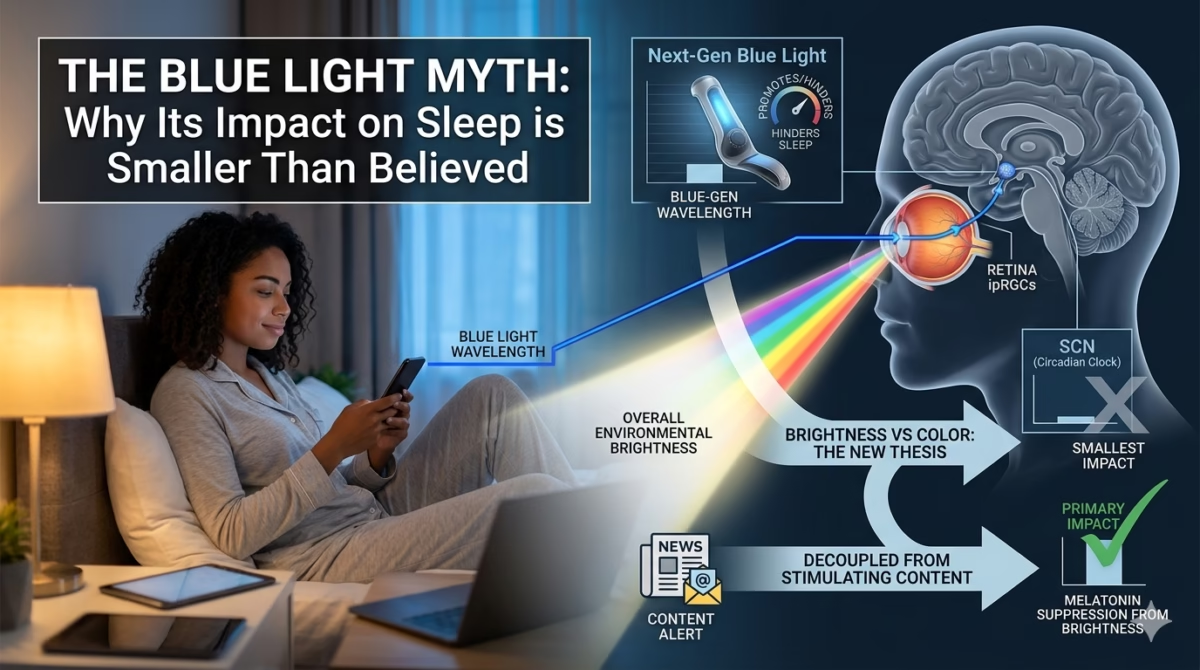
The traditional theory suggests that blue light, which has a short wavelength, mimics daylight and suppresses the production of melatonin, the hormone responsible for telling our brain it’s time to sleep. While it is true that blue light is particularly effective at stimulating the “intrinsically photosensitive retinal ganglion cells” (ipRGCs) in our eyes, new studies indicate that the “Blue Light Disadvantage” has been overstated.
Researchers are finding that the brightness of the screen and the stimulating nature of the content we consume (scrolling through social media or checking work emails) often play a much larger role in “Blue Light Sleep Problems” than the actual blue tint itself.
How Does Light Affect the Sleep Cycle?
To understand why blue light isn’t the only culprit, we must look at how light affects the sleep cycle as a whole. Our circadian rhythm is tuned to the transition from the bright, blue-rich light of midday to the dimmer, warmer (yellow/orange) tones of sunset.
However, a total “Blue Light Impact on Sleep and Eye Health” study reveals that:
- Context Matters: Exposure to bright light during the day actually makes us more resilient to blue light exposure in the evening.
- Brightness vs. Color: A very dim blue light might have less of an impact on your brain than a very bright warm yellow light.
- The Next Generation: Scientists are now working on “Next-Generation Blue Light” that could potentially promote or hinder sleep on command by precisely targeting specific photoreceptors without distorting the visual color of the screen.
The Impact of Blue Light on the Brain: Psychological vs. Biological
When we discuss the “Impact of Blue Light on the Brain,” we often confuse biological suppression with psychological alertness. If you are reading a high-stakes news story or an engaging novel on an iPad, your brain is staying awake because it is interested, not just because of the pixels.
Recent findings suggest that the relaxation techniques we use (or fail to use) before bed are more predictive of sleep quality than whether or not we used a blue light filter. For most people, the physiological delay in sleep caused by a smartphone screen is estimated to be only about 10 to 15 minutes—a far cry from the “hours of lost sleep” often cited in earlier headlines.
Conclusion: A Balanced Approach to Screen Time
The takeaway from the latest research isn’t that blue light is completely harmless, but rather that it isn’t the boogeyman it’s been made out to be. Instead of obsessing over screen filters, sleep experts now recommend a more holistic approach:
- Increase Daytime Light: Get plenty of natural sunlight in the morning to “anchor” your internal clock.
- Reduce Overall Brightness: Dim your household lights and screen brightness in the evening.
- Mental Decoupling: Focus on winding down mentally, rather than just switching the color of your screen.
As the science evolves, it’s becoming clear that the secret to a good night’s sleep isn’t just avoiding a specific color—it’s about respecting the natural rhythm of light and dark that our bodies have relied on for millennia.
Frequently Asked Questions (FAQs)
Q1: Should I stop using blue light filters on my phone? Not necessarily. While the impact might be smaller than believed, blue light filters can still make screens more comfortable to look at in dark environments, reducing digital eye strain.
Q2: Does blue light damage my eyes permanently? Most current research suggests that the amount of blue light coming from consumer electronics is not high enough to cause physical damage to the retina. The “Impact on Eye Health” is mostly related to strain and dryness.
Q3: Why did we believe blue light was so dangerous for so long? Early studies often used very high intensities of blue light that don’t accurately reflect how humans use their phones in the real world. Newer studies use more realistic conditions.
Q4: Is “Warm Light” better for sleep? Warm light (yellow/red) is generally less stimulating to the brain’s “wakefulness” centers, but if the warm light is very bright, it can still interfere with your sleep cycle.
Q5: What is the best way to ensure good sleep in the digital age? Consistency is key. Keeping a regular sleep-wake schedule and ensuring your bedroom is dark, cool, and quiet is more effective than any blue-blocking gadget.
Elevate Your Brand with MasterInDesign 🚀
Don’t let your business get left behind in today’s fast-paced digital world. At MasterInDesign, we specialize in helping brands stand out, engage audiences, and grow online.
Take the next step toward digital excellence. Contact us today and transform your brand into a powerful online