

Oil Prices Jump as Iran War Rounds One Month | U.S. Markets Open Higher
March 30, 2026
LinkedIn Tips: Using Articles to Boost Engagement
March 31, 2026
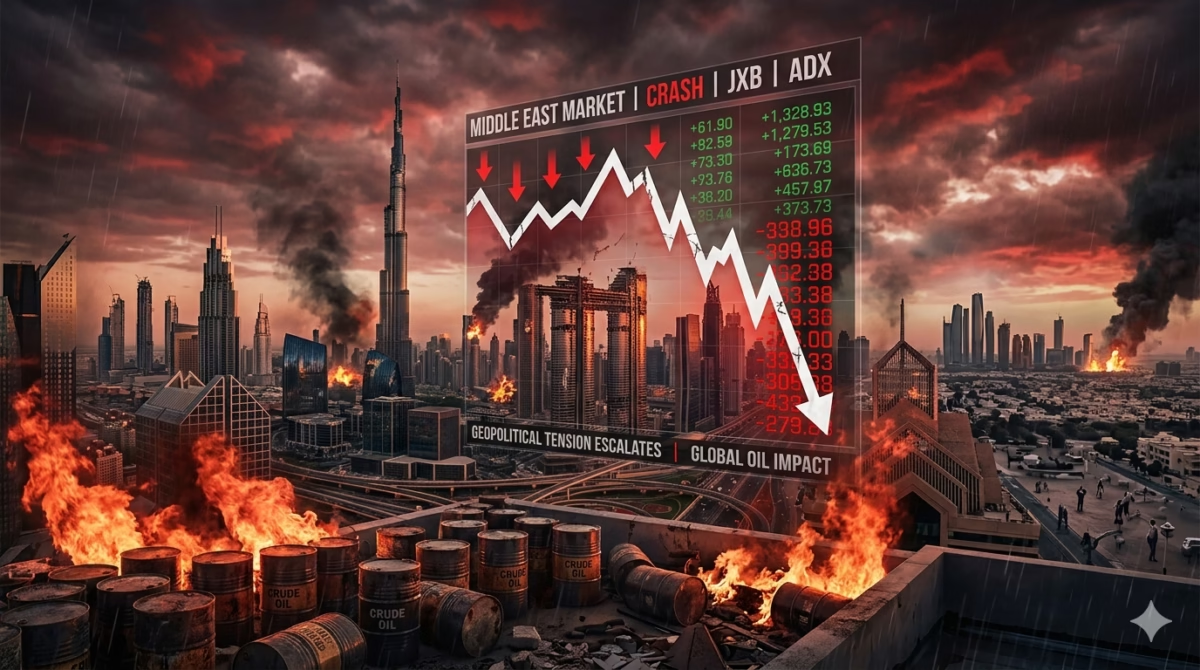
Iran War Wipes $120bn Off Dubai, Abu Dhabi Stock Markets
Introduction
Middle East financial markets faced a massive shock as escalating tensions linked to the Iran war triggered a sharp sell-off across Gulf stock exchanges. Investors reacted swiftly to rising geopolitical risks, wiping out nearly $120 billion in market value from major indices in Dubai and Abu Dhabi.
This sudden downturn highlights how sensitive regional markets are to political instability, especially when it involves key players like Iran and its neighboring Arab countries. The situation has not only affected equities but also raised concerns about oil supply, trade routes, and long-term economic stability.
Market Crash Overview
The stock markets in Dubai and Abu Dhabi experienced one of their most significant declines in recent times.
- Billions in market capitalization were lost within a short period
- Banking, real estate, and energy stocks were hit the hardest
- Investor sentiment shifted rapidly from confidence to caution
The sell-off reflects a broader fear that the Iran conflict could expand and disrupt the entire Gulf region’s economic ecosystem.
Why Markets Reacted So Strongly
Financial markets are highly sensitive to uncertainty, and geopolitical tensions are among the biggest triggers of volatility.
The Iran war has raised several concerns:
- Potential disruption to oil exports
- Threats to key shipping routes in the Gulf
- Rising military tensions across the region
- Risk of broader conflict involving multiple countries
When such risks increase, investors typically move their money out of stocks and into safer assets, causing markets to drop sharply.
Iran Warns Arab Countries
One of the major factors behind the market reaction is Iran’s increasingly strong stance toward neighboring nations.
Reports suggest that Iran warned Arab countries, including the UAE, against supporting opposing forces. This warning has heightened fears of regional escalation, making investors more cautious.
The UAE, being a major financial hub, is particularly vulnerable to such geopolitical signals. Any indication of conflict spreading into the Gulf can trigger immediate capital outflows.
Impact on Dubai and Abu Dhabi Markets
Dubai and Abu Dhabi are key financial centers in the Middle East, attracting both regional and international investors.
Dubai Market Impact
- Heavy losses in real estate and construction stocks
- Decline in investor confidence due to exposure to global capital flows
Abu Dhabi Market Impact
- Energy stocks affected by oil market uncertainty
- Banking sector faced pressure due to risk-off sentiment
These losses collectively contributed to the estimated $120 billion wipeout.
Oil Prices and Economic Pressure
The Iran conflict has also driven volatility in oil markets. While higher oil prices can benefit exporting countries, they also create uncertainty.
Key concerns include:
- Supply disruptions due to conflict zones
- Increased shipping risks in strategic waterways
- Volatility in global energy prices
The concept of Iran oil swap and regional energy trade agreements may also face disruptions, affecting long-term economic planning.
Iran Trade with Afghanistan and Regional Economy
Beyond oil, Iran plays a significant role in regional trade networks. Iran trade with Afghanistan and other neighboring countries is an important part of the regional economy.
If the conflict escalates:
- Trade routes could be disrupted
- Cross-border commerce may decline
- Regional supply chains could weaken
This adds another layer of economic uncertainty, impacting investor confidence across multiple sectors.
Iran Wholesale Market and Business Activity
Domestic economic activities within Iran, such as the Iran wholesale market, may also face pressure due to sanctions, instability, and reduced trade.
A weaker domestic economy in Iran can have ripple effects across the region, especially for countries engaged in trade or investment partnerships.
Iran Warns UAE: Rising Tensions
The situation has become more critical with reports that Iran warns UAE about its geopolitical stance.
Such developments increase:
- Diplomatic tensions
- Military risks
- Economic uncertainty
For investors, this translates into higher risk premiums and reduced appetite for equities in the region.
Iran Saudi Deal Brokered by China: A Fragile Balance
Previously, the Iran-Saudi deal brokered by China was seen as a major step toward regional stability. It helped reduce tensions and improved diplomatic relations.
However, the current conflict threatens to undermine that progress.
If the agreement weakens:
- Regional cooperation may decline
- Political alliances could shift
- Market stability may remain uncertain
This reversal of diplomatic gains is another factor contributing to market volatility.
Irani Stock Exchange and Domestic Impact
The Irani stock exchange itself is also under pressure, as domestic investors react to the conflict and economic uncertainty.
Challenges include:
- Currency fluctuations
- Reduced foreign investment
- Increased inflation
These issues not only affect Iran but also influence regional economic dynamics.
Iran Business News: Investor Sentiment
Recent Iran business news has been dominated by concerns over conflict, sanctions, and economic slowdown.
For global investors, this creates a risk-heavy environment where:
- Capital preservation becomes a priority
- Emerging markets face selling pressure
- Volatility increases across asset classes
This explains the sharp decline in Gulf stock markets.
Broader Economic Implications
The impact of the Iran war goes beyond stock markets.
1. Global Oil Markets
Any disruption in the Middle East affects global energy supply and pricing.
2. Investor Confidence
Uncertainty leads to reduced investment and slower economic growth.
3. Trade and Logistics
Shipping routes and supply chains may face disruptions.
4. Regional Stability
Long-term economic planning becomes difficult in an unstable environment.
Conclusion
The Iran war has delivered a significant blow to financial markets in Dubai and Abu Dhabi, wiping out $120 billion in value and shaking investor confidence.
While markets may recover if tensions ease, the current situation highlights the deep connection between geopolitics and economic stability. From oil prices to trade routes, every aspect of the regional economy is influenced by these developments.
For now, investors remain cautious, closely watching how the situation unfolds. The future of Gulf markets will largely depend on whether tensions escalate further or move toward resolution.
FAQs
1. Why did Dubai and Abu Dhabi markets fall?
Markets fell due to rising geopolitical tensions linked to the Iran war, causing investor panic and sell-offs.
2. How much value was lost in the stock markets?
Approximately $120 billion was wiped out from Dubai and Abu Dhabi stock markets.
3. What role did Iran play in the market decline?
Iran’s warnings to Arab countries and escalating conflict increased regional uncertainty, impacting investor confidence.
4. How does the Iran war affect oil prices?
The conflict creates supply risks, leading to volatility and often higher oil prices.
5. What is the Iran-Saudi deal brokered by China?
It was a diplomatic agreement aimed at improving relations, but current tensions may weaken its impact.
Elevate Your Brand with MasterInDesign 🚀
Don’t let your business get left behind in today’s fast-paced digital world. At MasterInDesign, we specialize in helping brands stand out, engage audiences, and grow online.
Take the next step toward digital excellence. Contact us today and transform your brand into a powerful online