
LinkedIn Among Top Sources for AI Chatbots: How Job Seeker Coach Shapes AI Responses
March 12, 2026
Iran’s New Supreme Leader Says Strait of Hormuz Will Remain Closed in First Purported Message to Public
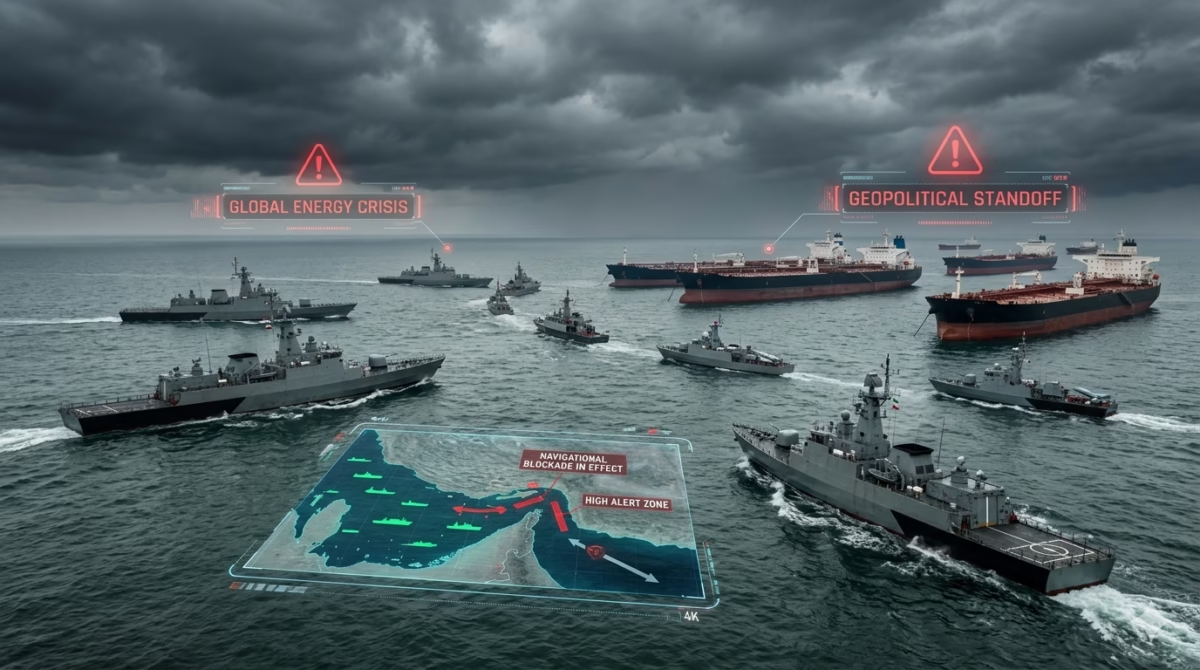
In a major escalation of tensions in the Middle East, Iran’s recently revealed new supreme leader has declared that the Strait of Hormuz will remain closed, signaling Tehran’s determination to sustain its confrontational stance amid ongoing war dynamics involving the United States, Israel, and their allies. This announcement is being viewed as the first purported message attributed to Iran’s new supreme leader following the death of his predecessor and reflects a more uncompromising approach in the evolving conflict.
The announcement, delivered via state media rather than a public address, outlined Iran’s intent to use strategic control of the Strait of Hormuz as leverage in its conflict posture. The strait — a narrow but vital maritime corridor connecting the Persian Gulf to international waters — remains at the center of geopolitical and economic concerns due to its critical role in global oil shipments and regional security dynamics.
A Bold Statement from Iran’s New Leadership
The first public message from the new supreme leader carried a defiant tone, emphasizing that Iran has no intention of reopening the Strait of Hormuz until its key conditions are met. The leadership framed the closure as a necessary response to what it describes as foreign aggression and interference.
Iran’s war strategy now appears to be tied directly to control of the strait, a move analysts say could be designed to maintain pressure on the United States and its allies, including Israel, as negotiations and military maneuvers continue.
The statement reportedly included a demand that foreign military bases and forces withdraw from the region before any consideration of reopening the strait. This reflects what has been described as Iran’s three conditions to end war: the withdrawal of foreign forces, an end to external military support for Iran’s adversaries, and guarantees against future attacks on Iranian leadership and infrastructure.
The Strategic Importance of the Strait of Hormuz
The Strait of Hormuz is one of the most strategically important waterways in the world. It serves as the only maritime outlet for several oil‑rich nations, making it a choke point for global energy supply. A significant percentage of the world’s crude oil and liquefied natural gas flows through this narrow passage each day.
Closure of the strait has immediate implications for international shipping, energy markets, and global economics. Even partial disruptions can cause oil prices to surge, increase transportation costs, and spark global economic instability.
Iran’s declaration that the strait will remain closed underscores how critical control of this channel has become in the broader war conditions and diplomatic standoff.
Latest News About US‑Iran War and Regional Ripples
As tensions between Iran and the United States have intensified, the conflict has shifted from isolated engagements to broader geopolitical confrontations. There have been ongoing military actions, diplomatic pressures, and shifting alliances that feed into the bigger picture known as latest news about US‑Iran war.
Military analysts explain that Iran’s strategy now includes using asymmetric tactics — including naval power and drone capabilities — to exert influence across key maritime routes. In recent days, several tankers reported near‑misses and emergency course changes due to naval activity in the Gulf region.
The disruption has also affected international trade patterns, with some shipping companies rerouting vessels around the longer route around Africa’s Cape of Good Hope to avoid the Persian Gulf and Strait of Hormuz entirely.
Iran Conditions to End War
Iran’s leadership has publicized what it calls the three conditions to end war. These conditions appear to be non‑negotiable from Tehran’s perspective and are seen as prerequisites for any move toward de‑escalation:
- Withdrawal of all foreign military forces in the region — especially U.S. troops and assets stationed in neighboring countries.
- Termination of military support to Iran’s regional adversaries, including arms and intelligence cooperation seen as antagonistic by Iranian officials.
- Security guarantees that prevent future attacks on Iran’s leadership and sovereign infrastructure.
These conditions have hard‑line support within segments of Iran’s political and military establishment. However, they are seen as extremely challenging to achieve through diplomacy given the current state of hostilities.
International mediators have suggested that compromise and negotiation may be the only viable pathways to reduce hostilities, but Iran’s public stance suggests that real progress toward peace may not occur unless its conditions are addressed in full.
Impact on Global Energy and Shipping
The closure of the Strait of Hormuz has triggered widespread concern among global energy markets. Oil prices have surged on fears of prolonged supply disruption. Energy analysts warn that an extended closure — even partial — could destabilize global economic conditions, trigger inflationary pressures, and disrupt energy security for countries heavily dependent on oil imports.
Major economies in Europe, Asia, and North America have called for restraint and urged Iran to reconsider its position, warning that prolonged closure would have “devastating consequences” for international energy markets.
In response, several countries have accelerated diplomatic efforts to ease tensions and establish alternative supply routes. Some shipping companies have already diverted routes, increasing transit time and freight costs.
Iran War News Update Today
Today’s update reflects a volatile situation where diplomatic channels remain open but are overshadowed by military posturing and strategic announcements like the closure of the strait. U.S. officials have affirmed that they do not seek escalation, but maintain that they will defend their forces and allies if provoked.
Meanwhile, regional capitals are balancing economic concerns with security strategies. Some governments have intensified coordination with international partners to monitor maritime security and ensure the freedom of navigation.
The news landscape remains dynamic, with new statements and military movements emerging daily. Observers note that actions taken in the coming weeks could define the future course of the conflict — either toward greater escalation or tentative diplomatic engagement.
Iran Allows Indian Ships Through Strait?
Amid conflicting reports, there have been discussions about exceptions to the strait’s closure, including whether certain countries’ vessels — such as Indian commercial ships — might still be permitted transit. Tehran’s leadership has hinted at potential conditional exemptions for select nations with longstanding diplomatic ties, but no official clarity has been provided.
This speculation has fueled debate among geopolitical analysts who point out that Iran’s economic interests may still intersect with shipping and trade, even as it asserts military control over the strait.
Dubai, Iran War News and Regional Security
Neighboring hubs such as Dubai have been closely monitoring developments. The Persian Gulf remains a critical region for commerce, banking, logistics, and travel. A protracted conflict involving Iran could disrupt regional stability and magnify economic stress across the Gulf Cooperation Council states.
Dubai’s financial markets and shipping operators are reportedly preparing contingency measures in case the strait remains closed for an extended period. Regional leaders have called for restraint and emphasized the importance of maintaining open waterways for international trade.
Is the Iran War Ending Soon?
Despite public declarations and strategic maneuvers, enthusiasm for an immediate end to hostilities remains low among many experts. The conditions outlined by Iran’s new supreme leader are seen as high‑stakes demands that are difficult for opposing parties to meet without substantial concessions.
Some analysts believe that back‑channel negotiations may be underway, even if official rhetoric emphasizes confrontation. The possibility of a diplomatic resolution — or even a temporary ceasefire — remains a topic of speculation among policymakers.
However, with the strait remaining closed and military tensions on the rise, any optimistic outlook on the Iran war ending soon faces significant obstacles.
FAQs
Why has Iran said the Strait of Hormuz will remain closed?
Iran’s new supreme leader declared the closure as a strategic response to ongoing hostilities and to pressure opposing forces, tying maritime access to its conditions for ending the conflict.
What are Iran’s three conditions to end war?
Iran has publicly outlined conditions that include withdrawal of foreign forces, termination of support to its adversaries, and guaranteed protection against future attacks.
How does the closure affect global energy?
The closure disrupts shipping of oil and gas through a vital route, leading to higher prices and uncertainty in global energy markets.
Are Indian ships allowed through the strait?
There are discussions and speculation about conditional exemptions for certain nations, but no confirmed official policy has been announced.
What is the latest update on Iran war news today?
The situation is volatile, with military tensions ongoing and diplomatic efforts continuing behind the scenes.
Boost Your Brand with Today’s Digital Insights!
Today’s news on Cloudflare Outage Disrupts Major Websites, Sending Shockwaves Across the Digital Economy shows how fast the online world can shift and how essential it is for businesses to stay prepared.
Don’t let your brand get left behind. At MasterInDesign, we keep you ahead of every digital curve with powerful services including Website Development, Social Media Management, SEO, Branding, and eCommerce Solutions. Whether your goal is to strengthen your online identity, expand reach, improve engagement, or grow your business from the ground up — we’re here to make it happen.
Contact us today and take your brand to the next level!