

Iran War Leaves Deep, Costly Scar on Mideast Energy Markets
March 19, 2026
Gold Price in Pakistan Today – March 24, 2026 | 24K, 22K, 21K Rates Per Tola
March 24, 2026
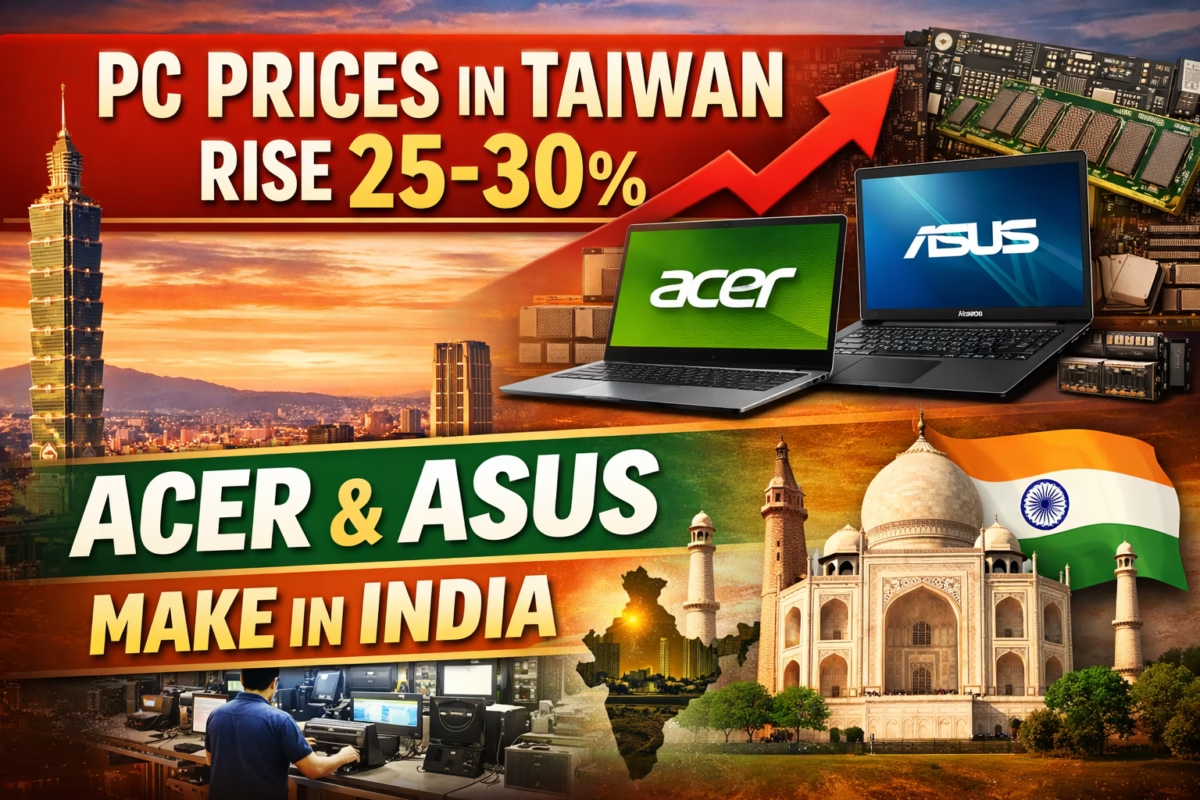
PC Prices in Taiwan Expected to Rise 25–30% in Q2: Asustek Forecasts Major Hikes
Taipei, March 25, 2026 — Taiwan’s PC market is bracing for a substantial price surge in the second quarter of 2026 as one of the island’s largest technology firms, ASUSTeK Computer Inc. (Asustek), warns that notebook and desktop prices could climb by 25–30 percent year‑over‑year. Industry insiders, retailers, and supply‑chain analysts say the hike reflects escalating component costs, global supply constraints, and strategic shifts in manufacturing footprints by Taiwanese OEM (original equipment manufacturer) brands such as Asus and Acer.
This development is attracting intense attention not only in Taipei’s domestic technology market but also across global consumer electronics circles, as Taiwan plays an outsized role in PC production worldwide.
Why Are PC Prices Rising So Sharply?
1. Memory Cost Surge
One of the most critical drivers behind the upcoming price rise is the sharp increase in memory prices, including DRAM and NAND flash. Memory chips have historically been volatile in price, but in recent quarters, supply constraints and rising demand — especially from data center and AI computing sectors — have driven costs significantly higher. As memory accounts for a large portion of a PC’s bill of materials, this has forced manufacturers to rethink pricing strategies for even entry‑level systems.
Manufacturers like Asustek say they can no longer absorb rising memory costs without cutting into margins to unsustainable levels, leading them to pass on the increases to consumers. Taiwanese retail partners are already adjusting suggested retail prices for new PCs accordingly.
2. Supply Chain & Global Pressure
Although much global attention has focused on semiconductor fabs and chip capacity, memory shortages combined with logistical bottlenecks have tightened inventories of core PC components. The ripple effect has increased lead times for motherboards, SSDs (solid‑state drives), and other critical parts — further pushing up overall production costs.
Taiwanese manufacturers, whose facilities are often tightly linked with global component suppliers, face compounded pressure as they balance inventory management with pricing strategies.
3. End of Discount Era in Taiwan
For much of 2024 and late 2025, PC brands and retailers offered steep discounts in Taiwan to clear old inventory amid sluggish demand. However, as component costs climbed, firms pulled back from discounting and began pricing new units at levels that better reflected current costs. This has resulted in a narrowing of previously available bargains in major Taipei tech markets.
Quieter discount seasons are expected to continue, leading to a higher baseline price level for consumers.
What This Means for the Taipei Tech Market
Taipei’s electronics districts, including areas well‑known for PC buying and customization, are expected to experience stronger pricing across many product lines. Local retailers report that in addition to standard consumer laptops, workstations and gaming rigs are also being repriced.
The price jump isn’t limited to high‑end products. Even mid‑range notebooks — especially those with popular screen sizes and moderate configurations — are seeing price tags rise as brands adjust pricing to match input costs.
Acer and Asus Plan Manufacturing Shifts
In response to ongoing global supply chain shifts and rising costs in China, Taiwanese manufacturers Acer and Asus are stepping up production in India and other Southeast Asian markets as part of broader diversification strategies. These plans have been publicly stated by senior executives in both companies and reflect a long‑term push to reduce dependence on China‑based manufacturing.
The objectives behind the “Make in India” expansion include:
- Mitigating geopolitical risk,
- Reducing labor and logistical costs over time,
- Capitalizing on India’s rapidly growing consumer technology market.
While this transition is expected to take several years to fully materialize, both Acer and Asus have increased investments in Indian assembly operations and are receiving government incentives designed to attract electronics manufacturing.
Impact on Global PC Competitiveness
Taiwan’s PC brands have historically been competitive due to a mix of innovation, manufacturing expertise, and cost‑efficient production. However, rising hardware costs — particularly memory and other essential components — are compressing traditional cost advantages.
Global competitors may also adjust pricing strategies, but given Taiwan’s central role in PC design and assembly for many international brands, price trends originating in Taipei could influence broader market pricing.
Analysts suggest that continued memory price pressure into 2026 and 2027 could keep global PC pricing elevated compared with recent years.
PC Pricing Trends: 2024 vs. 2026
To understand the context of this increase, it’s useful to look briefly at pricing trends over the past few years:
2024:
PC prices broadly softened in many markets as pent‑up supply exceeded demand, leading to discounts and promotions especially in late 2024. Many Taiwanese retailers reduced prices to clear inventories of older models.
Early 2025:
While some stability returned, memory prices began rising again mid‑year — but many brands still absorbed costs to maintain competitive price points.
Q1 2026:
Market data shows year‑over‑year (YOY) PC shipments and pricing beginning to diverge from historical patterns, with unit shipments relatively stable but average selling prices rising sharply due to rising parts costs.
Q2 2026 Forecast:
Asustek and other OEMs now expect overt price rises of 25–30 percent YOY, a dramatic shift from the softer pricing environment seen just two years earlier.
Taipei Market Sentiment
Buyers in Taipei are reacting cautiously. Some potential laptop purchasers are delaying upgrades in hopes that discounts may return later in 2026, while others are choosing to purchase now to avoid higher price tags later in the year. PC component dealers in local markets are also adjusting inventory strategies based on expectations of reduced consumer demand at higher price points.
Frequently Asked Questions (FAQs)
Q1: Why are PC prices rising now after years of stable or falling prices?
A: The main driver is rising costs for key components — especially memory — combined with broader supply chain pressures and reduced discounting. This has forced manufacturers to pass more of the cost burden onto consumers.
Q2: How much will prices actually rise?
A: Asustek forecasts a price increase of 25–30% in Q2 2026 compared to the same quarter last year. This applies across a wide range of consumer and business notebook and desktop products.
Q3: Are all Taiwanese PC brands raising prices?
A: While Asustek has explicitly signaled price rises, market indicators suggest other brands — including Acer and others selling in Taiwan — are also adjusting prices as component costs rise.
Q4: Will cheaper PCs still be available in Taiwan?
A: Entry‑level and budget systems will still be sold, but their price tags are being adjusted upward to reflect higher underlying costs. Deep discounts like those seen in 2024 are expected to be rare.
Q5: Does this mean global PC prices will rise too?
A: Taiwan is a central hub for global PC manufacturing. As pricing trends change here — especially at leading OEMs — similar pressures are likely to be felt globally, though the exact impact will vary by region.
Q6: How does “Make in India” fit into this?
A: Taiwanese giants like Acer and Asus are investing in expanded production in India to diversify supply chains and reduce long‑term costs. This won’t immediately lower prices but aims to stabilize production cost structures over time
Elevate Your Brand with MasterInDesign
Don’t let your business get left behind in today’s fast-paced digital world. At MasterInDesign, we specialize in helping brands stand out, engage audiences, and grow online.
Take the next step toward digital excellence. Contact us today and transform your brand into a powerful online